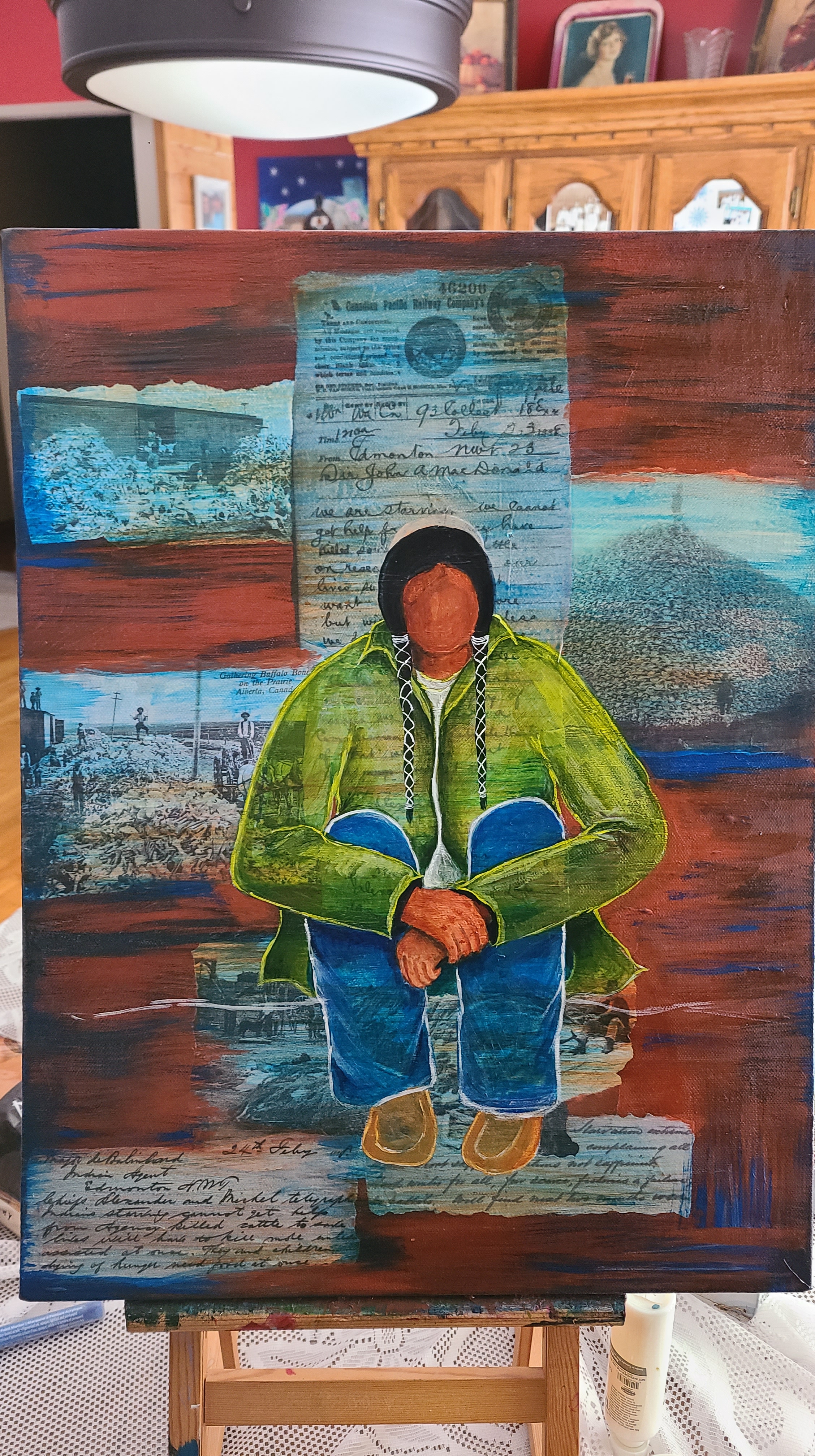
This mixed media piece includes a telegram sent in 1888 from the Chief’s Alexander, Alexis and Michael telling John A MacDonald that their community members are starving and that they had to break the law and kill the cattle in order to save the lives of they and their children and includes parts of the responses from the government. This piece includes images of piles of bison bones and hides from when the bison were slaughtered to show the impact of the loss of an important resource to all plains peoples. The pictures also show the use of the railway to transport the bones to factories to make fertilizer.
The man painted over top has his head down in reflection as he contemplates the telling of our history.
The words of the telegram show through to demonstrate how the history of colonization continues to impact us. The past will always sit with us, and it is important that we remember and tell our own history. The inclusion of archival documents shows a record supporting oral traditions about the impact of signing treaties, the neglect of treaty obligations especially after the 1885 resistance, the loss of access to the land and the loss traditional food resources. It demonstrates the loss of autonomy through the need to ask permission to slaughter their cattle and that without asking permission, they had broken the law and were at risk of being arrested. It is called “Tell me a story” because we continue to speak about our past and the impacts it has had on our communities.
Transcriptions of archive RG10, Volume 3794, File 46,205
Telegram:
Feb 23, 1888
From Edmonton, NWT
Sir John A. MacDonald. We are starving. We cannot get help from the agency, have killed cattle on reserve to save our lives so far. We don’t want to kill anymore but will have to unless we get help at once. We don’t want to break the law but we and our children are dying of hunger. We ask for a commission to investigate the truth of what we are saying but need food at once.
Alexander, Chief of River Qui Barre
Michael Callioux, Chief of Sturgeon river reserve
Alexis, Chief of Lake St. Ann Reserve
At that time, it was illegal for Indigenous people to slaughter their cattle without permission. Even though the cattle had been given to the people as their own to encourage farming, the Indian agent and the government did not consider the cattle the property of the people it was given to. The file this is from includes other documents that explain why the Indian agent decided not to have them arrest for fear it would cause another uprising.
This piece also includes the responses from the governments Indian department to this situation.
Response 1
Feb 24, 1888
To Major de Balinhard Indian Agent
Edmonton, NWT
Chiefs Alexander and Michael telegraph Indians are starving, cannot get help from agency. Killed cattle to save lives, will have to kill more unless assisted at once. They and children dying of hunger need food
at once. Please write facts. See Chiefs and inform them that you have been communicated with by dept. This reply questions the validity of the statement they are starving.
Response 2
Edmonton Feb 25, 1888
Contractors behind delivery provisions, Saddle Lake, Edmonton, and Whitefish Indians were hungry, now fully rationed, Lac La Biche also now receiving rations. Starvation extreme word. Edmonton and St Ann’s complaining all winter of short supplies of rations, not sufficient. Hard winter for all, fur scare, fisheries a
failure, no rabbits, will find next two months more. Samuel, member and spiritual advisor, [is] working this up
[This response downplays the lack of ration, providing an explanation for the provisions not being provided. This treaty
has a clause that stated provisions would be provided in times of famine. It also states that one member is overreacting and getting everyone worked up. It seeks to invalidate the experience of starving people.]

 Sakaw Iskwew