Blog

Tell me a story

“Tell me a story “

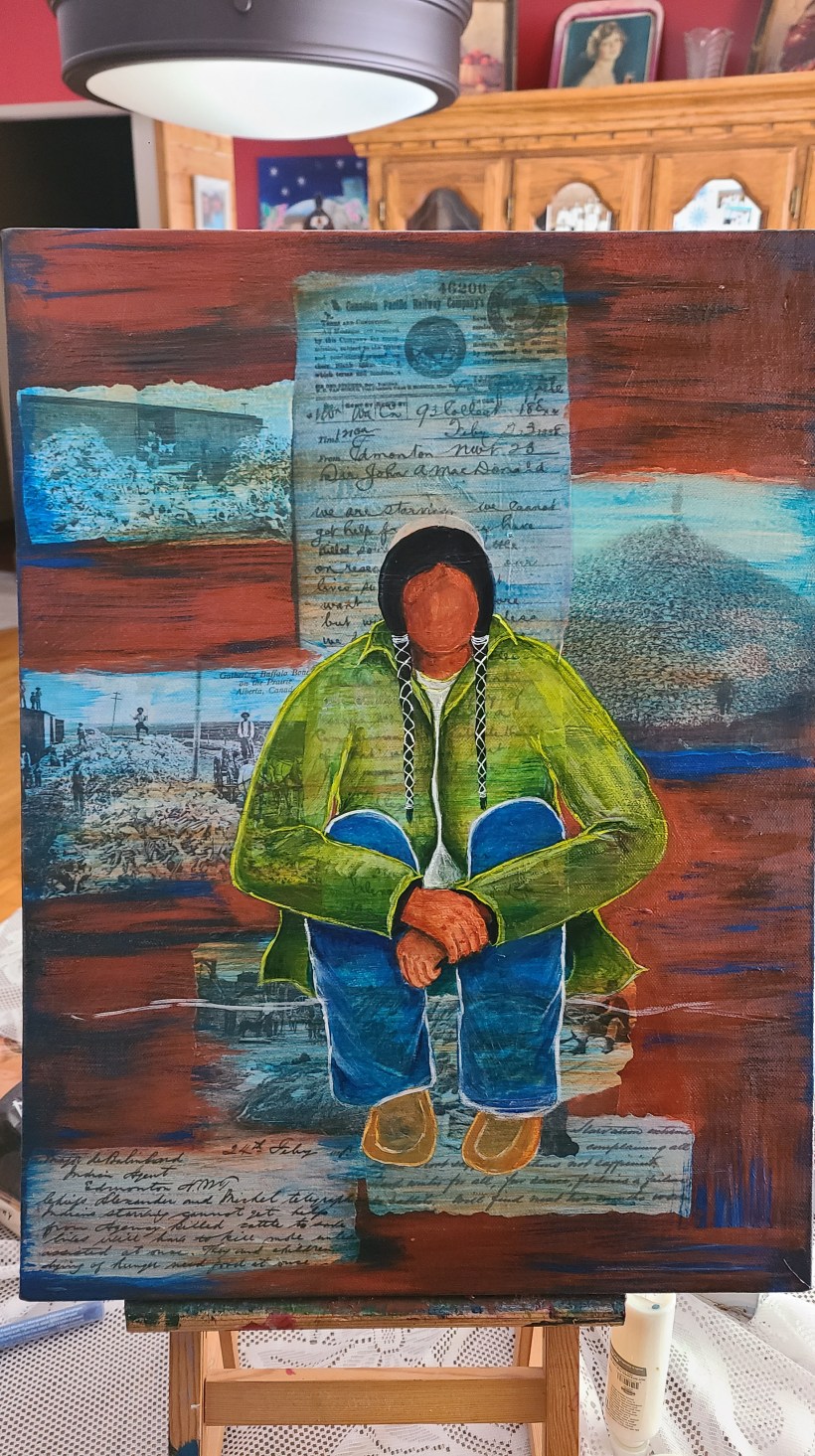
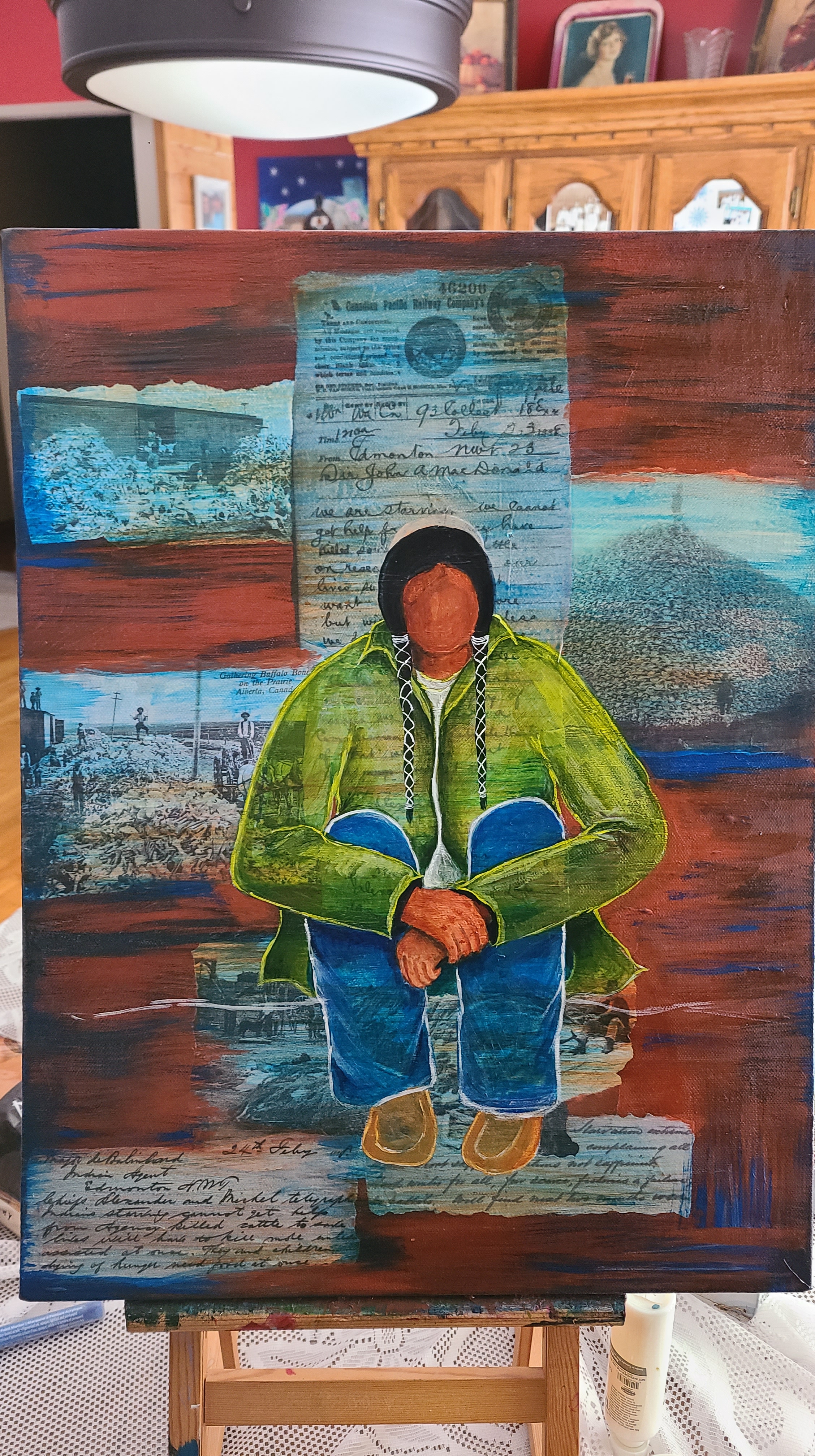
This mixed media piece includes a telegram sent in 1888 from the Chief’s Alexander, Alexis and Michael telling John A MacDonald that their community members are starving and that they had to break the law and kill the cattle in order to save the lives of they and their children and includes parts of the responses from the government. This piece includes images of piles of bison bones and hides from when the bison were slaughtered to show the impact of the loss of an important resource to all plains peoples. The pictures also show the use of the railway to transport the bones to factories to make fertilizer.
The man painted over top has his head down in reflection as he contemplates the telling of our history.
The words of the telegram show through to demonstrate how the history of colonization continues to impact us. The past will always sit with us, and it is important that we remember and tell our own history. The inclusion of archival documents shows a record supporting oral traditions about the impact of signing treaties, the neglect of treaty obligations especially after the 1885 resistance, the loss of access to the land and the loss traditional food resources. It demonstrates the loss of autonomy through the need to ask permission to slaughter their cattle and that without asking permission, they had broken the law and were at risk of being arrested. It is called “Tell me a story” because we continue to speak about our past and the impacts it has had on our communities.

Transcriptions of archive RG10, Volume 3794, File 46,205

Telegram:
Feb 23, 1888
From Edmonton, NWT
Sir John A. MacDonald. We are starving. We cannot get help from the agency, have killed cattle on reserve to save our lives so far. We don’t want to kill anymore but will have to unless we get help at once. We don’t want to break the law but we and our children are dying of hunger. We ask for a commission to investigate the truth of what we are saying but need food at once.
Alexander, Chief of River Qui Barre
Michael Callioux, Chief of Sturgeon river reserve
Alexis, Chief of Lake St. Ann Reserve

At that time, it was illegal for Indigenous people to slaughter their cattle without permission. Even though the cattle had been given to the people as their own to encourage farming, the Indian agent and the government did not consider the cattle the property of the people it was given to. The file this is from includes other documents that explain why the Indian agent decided not to have them arrest for fear it would cause another uprising.

This piece also includes the responses from the governments Indian department to this situation.

Response 1
Feb 24, 1888
To Major de Balinhard Indian Agent
Edmonton, NWT
Chiefs Alexander and Michael telegraph Indians are starving, cannot get help from agency. Killed cattle to save lives, will have to kill more unless assisted at once. They and children dying of hunger need food
at once. Please write facts. See Chiefs and inform them that you have been communicated with by dept. This reply questions the validity of the statement they are starving.

Response 2
Edmonton Feb 25, 1888
Contractors behind delivery provisions, Saddle Lake, Edmonton, and Whitefish Indians were hungry, now fully rationed, Lac La Biche also now receiving rations. Starvation extreme word. Edmonton and St Ann’s complaining all winter of short supplies of rations, not sufficient. Hard winter for all, fur scare, fisheries a
failure, no rabbits, will find next two months more. Samuel, member and spiritual advisor, [is] working this up
[This response downplays the lack of ration, providing an explanation for the provisions not being provided. This treaty
has a clause that stated provisions would be provided in times of famine. It also states that one member is overreacting and getting everyone worked up. It seeks to invalidate the experience of starving people.]

Kiyas ago, our mosom and kokoms; our grandfathers and grandmothers, told us this. We were starving, and our children were dying. We couldn’t get any help from the Indian agent. The law said we could not kill our own cattle. Lots of our traditional food was gone. We thought that we would also be gone.

Moccasins

My favorite piece of footwear isn’t actually shoes

My favorite shoes aren’t actually shoes. They are moccasins. They are comfortable and warm. I have 3 pairs. I’ll tell you about them.

One pair has beaded wolf tracks and soft rabbit fur. These were made from home tanned hide. When the box arrived, it smelled so good. It reminded me of good things from my childhood. They travel with me, and I wear them indoors wherever I am. The other 2 pairs are wrap around style.

The next pair I bought comes from a lady in High Prairie. They are made from home tanned hide. I bought them from her when I finished my bachelor’s degree. They are warm and comfy. They remind me to walk with a good heart and to be considerate of others. I wear these ones to ceremonies and when I’m learning something important.

The last pair is a beautiful teal blue. These are commercially tanned and dyed. They have beautiful beaded flowers. They are to remind me that I’m still here. I bought them after I finished my chemotherapy. They came from BC. I wear them anytime I’m doing anything related to the ovarian cancer that I had.

All these moccasins remind me to have hope. To walk in a good way. To have a good heart. To be considerate of others and that I am still here. My moccasins have taken me many places, but most of all, they bring me to a good place in my heart.

Searching for history

History is interesting. It is both written and spoken. History is remembered, and some events will always be spoken of. Those events that continue to be spoken about have had huge impacts on those that tell the story.

The stories we tell are connected to where and who we come from. Some of those who I come from didn’t have a voice that was ever heard. So now I research their stories so I can speak their truth.

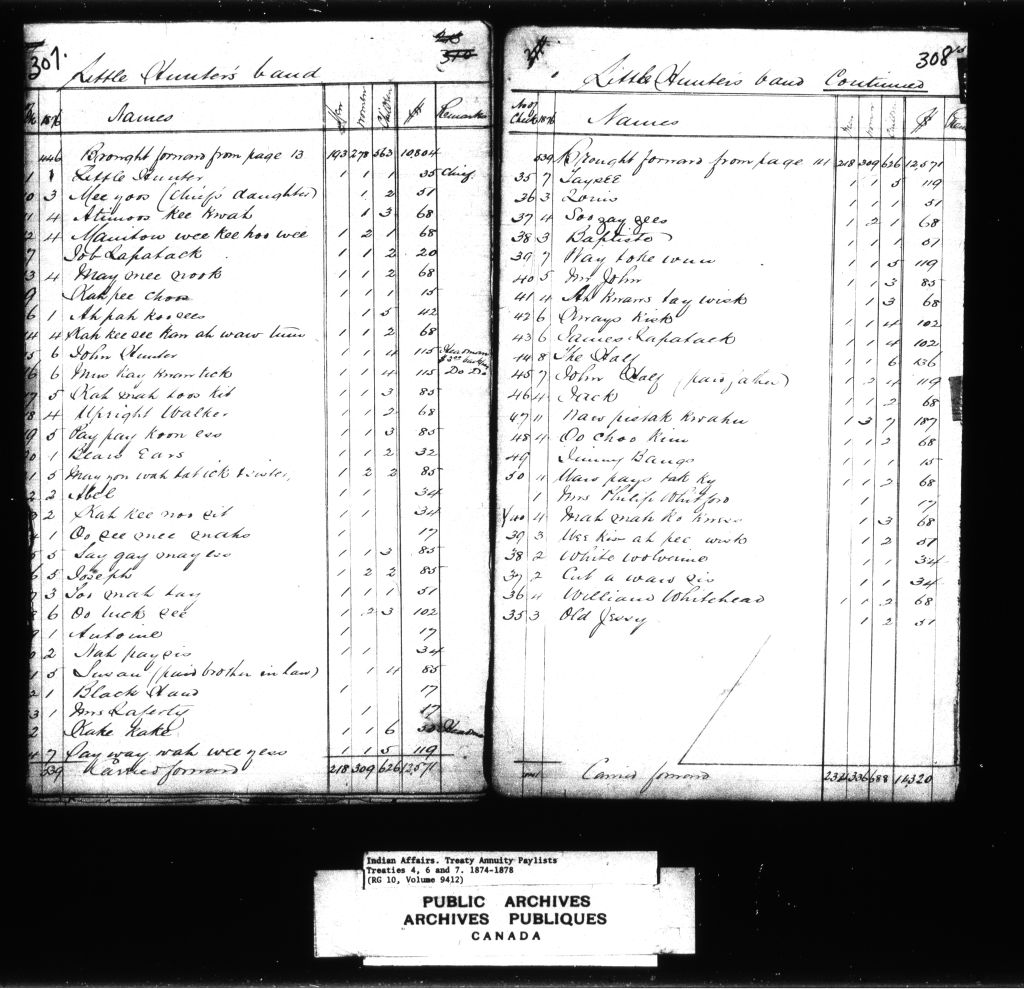
1876 treaty paylist

My family always tells the story of when the treaty was signed at Saddle Lake. They say it was at the corner where our family had property. They say the first signers were 7 brothers. They agreed to join the treaty. This is a paylist. I wonder, are these those 7 brothers? Were there sisters? What are the other stories?

History is interesting. Written or spoken, it tells the story of a time and place. It tells the story of what happens to people. We must remember to tell the stories.

Where I come from

I come from the land where trees surround me, and the sky is clear.

I come from the place where the lakes and rivers surround me.

I come from the land where my ancestors have walked before me.

I come from the place where my culture grew strong from time immemorial.

I come from the people of four directions, of medicines, of ceremony, of beauty, of loss, and of healing.

I come from the people who walked before me and for the people who will walk after me.

I come from the strength of spirit, and I continue to walk.

I come from here.

Kewaytinok

The going home snow, kewaytinok

Tell me about the going home snow, kewaytinok

The last snow before spring. One last moment to remind you to take a breath in the stillness of winter.

Tell me how the geese have returned and the birds sing. Kewaytinok

Tell me about life renewed.

Tell me about the going home snow and what it means.

Kewaytinok

A perfect day

Describe your most ideal day from begining to end.

I wake up, the sun is shining. There’s a slight breeze and I can go sit by the campfire outside. I drink tea listening to the sounds of the bush, the lake and the fire. The people I love are close by enjoying themselves and there is nothing but right now. All through the day everyone lives in the moment, the laughter and happiness is true. The day ends with a beautiful sunset, I sit by the fire listening to the night sounds drinking tea. I hear the bush, the lake, and the fire. I take a deep breath. Those I love are close by and there is nothing but this moment.

Meditation

I close my eyes and I feel the softness of the earth under my feet. My moccasins touching the soul of where my ancestors walked before me.

I breath in and listen to the quiet of the forest all around me. It’s quiet but noisy at the same time. I gear the birds and animals around me. I feel the peace and connection that my ancestors felt before me.

I open my eye and I see the beauty of this land. I see the clear water, I see the treas grown tall. I see the birds flying and the moose walking. I see the plants for healingand medicines and I know where I belong.

I feel the connection, so strong. I pray to my ancestors to ask Creator to help me and guide me. I pray that others see the beauty and blessing of our ancestors who walked this land. I pray so others may see their reflection and the beauty of the natural world.

Blessed

In the morning the sun shines and reminds me I’ve been blessed to have another day. I greet you with a morning kiss and remember, I am blessed to spend another day with you. I breath in joy, happiness and hope and go about my day.

In the evening I express gratitude. I sit and reflect on how much I love you. I’m grateful to still be here. I’m grateful that I gain a new life everyday overcoming fear and remembering that you are with me too. I am grateful for every day experiences and blessings.

Hope

Hope is powerful when you have it. So many experiences can diminish the hope that you have and it can be difficult to find it again. Being diagnosed with cancer can devastate your hope. It can be like having a candle and trying to keep it lit in a storm. You never know whats happening and you are never actually prepared for whats going to happen.

Recently I have had many people close to me diagnosed with cancer. It sometimes feels like it’s all around me and as if it’s so common. It feels like we all need hope in action. We can only do what we can to build hope in ourselves and in others.

There are so many thing to learn when you get diagnosed with cancer. It’s hard to figure it all out. There’s lots of information out there. It’s also difficult to know how accurate all that information is. Every time I hear about someone I know being diagnosed with cancer I feel my shock over again. Then I think about all the experiences they will be going through and I pray that they have a good outcome.

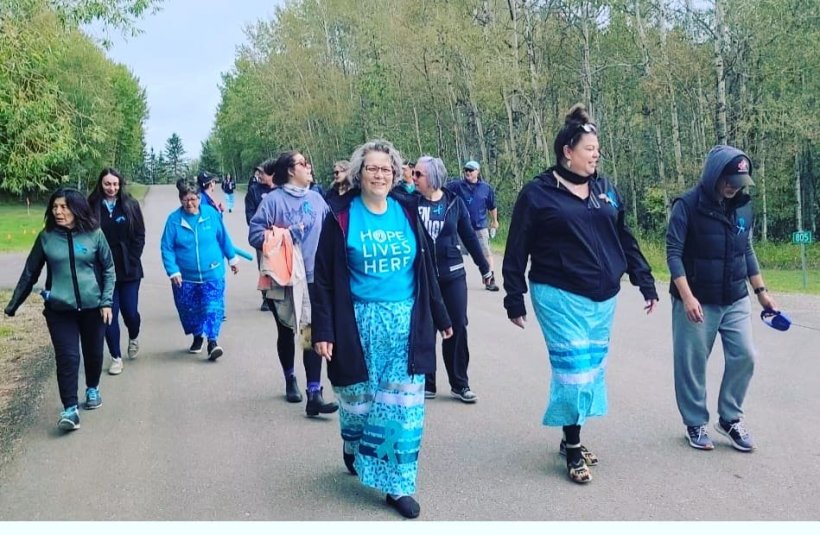
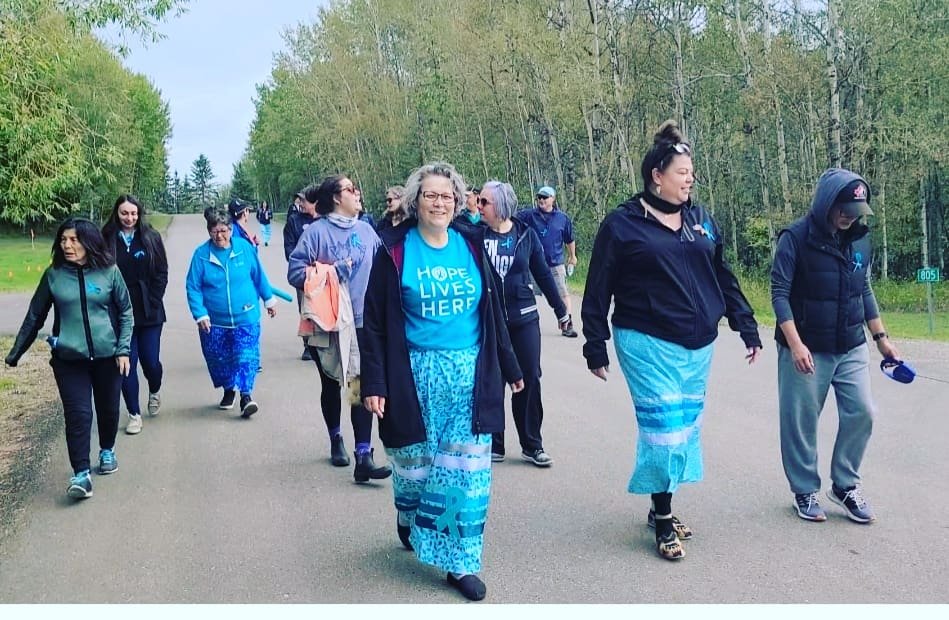
I walked in Ovarian Cancer Canada’s walk of hope. They say “Hope for change, hope for awareness and hope a cure.” This year will be my third year walking in it. I prefer to do a virtual, local walk instead of the large walk in Edmonton. I can walk with my friends and family. It makes me feel hopeful. The first year I walked I was still receiving chemotherapy. I could not walk very far. I set a goal for my second year, to walk at least 5 kms. I was able to do that. This year, I hope to walk at least the 5 kms again and perhaps further.

Walk of Hope 2021

I’m walking because I was diagnosed with stage 3B ovarian cancer on April 1, 2020. I was told I’m in remission on September 28th, 2020. It’s been an experience and a difficult journey. I thought that somehow being in remission would mean that I was better. That all the fears I struggled with would soon be gone. That’s not the reality. I have lingering affects from the chemo. I struggled to remove myself from the idea of having cancer.

I guess I’m kind of still living with cancer. I’m still receiving treatment because I have a BRAC1 gene mutation. This means that I’m at higher risk for recurrence or getting breast cancer. I’m currently taking a parp inhibitor, which to my understanding is a form of targeted therapy to prevent recurrence. Research shows its very effective.

Recently I started seeing information about living with and living beyond cancer. I guess living with cancer would be the diagnosis and the treatments. Living beyond cancer would be be after all your treatments are finished and seeing yourself as thriver not just a survivor. I plan to live beyond cancer.