Nista Mina

I wish I could speak my language. I know words but not conversations. I hear words I recognize but cannot understand. Some words come to me.

Pikiskwe – speak

Astum ota – come here

Awas – go away

Mitsoh – eat

I know words and sometimes I hear answers in my mind…

Tansi -namoyananto ekwa kiya

…but my mind says “I’m fine, how about you?”

Someone gives me something, my mind says ay-aye but I answer in English and say thank-you.

Kekeway oma? What is this?

I have lost my words. I have lost my conversations and now only in my mind I speak.

Healing

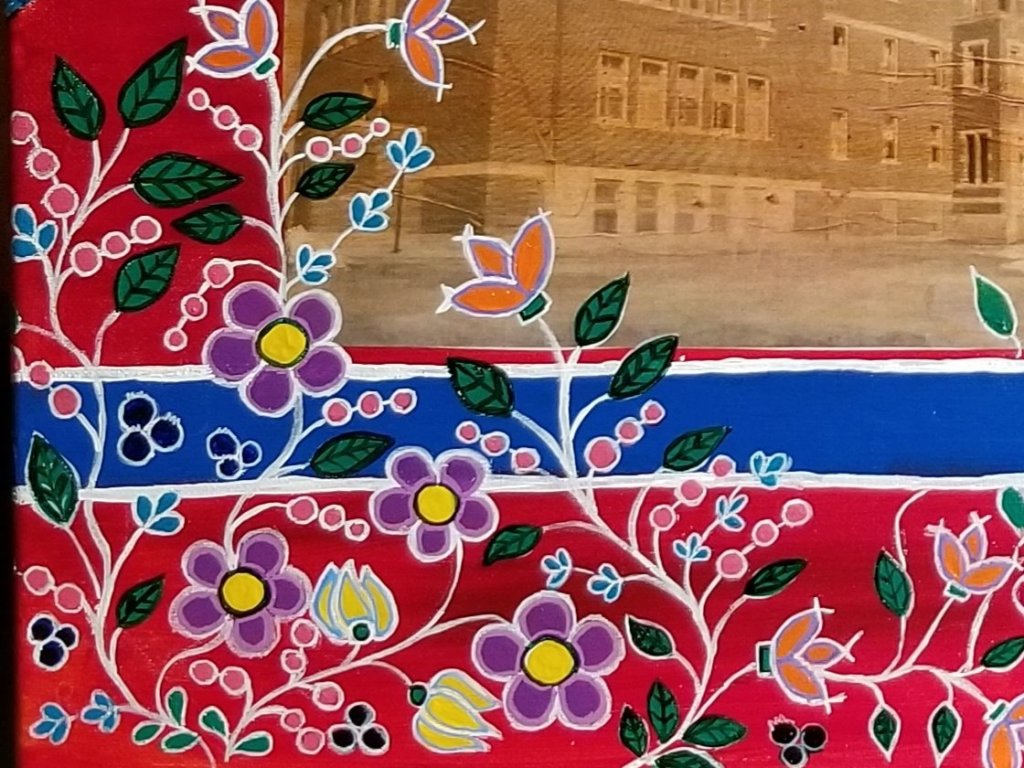
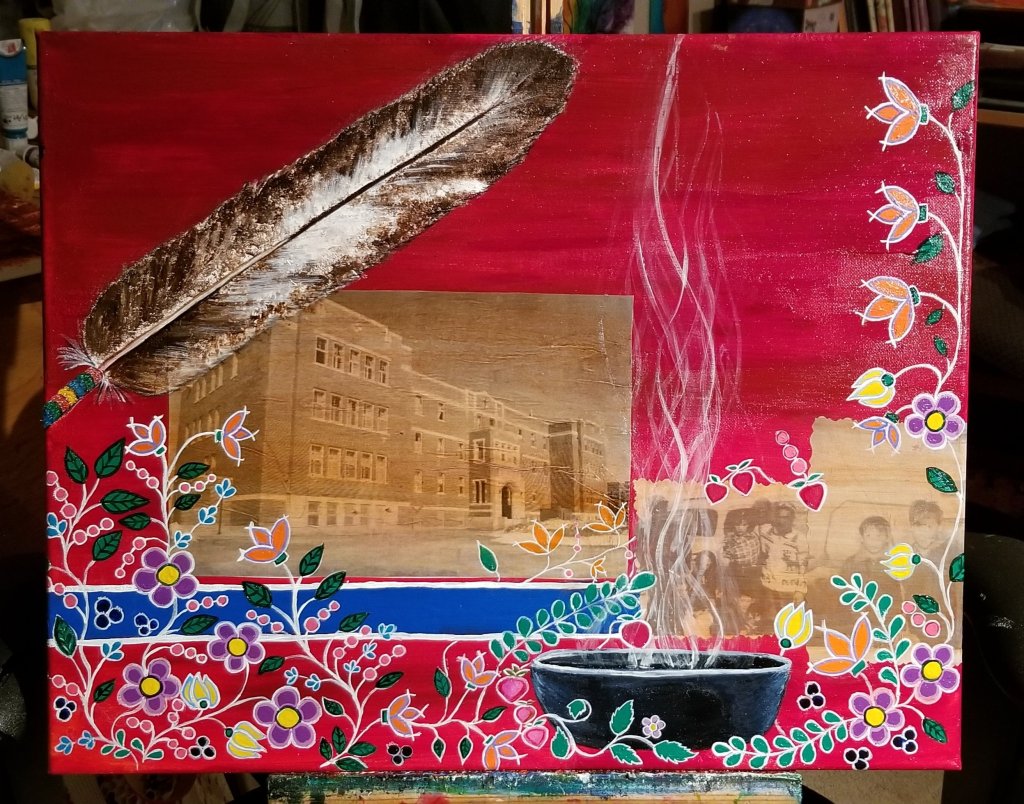
This painting represents how imposing blue quills has been on my family. There is a lot of intergenerational trauma because of it. This place caused a lot of physical, emotional and spiritual pain for my family. My dad and all his siblings attended there. My mosom (grandfather) and his siblings attended there. My Chapan, great grandfather he was fortunate enough to not have to go to residential school. However he did have the experience of losing his father at a young age, when his father was murdered during the 1885 northwest rebellion . (That’s another story)

This painting came to me one night while I was thinking about the impact that residential school had on my family.

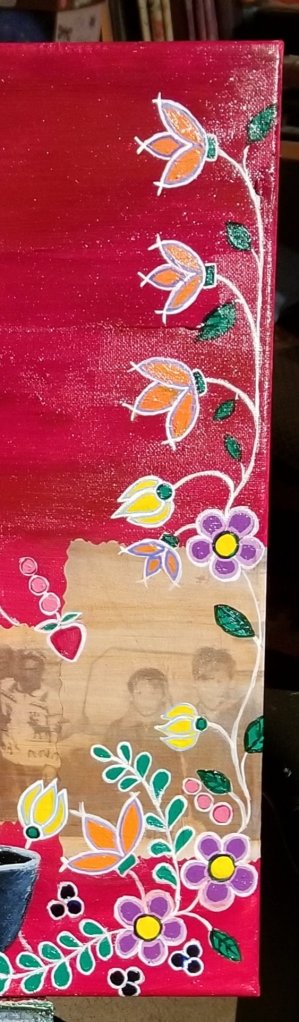
The flowers are growing over the photos and bringing healing and change. The photo of blue quills is large because it had a huge impact. It’s not covered because it will never go away.

The smudge and eagle feather are clearing away the pain through reconnection to culture.

The photos are of my dad and his siblings. Each one of the flowers represents someone in my family. The purple ones are my dad and his siblings. The yellow ones represent myself and my siblings that’s why there are 5 of them. The orange ones are my parents grandchildren. The pink dots represent all of my cousins. The berries represent change and new growth. The sage also represents growth through healing. The background colours are there because of how this painting came to me.

Cancer

I don’t like being sick or unwell. How long will I have to feel this way? The pain is great, I need tests. The fear arises.

Fear arises, questions begin. Is this more than I can handle? What’s going on within? I breathe and I pray, the pain subsides.

The pain again arises and with it the fear. What does this mean? When will I know? What’s wrong with me? Oh, that’s the anxiety.

Fear arises, the diagnosis comes….. cancer…. need I say more? Fear takes hold. What does this mean? Fear arises… death? More pain? Suffering? Fear arises

I breathe, I pray

I breathe, I pray

I feel calm, I feel peace.

I breathe, I pray, I breathe. I breathe, I feel peace. I feel more calm settle over me. I breathe, I feel that all will be okay. Assurance arises. I breath, I pray

Fear subsides, becomes diminished. Hope arises.

Hope arises

Hope arises

I continue to breathe and pray. Hope arises.

Connections with the Land

Do you carry the land or does the land carry you?
Are you immersed and infused? Do you feel it in your blood?

Do you carry the land?

Does it walk with you?

Does it heal you?

Do you feel it within you? I feel the land, it is ever present in its beauty, in its calm and even in its wild freedom. The land exists in my heart and my spirit.
Where is the land in you?

Do you carry the land or does the land carry you?

When you walk through the bush do you feel the land? Can you see its gifts, it medicines, its life?

Do you feel it carrying you, sustaining you and healing you?

Does the land carry you? Are you connected to the land? Are you part of the land? Is it part of you? Do you hear it speak and feel its heartbeat?

It speaks through the rustles of the wind in the trees and grasses. It heals through connection. It heals through plant medicine and the water. It heals through its spirit. When I walk barefoot on the land, it sustains me with its gifts. I am infused within the land. My ancestors walked here, healed here, bled here, ate here. This land gifted my ancestors with life.

The land speaks to me. In the winter it speaks in the cold and the silence. The the spring it speaks when it awakens with new life.  In summer it speaks in its beauty. In the fall the land speaks, with its gifts, relaxation and promise of restoration.

It carries me, it sustains me, it heals me.

I feel the land, it flows within me, I carry the land with me.

I carry the land and the land carries me.
What about you?

Do you carry the land or does the land carry you?

Returns

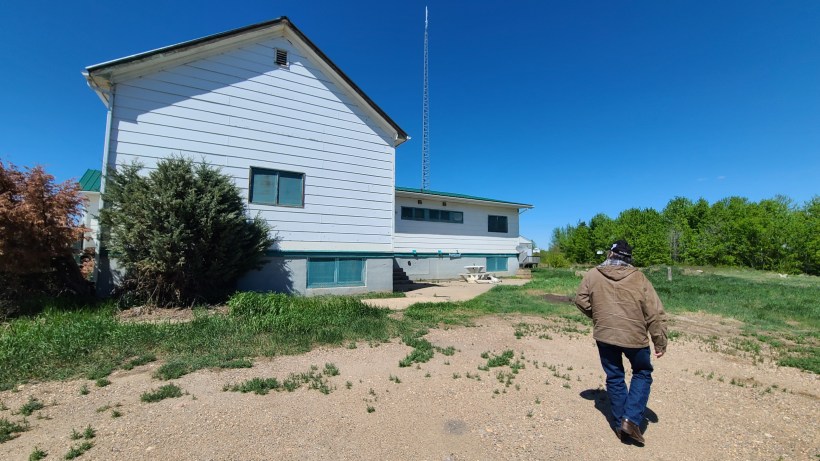
I walked into the school my father once attended never knowing he had been there before. I saw the Nehiyaw culture every where I looked but I felt something there that was unexpected. I felt dread and emotion that I did not understand and I thought it was because this was a residential school.

I thought that because I knew this had been hallways and dorms

where children were brought,

where they did not feel safe,

where bad things had happened,

that this was the reason for my fear.

I walked down the hall to where the library now stood, where once a chapel had been. I felt dread and disconnected from the reality of where I stood. I left and felt glad to be shedding the feeling of this place. Perhaps it was all in my head.

I returned home and told my father where I had been and where I had stood. He asked me why would I ever go there. I said I was there to learn about its history and its place now, as it tries to return culture to the people it stole from. I said “you should come there with me some time. There’s culture and language everywhere.” He looked at me and in a shaky voice half shouted “I will never go back to that fucking place.” I was shocked and shook to my core. I did not even think about my dad being in school there.

I remembered then the stories he told, brief though they were, of the nuns and how mean they were in school. I paused and I questioned, “I thought you didn’t go to school there.” He said quietly “It was only two weeks.” I did not say anything else but I thought his reaction was too strong for only two weeks. I didn’t ask again.

I went back there…to the school of two weeks…wondering how this place connected to me and my history. How was it connected to the pain my family experienced and as if the school could read my thoughts, I could not find a way into the building. None of the doors would open although there were clearly people inside. Someone came out and I caught the door and went in. The same feeling of dread surrounding me as I walked down the hall. I went to meet the person I had come to see, unfortunately, she had been called away for a family emergency. I left the building and immediately felt better.

Twice more I came to the building and was shut out. Twice more I left without answers. Then I went to a ceremony being held on the school grounds and I prayed that my dad would feel safe enough to tell me something; I shed tears for him.

A few days later my parents called. They said “can you please come here, we need you to look at some papers.” I went to their home and my dad handed me a brown envelope; he turned and walked away. I sat down at their kitchen table and asked my mum what it was. She said its about the time your dad spent at residential school. I said oh. I felt emotionally flat. I said I thought it was only 2 weeks. My mum said “no its longer and they only know he was there because other people identified him”. The school otherwise had no real records of him.” I felt anger burn in the pit of my stomach but I also felt sick. I asked “how old was he”….my mum said “just read the papers.” So I did.

It identified his timeline as at least two years and two months. I felt sick. I asked “What does this mean” I felt bewildered and confused. My dad came and sat down next to me. He asked “what should I do?” “They want me to go and make a statement.” I asked him “Do you want to?” He was unsure, unsure if he should open old wounds, unsure if he should talk about it, unsure if it was safe to do so. We smudged and prayed and I went home with even more questions.

I knew my uncles and aunties had gone to school there, they had said. My Auntie told me that they didn’t learn to read or write, that they had learned how to pray and to know that they weren’t good enough. She said my uncles learned how to work farm jobs. My Kokom had told me that they had been treated worse than dogs and that everything was rationed, they had to make do. Yet I couldn’t figure out why I didn’t think my dad had gone to school there. I guess because he never really said anything about it and because he had a substance use disorder, it wasn’t something that every crossed my mind. Now I had more unanswered questions. I also knew why my dad would walk away when anyone talked about going to school.

My dad called me a couple of days later and said “I’m going to do it but only if you and your brother will come with me and please ask your friend Wanda to come with us.” I said ok. nothing more, no questions just ok.

The day came for the independent hearing and I was nervous. We smudged and prayed. I gave my dad the things my children had given to me for Mosom; rocks for strength and a letter telling him that they knew he would be ok.

I listened to my dad’s story, the terrible things that had happened to him, the fear he felt, the pain he experienced and how it impacted his life. He he had suffered from depression, anger and suicidal thoughts for years. How he couldn’t be the father that he wanted to be but how he wanted to be a better Mosom. He showed them the gifts the kids had sent for him. WE were all crying. I understood my sense of dread and fear connected to that place.

I heard his story and understood my father on a different level. I saw him as a child, who had survived a horrible experience. How his dependence on alcohol for so long had kept him from thinking about those experiences and how his years of sobriety had helped him tell his truth.

I continued to go to that school to participate in the ceremonies every year that are held there. I always asked him if he would come. He always said no until about 5 years ago when he said maybe. Then he came with me. He was nervous and scared. As we drove closer he talked about the evil of the place and how much he didn’t want to be there. I asked him “do you want me to turn around?” He said no. We arrived.

He had returned. My nephew, the youngest grandchild at the time, was with us. He took his Mosom’s hand and we walked towards the building. My dad walked up to the building, took a breath and walked in. He had returned to his place of terror. He could only get through the door but that was more than I had expected. I felt proud of him. My mum looked at me as my dad said I need to leave the building and my nephew walked out with him. They walked around the grounds and we gave them time. Then we left. My dad seemed somehow lighter as we left.

The return was powerful, as was the ability to choose to leave. He had gained some freedom and I told him he didn’t ever have to go back there unless he chose to again. My parents, my nephew and I have gone back only once since then to attend a ceremony on the grounds but never to the building. I doubt if he will ever return to the building now that he has freely walked away from it.
We have an Elder at our school

I work at school that is not on a Metis Settlement or in a First Nations community. It has a majority of students that would identify, using school terms as FNMI, or First Nations, Metis, and Inuit. Our school is also very diverse with many cultures that are also strong in their beliefs and practices. As an Indigenous woman who went through the local school system it was important for me to support all students and especially “our” students. After having a student move from a remote Cree speaking community and hearing him preferring to speak Cree but not having people, including myself that really understood a lot of the language, I reached out to an Elder and asked her if she would be willing to come and just spend some time talking to him in school. Being able to build that connection for him. It was amazing to see how much his face lit up every time they would talk. Soon other students asked me how come he was the only one who was able to do that. I decided to go and speak to the principal of the school. This eventually led to us having a full time elder in residence at our school. I was asked by someone why it mattered and I answered it just does, which isn’t really an answer. So I had to ask myself “why is having an elder in residence good for the mental health of our students?” I thought a lot about it and this is the best way I could explain it.

I am an Indigenous woman and as such I explain things through story and the context of things relationally. This is how I will explain to you why having an Elder is good for the mental health of our students. As an Indigenous person it is important to me that we have cultural connections at our school. When I was a student going through the local school system there wasn’t always a good and accurate reflection of Indigenous people in our schools; as time went on that changed slightly.

I remember how in grade 4 we were offered a language choice but neither Cree nor Michif were offered at that time. I would have really liked to have had that exposure to my language. My parents did not speak Cree at our home because my mother could not speak it because she is English. My father is fluent in Cree as it was his first language. For myself I would hear it at church as the sermon was half in English and half in Cree. I would hear it when visiting family and friends. I would hear it when my dad would see people he knew up town so I was surround by it but did not speak it. I guess you could say my life was infused with it but not in a way that helped me to speak it.

In grade 9 we were offered Cree language but it was not taught by a Cree speaker. Rather it was taught by the French teacher and while she was nice, when we students would bring up cultural experiences she could not relate to us and we would often try to explain it to her. She would then tell us that we needed to move on and was not able to put those experiences we were talking about into a context. She would put on the tape so we could listen to the lesson and we would move on. It felt like our language and experiences weren’t important.

Throughout the grades we learned about Indigenous people as though we were dead, extinct and savage. We learned that people were crazy and bad; we learned that we were put down in the rebellions that were simply something minor and not anything big in the Canadian context; while my family taught me something else. My family taught me that one of my Mosom’s was killed in the great war and that his body was treated badly and we were not able to bring him back home. I was told we were not allowed to do anything and we were not allowed to ask questions or talk about our culture. If we participated in cultural practices we learned we were not allowed to let anyone know in case we would get in trouble. I heard from my family that schools were bad and that they hated us because we were “Indian”; that schools took away our language and our culture and were a place that mistreated us. In fact I heard stories from my cousins about how terrible teachers could be.

What I learned without knowing it was that this great war my family talked about, the one where we lost family, where people starved and died was not world war 1 but the 1885 north west rebellion. It was a war of survival and it was not actually a rebellion as much as it was about sovereignty. I was learning from my family a version of Canadian history. I learned that we had a way of life before colonization and that it was good. We had our own political governance structures, our own independence, our own revenue and that all these things allowed us to be who we were. I learned that when the Europeans came we lost that. I learned that there were treaties designed to allow the new people to share the land with us and I learned that did not happen. We lost a lot of our way of life through legislation that was imposed on us and through schools that were created to erase from our memories who we are. All these things have created legacies of both historical trauma and Intergenerational trauma.

So why am I telling you this, my children went through this school system trying to also connect with their identity, their culture and their language. They had a few opportunities, through a Cree language program, native arts classes and the opportunities given to them in high school. They had class debates where they were told by classmates that it was a long time ago and they should just get over it. My son asked me why his grade 7 social studies book called us savages and when I asked him what he learned he said that we are not very well educated and that our culture is mostly gone. This did not contribute very well to their positive identity. As my children are now adults one of the things that have discussed is the power of having someone who reflects who you are in the school.

The Elder at the school now was in the school when I was in high school. She did not have this same role and was not allowed the same conversations that she has now. We often talked and while I didn’t tell her anything personal it was really nice to have her there. She was around at the high school when my children were there. My kids knew that she would understand and that she would be a support if she could be. If she was allowed. These were not her roles at those times. We connected it because of cultural connections. She understood when I said I’m going to another funeral and didn’t say “how many funerals can you go to” making it seem like I was lying. She simply said I understand, that must be hard. She didn’t ask questions and didn’t say anything to my teachers.

In high school we also had another Metis lady who was good to talk to and when my cousin was murdered I tried talking to her about it but she wasn’t allowed to talk to me because again that was not her role. She told me that she was sorry but that she would get into trouble if she did talk to me about it. I could not talk to anyone else about it as there was nobody there who would understand. The two ladies that could have understood were limited by expectations surrounding their job.

Having an Elder in the school would have helped me. Having an Elder in the school would have helped my children because there are somethings that you do not have to explain why its happening they simply know. They simply nod and understand. Having that person who understands; that you are going to a wake, that you are having a rites of passage ceremony, that this is the 5th grandparent you have lost, is important. It allows you to be connected in a positive and healthy way, it creates comfort and safety and allows someone to explain the cultural aspect to your teacher when no one else can so that you do not have to. Indigenous people need those relationships, those connections and the understanding that it brings.

Having an Elder at the school allows staff to Indigenize the content and bring the curriculum into context through the oral histories and traditional teachings. It build a student’s pride in themselves, their language and cultural. It teaches other students that stereotypes that exist are not truths and it allows those students to connect with a culture that they might not otherwise be exposed to. It gives pride to parents and the community as a whole and it allows us to see that even though schools were a place that tried to make us forget who we were, that this school, our school is trying to help heal that wound. It helps not only the school, the students, the families but it helps everyone and that is why it is good for students mental health.

Lest we forget

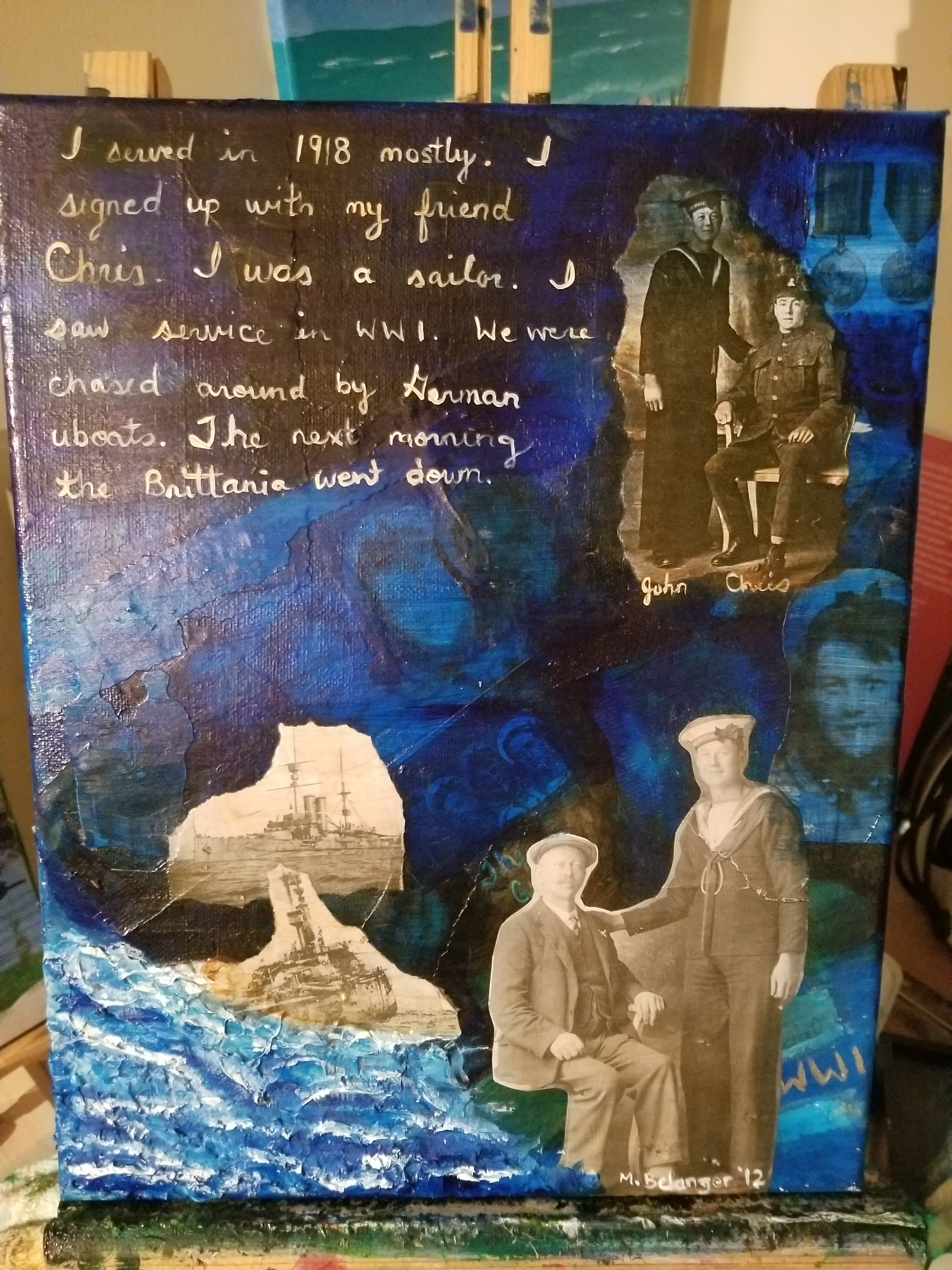
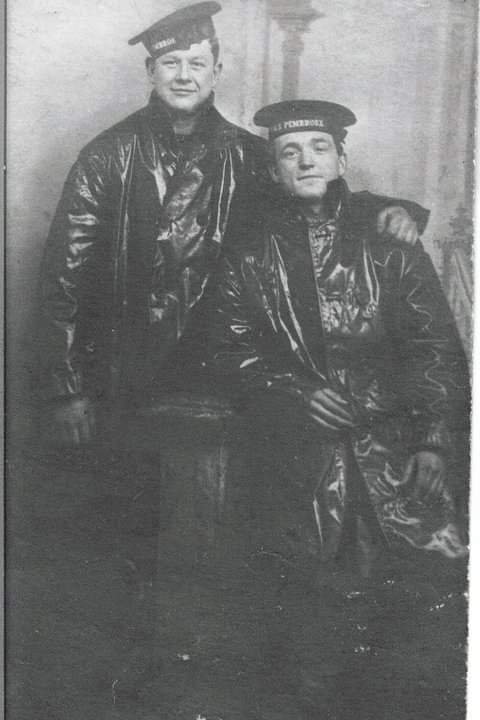
My grandad was born in 1899 and was only a young man during World War 1. He served in the merchant marines. He did not serve long.

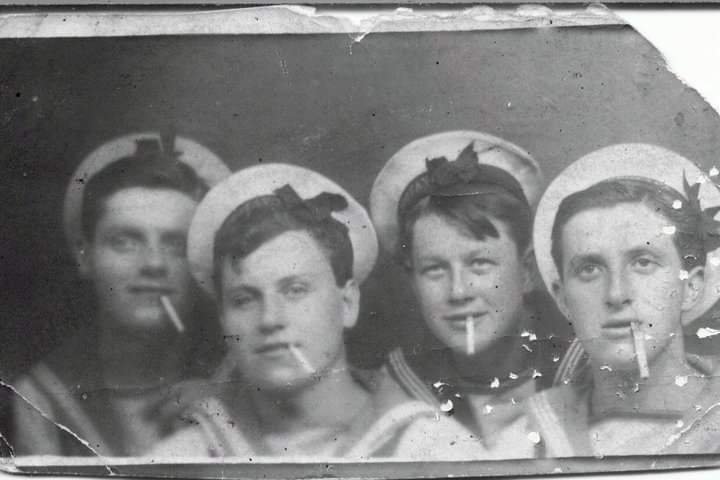
I created this a few years ago. It’s of my granddad and his service in WW1. He didn’t like to talk much about it, he only said he didn’t serve as long as others, mostly in 1918. He said where he was and that the Britannia sank. He signed up with his friend Chris.

My favorite picture of him at that time is this one with his friends.

They were all so young. We should always remember that it was young men who went to war.

He had a young family in WW2. He still wanted to support the effort so he fought fires in London during the bombing. He also didn’t like to talk about that. He said lots of people were injured and hurt.

I asked my mum about what she remembered about that time in her childhood. My mum remembers being carried down the stairs as bombs fell and the house shook. She said a bomb landed on a house down the street from them. She said that they were evacuated from London for their safety and was probably about 5. My mum remembers that they didn’t stay there long because a boy was murdered so her mother decided that they would be safer with her dad and they returned to London.

My mum remembers going to school and hearing the air raid sirens going. She remembers the gas masks they had to wear and running across the field holding hands with other primary school students and the songs they sung until the all clear was announced. She does not like those songs. The war gave her many scary memories.

I am grateful for those who served. I am forever grateful that neither myself nor my children ever had to experience that. I will remember and want my children to always remember.

Forgotten histories

I’ve always been interested in history. I think it’s a family thing, my parents always told stories about historic events. There was a day my late uncle Archie brought me a bunch of old papers he found at the dump. He asked me to look through them and see what I could find. They were photocopies of black files from the Saddle Lake agency. These were a history that validated a lot of the stories.  These records were of the interactions between the Canadian governments Indian Agent and the department of Indian affairs. They told a story of what happened in the community but are very one sided. These files are available through the Canadian archives. 

This selection of papers my uncle gave me started me to looking for more information as i wondered if there was anything directly related to my family.  When I was looking for more records online I somehow became distracted by old photos. I began looking at these old black and white photos online and became increasingly annoyed by what I saw.

What bothered me was that the photographers took the time to take photos but not the time to know whose photo they took. Sometimes if there was a European person in the picture, his name was included. Most often the pictures of the indigenous people said “unknown Indian”, sometimes “anonymous indian” or sometimes they named the tribe from where the person originated. What bothered me was that these were someone’s family members. They lived, they were loved and not forgotten when they died.

It bothered me because my great great grandparents could have been in those photos and I would never have known. It bothered me because the history I had been told about my dads side of the family is a sad tragic tale. It is inherently one of loss, loss of land, loss of culture, loss of freedom, loss of language, and loss of life.

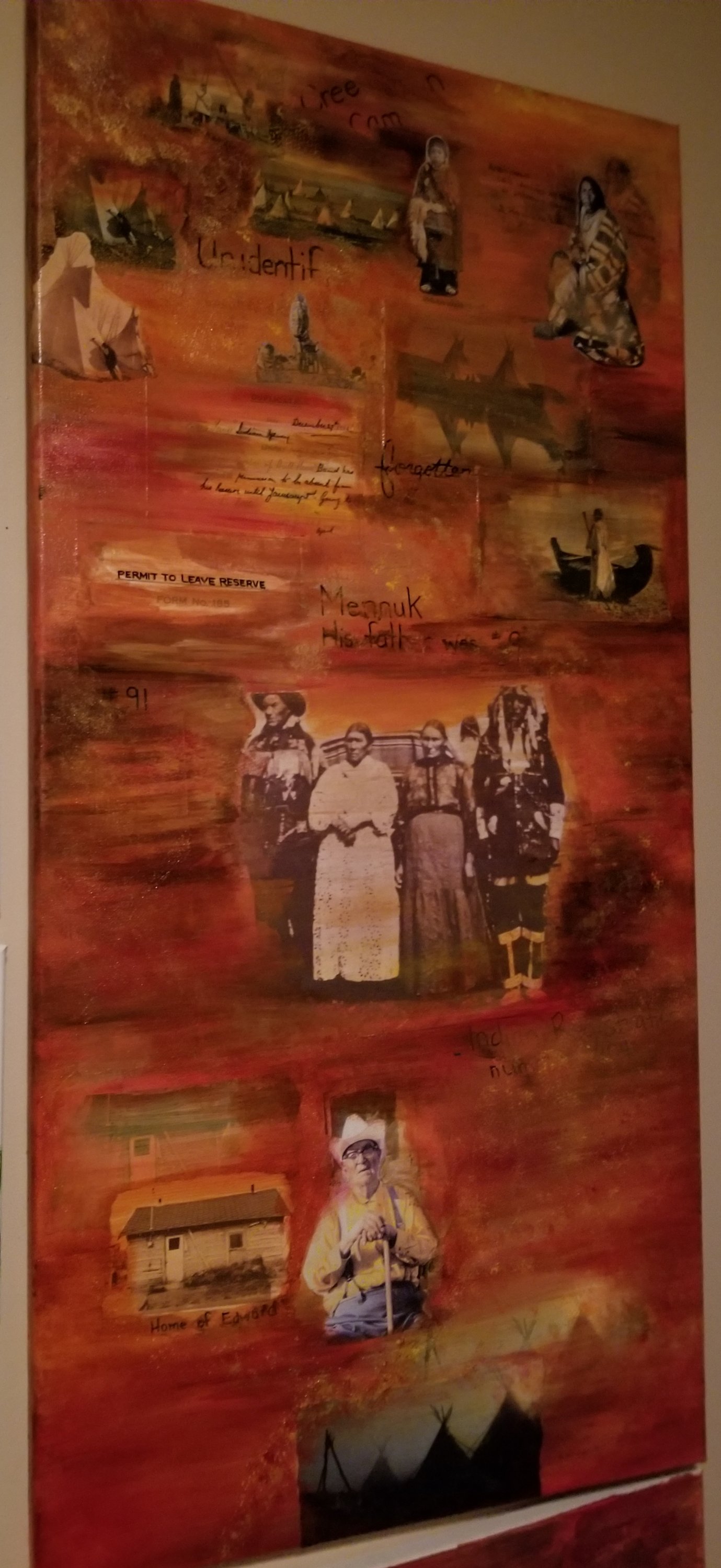
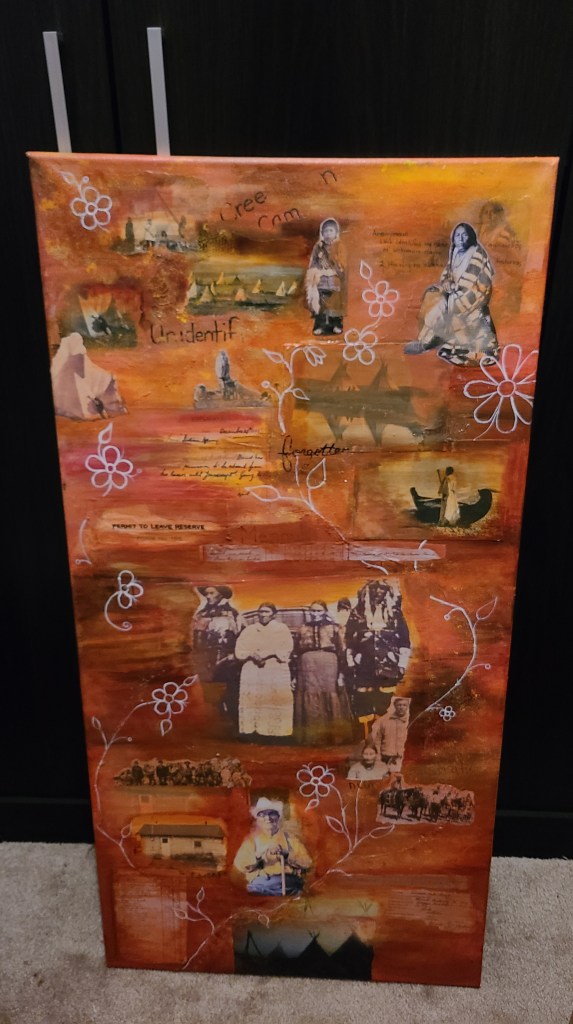
My mosom Mumstahp’s father Memnook (sometimes spelled Maymenook) was killed in the great war. This isn’t world war 1, this is the 1885 northwest rebellion or resistance. Our family called it a great war. The story of his death is another tale. His father was named Witokan. We are told that he passed before treaty 6 was signed. We are told that he and his 6 brothers were the first to sign on the treaty at Saddle Lake. It was agreed to by them and ceremony was held at the corner where our family has their land. 

After the treaty was signed all the family members received registration numbers, their names were included on the new band list. Maymenook was number 9 on the Saddle Lake band list. He was killed in May of 1885. His story was forgotten, not part of the Canadian history I learned in school. My mosom Mumstahp was given number 91 when he got married in 1904. 

After the war the government, which had already broken many of their treaty promises created a list of “disloyal Indians”. 

They needed permission from the Indian agent to leave the reserve, they needed permission to sell their produce. It was illegal for them to buy stamps, to hire a lawyer, to vote, and to gather, to practice culture and traditional beliefs. The government was trying to erase everything about who they were. 

This painting is my way of illustrating that we are always connected to the past. We are connected by stories and shared history. Mosom Mumstahp was at least 106 years old when he passed away. I was 6.

This painting travels through history to connect with him with both the past and the present and it ends with the photo of tipi’s. The connection is illustrated through the flowers that wind through the painting. The tipi’s are a picture I took one morning when I was at the Saddle Lake cultural camp.

To me it shows resilience, that though much had been oppressed, we survived inspite of those who tried to erase Nehiyawak/Cree culture. It shows that those in the past are still connected to who we are today.

This painting represents hope. That although society saw a group of people and wasn’t interested in them; that society would rather forget about them, we are still here. It shows that the strength of our ancestors still resides in us.

I recently added to this painting, as I’ve learned more of my family history. I wanted to include elements that occurred to Mosom Mamstahp during his lifetime. I included a paylist, photos from life events and images on their numbers on the paylist. 

We are still connected to what our ancestors experienced.  It is part of who we are. The photos of those unnamed group of Cree people are still who we come from. 


Dreaming of spirits – the story of this painting

If you are wondering what Sakaw Iskwew means it means bush woman and is the name of my great grandmother. There are reasons and stories about why I named my art pages after her. I’ve also been asked about the stories of my paintings so I decided to start writing them. I was asked if my art is native inspired, it’s not. It is native art, there is a difference. My art is inspired by my Cree culture, my experiences and often my dreams.

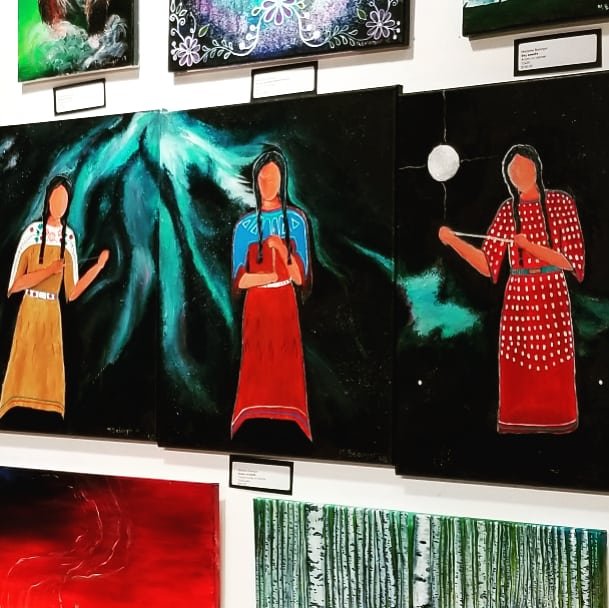
This triptych is of a dream I had several years ago. I dreamed of 3 women, these are grandmother spirits. They were old but didn’t look old. Each of these women had a different gift that to share. after I had the dream I spoke to an Elder and asked if it was alright if I painted these women. She told me that I could paint it as long as I didn’t paint all the details. So I tried paint a vivid experience with less details. That is not an easy thing to do.

I painted the dresses and some of the spiritual landscape and I also decided to hint at the fact that they were in ceremony and passing the pipe.

I was also asked about why they didn’t have faces. This is because of a conversation I had with one of my kokoms. I was talking to her about beadwork, traditional dolls and paintings. She said to me to consider how in the old days people didn’t include the face because of their teachings. We talked about how people have a spirit and the only person who can create a spirit is Creator. So now I try not to paint faces on people who haven’t existed here. Sometimes I still paint faces if it feels right but most of the time I don’t paint them anymore.

If you want to check out my other paintings you can check out my Facebook page.

https://www.facebook.com/sakawiskwewart/

Reflection

Have you ever looked in the mirror and then realized that you look like someone. That one person in your family that you didn’t expect to look like?

I had that happen to me the other day. I was camping. As usual when I camp I braided my hair. As I stood looking at my reflection I suddenly saw one of my Kokoms looking back at me. I was so shocked that I stopped braiding my hair and really looked at myself. I saw Kokom Agnes looking at me. I’m not sure what exactly it was, maybe it was the curly hair sticking out of my braids, maybe it was the glasses, whatever it was I was surprised.

Kokom Agnes was my grandmother’s aunt, her husband was my grandfathers brother. As a kid I remember visiting them and eating cookies and drinking tea. When Mosom Morris passed we didn’t really go visit anymore.

She has been passed for at least 25 years now maybe even longer. I hadn’t really thought of how she looked for years. In fact I hadn’t really thought about how she looked until that moment. As I looked at myself I was reminded of how her hair looked and how it was frizzy even though it was braided. I’m still not sure what it was in that moment but I did see our connection in that moment. I was grateful and surprised all at the same time.