Family history

I’ve been told about my family’s history and told I should remember it, so I do. This is how we start.

In the beginning… we were here, we were here from time immemorial, from before colonization, before Canada and before the treaties. We come from people who were autonomous and independent. We had our own creation story, our own history, our own math and science. We hand our own medicines and medical practices. We educated ourselves. We took care of ourselves. We knew our history, our laws, and practiced our culture freely.  As time continued we experienced changes and made contact with new cultures and new ideas. We considered ourselves equal to these people. They did not consider us their equal and sought to exploit us.

We found the changes that were occurring were faster than we expected, and we were asked to enter into agreements to share the land.  So we entered into ceremony, prayed, and asked for guidance towards this end. In 1876, we were guided and therefore agreed to enter into a sacred treaty. This was done to benefit the people. We thought that because we we had entered into an agreement through Sacred Ceremony, that they would honour the sacredness and truth of the treaty. We thought they would follow through on their word to help us.

We did not agree to give up our independence, nor did we agree to give up who we were, our laws, our traditions, and our ways of being. We did not think they would continue to steal from us, not only taking all the land we agreed to share but also eventually our children. We did not think we would lose our autonomy, nor did we think we would be forced to give up our culture, language, and traditions to fit into another nations society. Their society.

So our family history is always told with the prefaced context of what happens next. This is the story of our family and its journey to now. It’s about how history has impacted us as best as I can tell. It’s about our relatives and who we come from. It’s the story of us.
“We don’t say goodbye”

Describe the last difficult “goodbye” you said.

I’ve always been told by my elders that we don’t say goodbye. We say see you later or we’ll see you again or see you soon. My understanding of this is because goodbye is final. Goodbye is what you say when you will no longer see a person.

There have been many times when it felt like I was never going to see a person or speak to them again. The last truly difficult goodbye was the last time I spoke to my cousin on the phone. He was in the hospital with covid. He was immunocompromised as he’d had a double lung transplant several years before.

When he got his new lungs, he was so grateful. He told me, “These lungs belonged to a young man, I’m going to live a life because of his gift.” He did. He and his girlfriend got married. They went places and most of all he went fishing. He loved fishing.

When he got sick with covid, he couldn’t have lots of visitors. He had his wife and my dad on his list. We talked a lot. He would send me photos of the treatments they gave him. Then he wasn’t getting better. The last time we talked on the phone when we were close to saying goodbye, I said “well we’d better say goodbye soon.” I didn’t even think about what I had just said to him, but he did. He said, “Ho, remember we don’t ever say goodbye. Don’t ever say goodbye. I’ll see you again.” “Yes, I forgot, ” was my reply. We talked a lot longer, and I told him my husband was taking me to Jasper for my 50th birthday and that I wasn’t sure what the cell service was going to be like. I told him I’d talk to him when I got back.

On my birthday my parents called me, they said that his wife had called and asked them to come to the city to be with them. My cousin passed away the next day. When my mum called me to tell me he had died, all I could think of was, “we don’t say goodbye, we never say goodbye, I’ll see you again.” On our hike that day, I walked to a beautiful spot, took a photo, put some tobacco, and prayed for him. When we buried him, it was hard. That was the last difficult goodbye.

History

I am a survivor – yes, a survivor of history, a survivor of residential school. Though I did not attend, I was never the less there. I survived it. I was there, I was there before I was born.

This is not ancient history, a story, it is real and it is my history.

I survived the hurt, the anger, the fear – the tears – the sorrow – the betrayal of trust. A child’s trust, the loss of that innocence.

I survived. I survived the wicked behaviour called “discipline”. I survived the shame, humiliation, self-hatred and the loss. “You are nothing, you dirty Indian”

I survived the losses.
The loss of language, culture, history and pride.
THE LOSS, THE LOSS, THE LOSS!!!
The loss of safety, security, and the loss of family, for generations.

How can this be? How did I survive, you ask???

I did, I survived….
I am a survivor of my fathers pain and my Mosom’s shame. I am a survivor of the betrayal, two generations of “education”.

Yes, I did not go to residential school but my family did. My family was sentenced there. The terms were carried out over several generations, sentencing that carried a legacy, holding us, stealing life from us, slowing us, paining us.

It taught my family not just reading and writing. It taught shame, self-hatred and created the need to forget.
It taught my Mosom Self-loathing, it raised him up in foreign ways. It told him “remember your place” “say your prayers, you’ll go to hell” and it created shame, shame, shame.
It taught my father to forget. The only direction to turn – ANYTHING to help you forget. But it was not gone. It never leaves, it was ALWAYS there. It is always there.

It is there in the fear and the tears and the sorrow. It is there in the behaviours, the promises and the inter-generational sorrow. The trauma that still holds.

Yet I have survived. I walked into that building, feeling the fear, struggling to make myself go inside. I cried. I cried for those children who never left, whether that was through experience or death. I cried so that I could be free. I survived.

I will not let the former shame claim another generation. “I will be okay, we are okay” “TAPWE” this generation grows strong because I survived. My father and my Mosom lived and I am here in spite of the fear. I am a survivor of residential schools.

Kewaytinok

The going home snow, kewaytinok

Tell me about the going home snow, kewaytinok

The last snow before spring. One last moment to remind you to take a breath in the stillness of winter.

Tell me how the geese have returned and the birds sing. Kewaytinok

Tell me about life renewed.

Tell me about the going home snow and what it means.

Kewaytinok

We remember

We remember when we used to walk free to gather medicines, hunt for food, have our ceremonies and raise our families.

We remember.

We remember when we were asked to share the places where we walked free as a nation, where our ancestors walked before.

We remember.

We remember when freedom was taken, and we were confined.

We remember.

We remember when our children were taken and we had to have permission to visit them.

We remember.

We remember when after we were confined we needed permission to pick berries, gather medicines, hunt for food and practice traditions.

We remember.

We remember these things, we know how it impacts us. We remember. Now it’s time you learn our history, our losses and acknowledge your gain. We remember, you should too.

We remember.

Etikwe, I suppose

Etikwe, I suppose. I’m not sure why this word popped into my mind, I suppose there are lots of reasons for it.

I think about how many different times I’ve heard this word in my life. Etikwe, I suppose it’s a lot.

Etikwe, it means I suppose or maybe just suppose. Awina etikwe, I don’t know who or maybe I wonder who depending on the context. I suppose I should talk pîskiskwêw to my dad about it.

I suppose I’m supposed to use it more. I guess I need to use the words in Cree as they pop into my mind.

Etikwe it is to remind me that there are words that I know and that I need to learn more.

So that I can pê-pîkiskwêw
Ekosi, that’s all my thoughts for now, etikwe

Truth and Reconciliation

Generational Healing

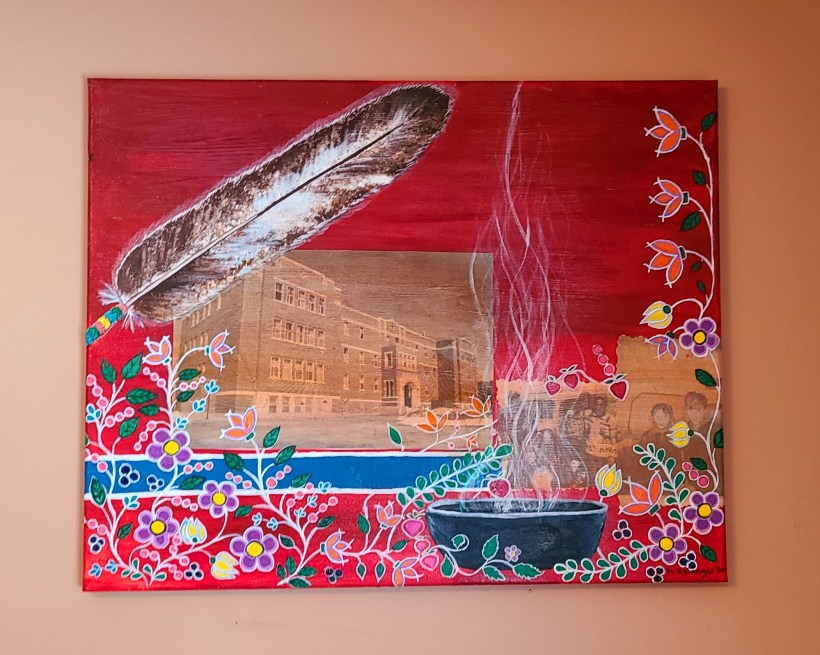
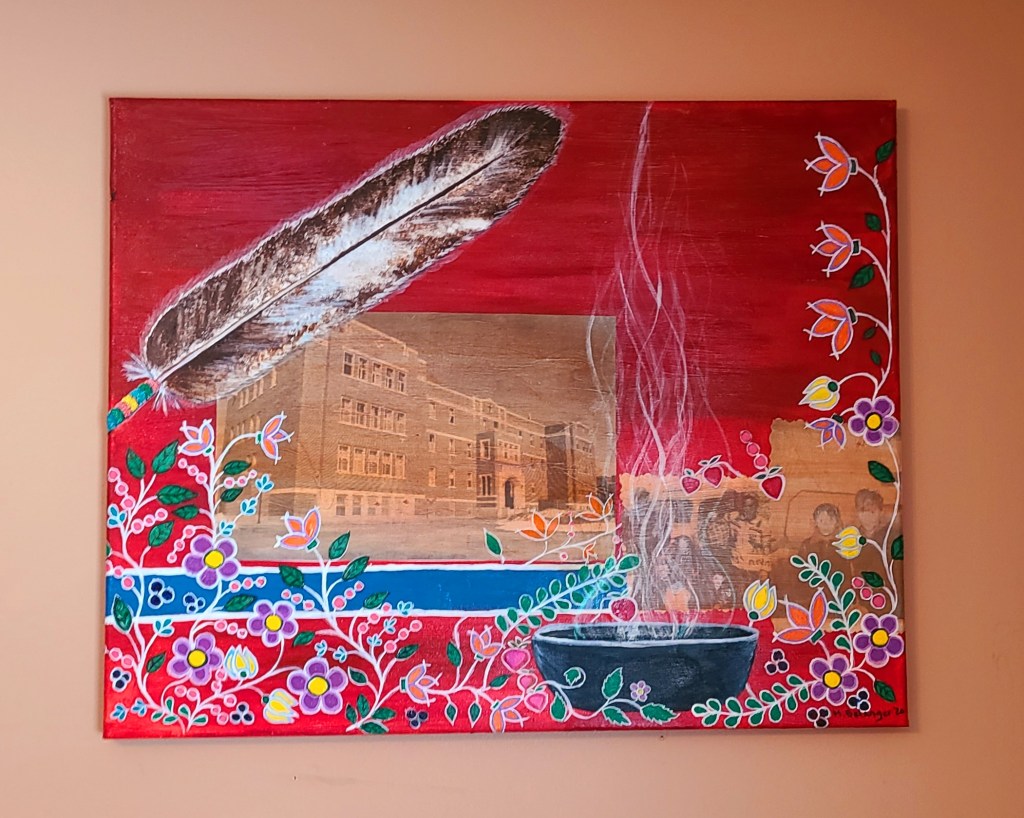
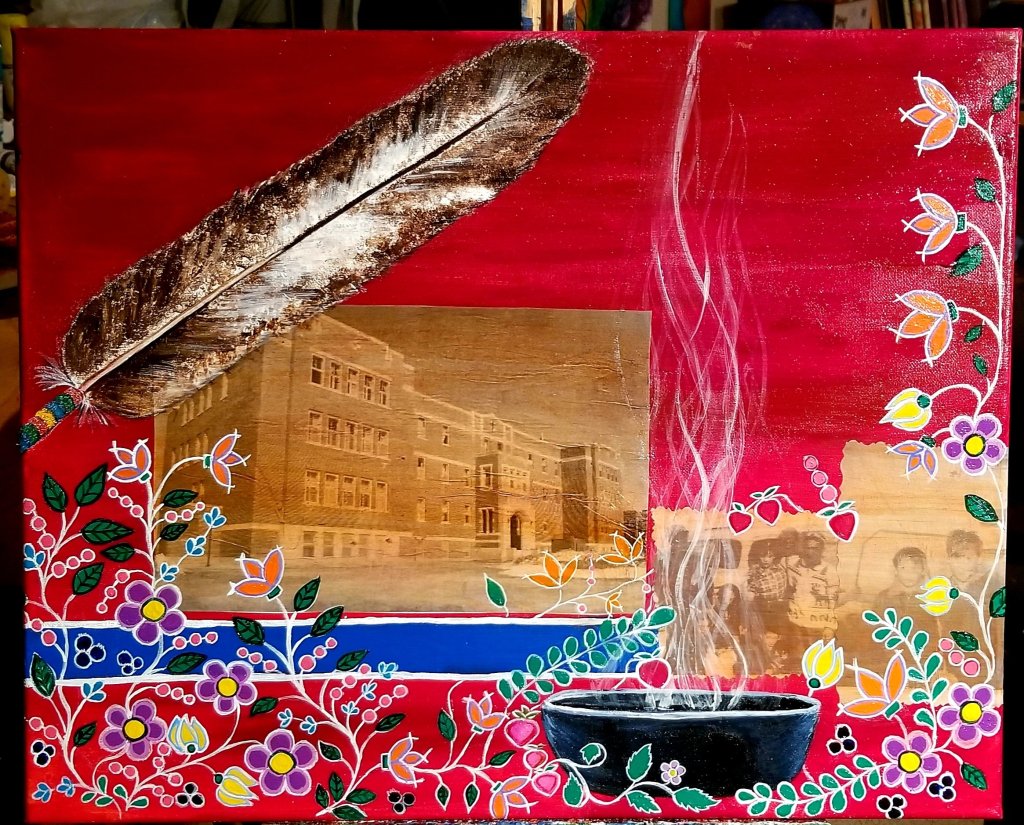
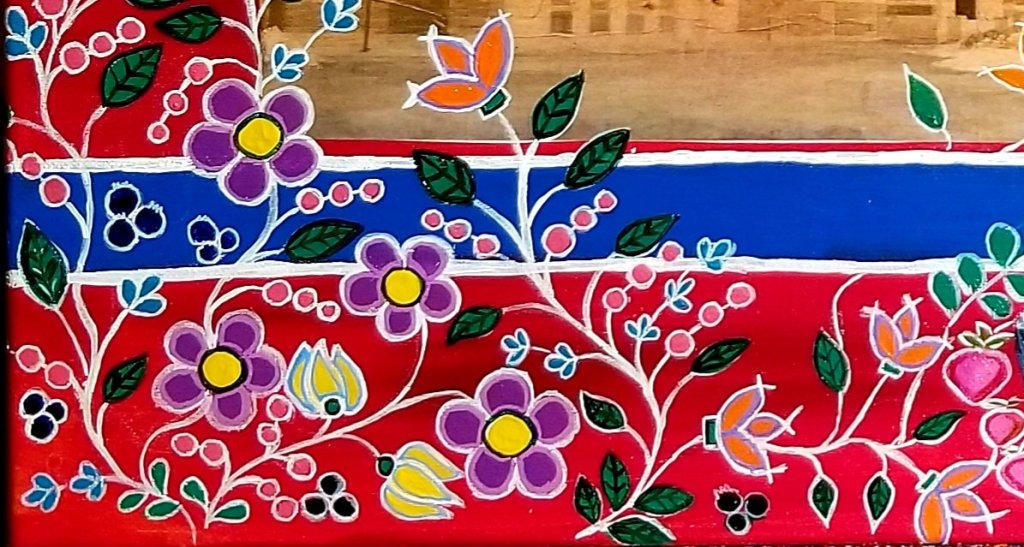
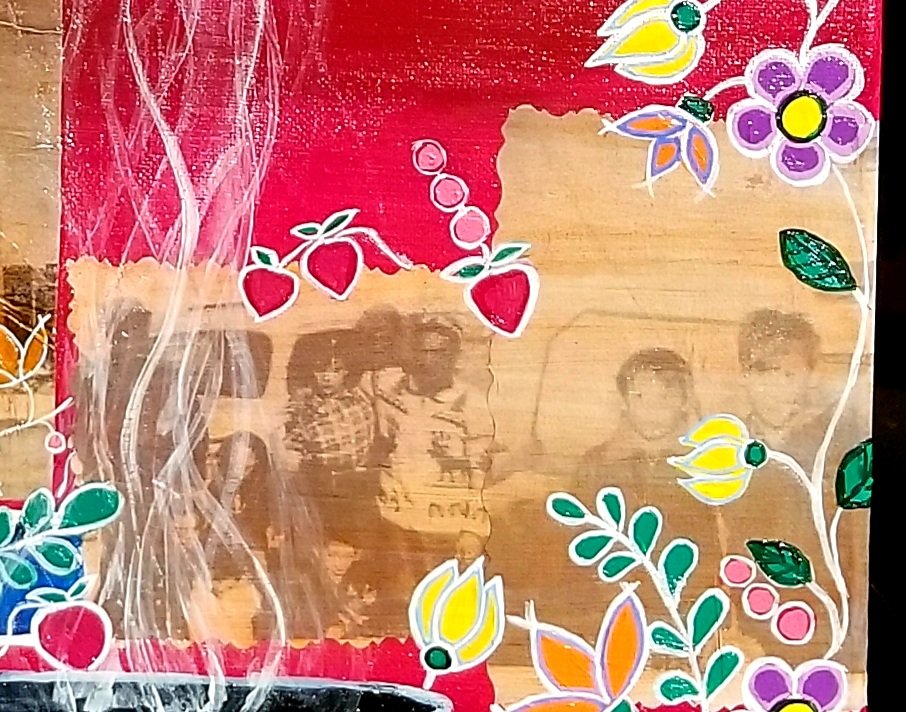
I paint as an expression of what I feel that I cannot always explain with words. Sometimes these paintings come to me very clearly as this one did. I had been thinking about how much my family has been impacted by residential schools, how colonization has affected us and how these things are passed on generationally.

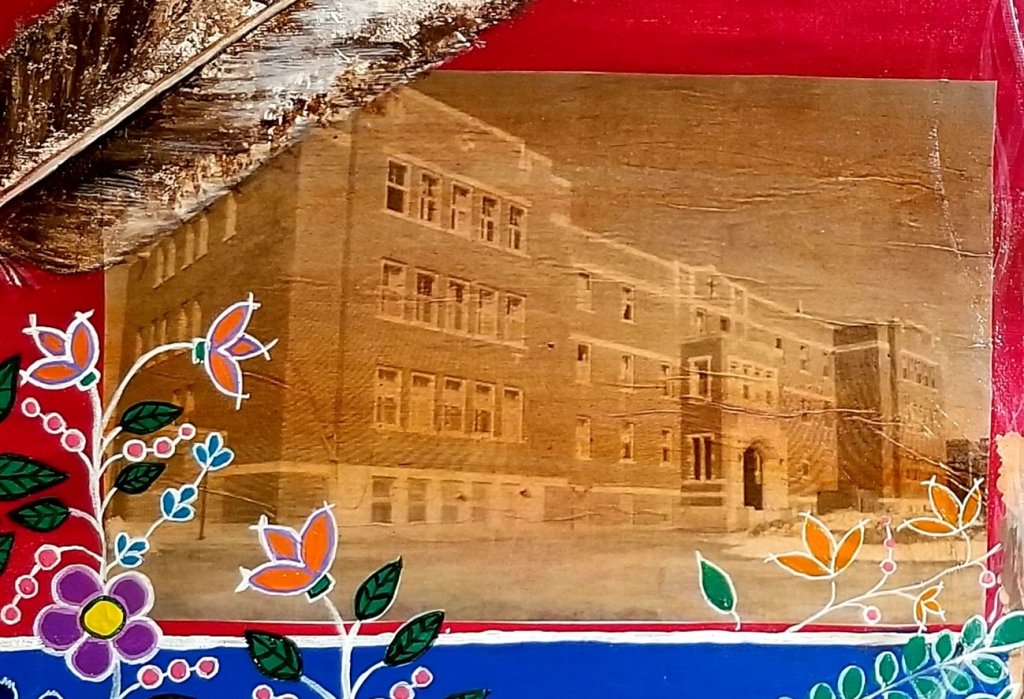
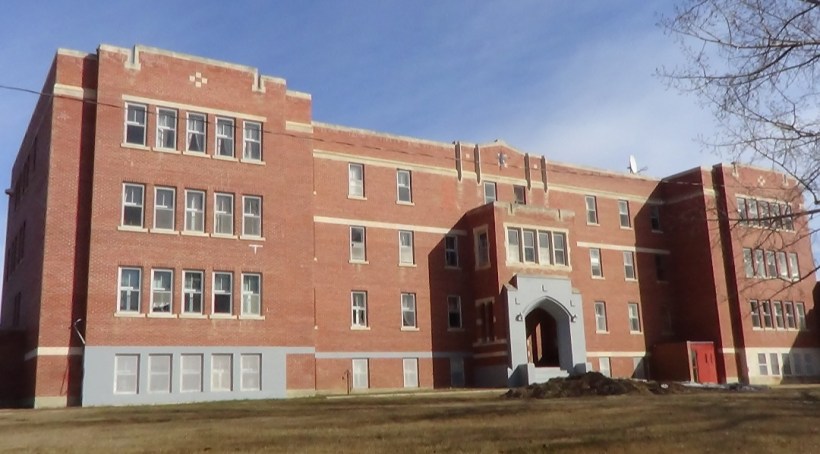
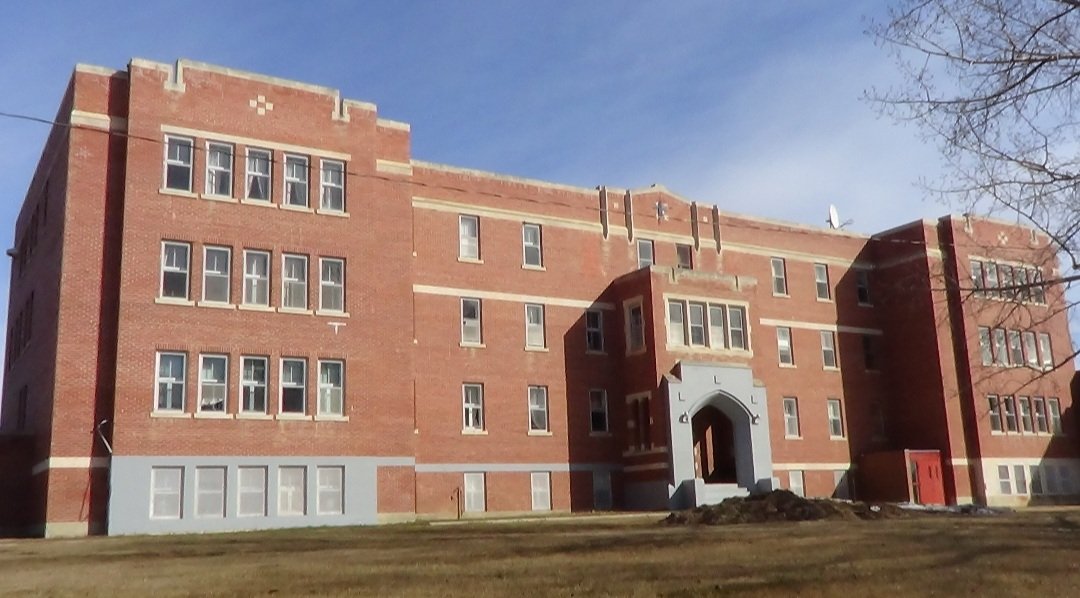
This painting represents how imposing blue quills has been on my family. There is a lot of intergenerational trauma because of it. We had multiple generations of family members attend this s hool.

Flowers represent medicines to me. The flowers are growing over the photos and bringing healing and change. Medicine comes in many forms.

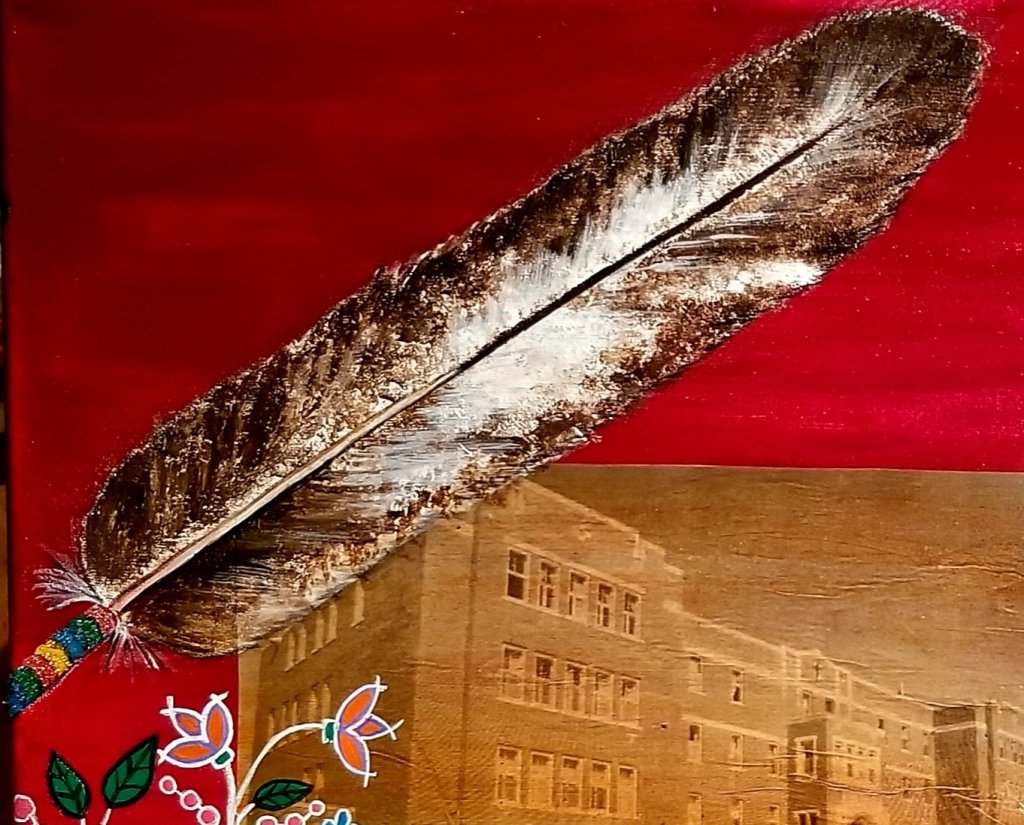
The photo of blue quills is large because it had a huge impact. It’s not covered because it will never go away.

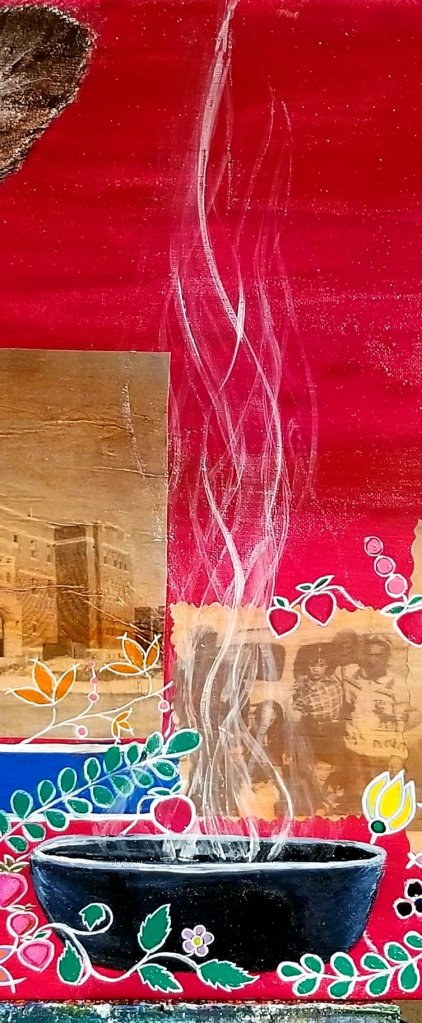
The smudge and eagle feather are clearing away the pain through reconnection to culture. Culture is medicine.

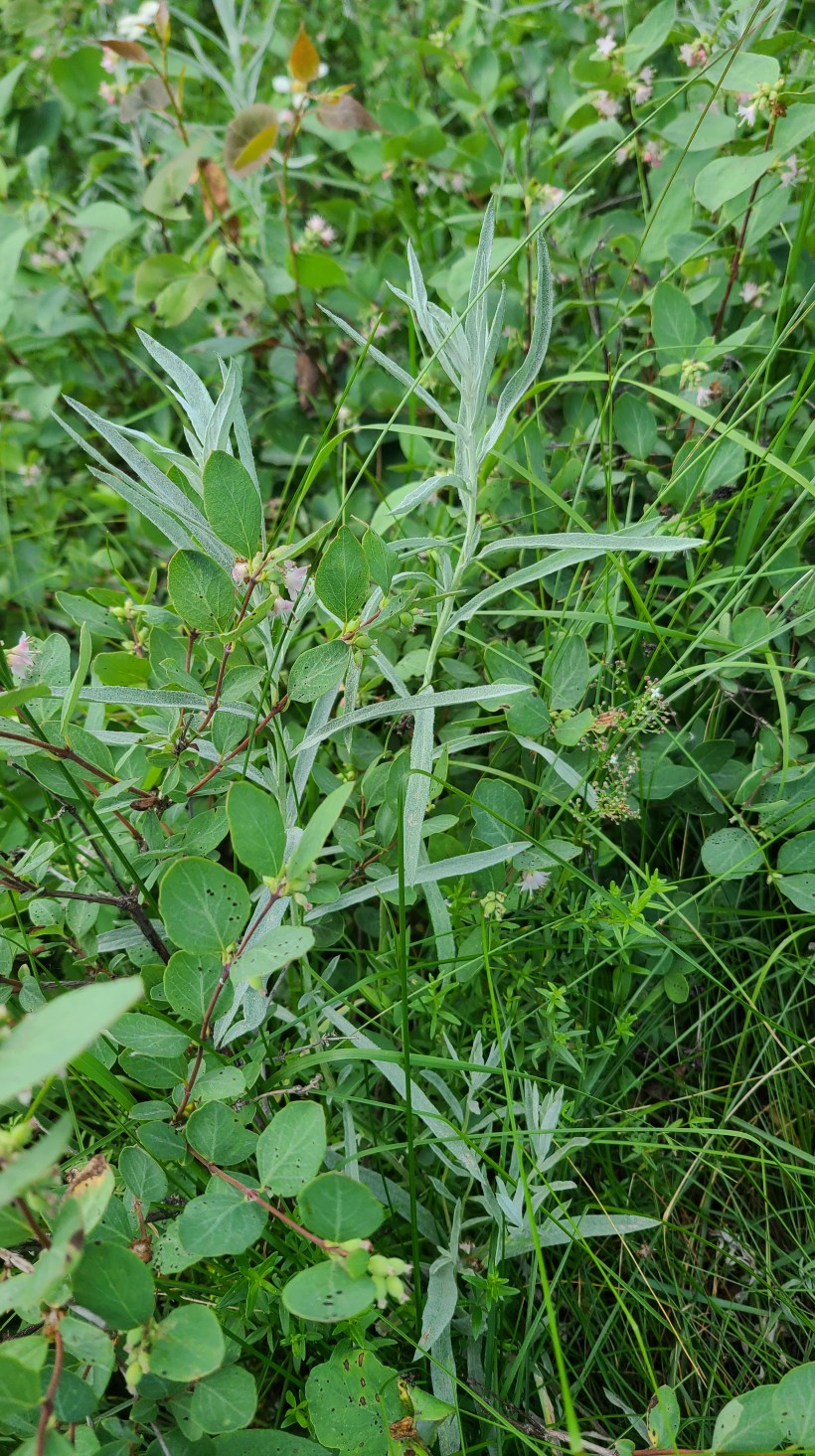
Each one of the flowers represents someone in my family. The purple ones are my dad and his siblings. The yellow ones represent myself and my siblings that’s why there are 5 of them. The orange ones are my parents grandchildren. The pink dots represent all of my cousins. The berries represent change and new growth. The sage also represents growth through healing. There are two photos of my family members as youth when they would’ve been in Blue Quills Indian Residential school

The background colours are there because of how this painting came me. Red is understood to be connected to healing, it is also understood to be the only colour that spirits can see.

Overall the painting is like a prayer for healing, separating my family from the school and the impact it’s trauma created.

It runs in the family

It runs in the family, terrible words to repeat but they need repeating. I knew that my dad’s sister, my aunt died from breast cancer. I knew his other sister had some kind of cancer and that she passed from it. I knew several of my cousins had cancer and passed from it and I knew that several of my dad’s cousins also had various cancers. That’s one side.

My mum’s mother, my grandmother had some kind of abdominal cancer that she died from before I was born. My mum had several aunts and cousins that also died from various abdominal cancers. My mum and her twin sister both survived colon cancer. Several of my cousins on my mum’s side have struggled  fought and survived cancer.

It runs in the family.

When you hear that you start to look at how many people in the family have had cancer. I knew these things and yet I hadn’t thought about it until I was diagnosed with ovarian cancer.  When I really looked at it, it kind of felt inevitable.  It runs in the family sounds like it’s fatal. It sounds like a bad thing. It forgets all the positives that exist too.

So what I’ve decided “it runs in the family” is going to mean to me is not something negative or awful or fatal.

Strength Sohkatisiwin

Strength is runs in the family. We’ve endured a lot of difficulty,  we’ve persevered and continued.

Hope Pakoseyimowin

Hope runs in the family. We keep going, we continue to fight, we keep trying.

Love Sâkihitowin

Love it runs in the family. We support each other. We are there for each other, we may disagree, we may live far from each other but our love is always there.

It runs in the family is all about how you choose to see what runs in the family. Yes our family has cancer but we also have strength, hope, love and we continue.

Ahkamēyimok, perseverance it runs in the family.