Family history

I’ve been told about my family’s history and told I should remember it, so I do. This is how we start.

In the beginning… we were here, we were here from time immemorial, from before colonization, before Canada and before the treaties. We come from people who were autonomous and independent. We had our own creation story, our own history, our own math and science. We hand our own medicines and medical practices. We educated ourselves. We took care of ourselves. We knew our history, our laws, and practiced our culture freely.  As time continued we experienced changes and made contact with new cultures and new ideas. We considered ourselves equal to these people. They did not consider us their equal and sought to exploit us.

We found the changes that were occurring were faster than we expected, and we were asked to enter into agreements to share the land.  So we entered into ceremony, prayed, and asked for guidance towards this end. In 1876, we were guided and therefore agreed to enter into a sacred treaty. This was done to benefit the people. We thought that because we we had entered into an agreement through Sacred Ceremony, that they would honour the sacredness and truth of the treaty. We thought they would follow through on their word to help us.

We did not agree to give up our independence, nor did we agree to give up who we were, our laws, our traditions, and our ways of being. We did not think they would continue to steal from us, not only taking all the land we agreed to share but also eventually our children. We did not think we would lose our autonomy, nor did we think we would be forced to give up our culture, language, and traditions to fit into another nations society. Their society.

So our family history is always told with the prefaced context of what happens next. This is the story of our family and its journey to now. It’s about how history has impacted us as best as I can tell. It’s about our relatives and who we come from. It’s the story of us.

Legacies

I once attended a conference day, where I worked. The organizers invited a woman, a holocaust survivor, to come and speak. She spoke of the legacies we leave behind. She expressed the wish to honour the legacies her parents gave her. With this consideration, I wish to do the same. Her parents did not know what legacies they gifted her. I wish to acknowledge the gifts that I have received from my parents just as this woman had legacies from both her mother and her father

I believe the greatest legacy I have received from my mother is the gift of love. Not just regular love but deep abiding and unconditional love. She taught me no matter how someone behaves or speaks; you must always treat that person with love because you do not know the pain the individual carries with him or her. 

My mother always approaches everyone with the love of a family member. Even when someone mistreated her, was cruel or unkind, my mother still held a place of love and respect in her heart for that person. This was the way that my mother taught me to forgive. My mother has always said forgiveness is not about the person you are forgiving. It is about releasing you from the bond of that other person. She taught me that if I did not forgive whatever it was that happened to me; I would become an angry and resentful person. She told me that if I became unforgiving, then the person who harmed me would win, and I would always give up my personal freedom to that person. In essence, I would be controlled by that person and the hate and anger I may feel towards them. 

 My mother taught me quiet strength. She did this through her deep abiding faith. Whenever there was a crisis in our lives, whenever things seemed crazy and out of control, my mother would calm us down and pray. She would tell us God is always with us, even in the bad times. My mother’s absolute belief that we are not alone in this world has carried through in all that I do. I live my life in constant prayer. I talk to God at all times. Some people would think it’s crazy to pray about knowing the right thing to say or to feel a sense of peace, but this is one of the lessons my mum taught me. Pray often, and do not be afraid to talk to God.  

My mother exemplified kindness, always willing to share whatever she had, always willing to look out for her fellow human being. My mother did not shirk away from people that might make others uncomfortable. She believes in the power of respect, kindness and most of all love. My mum loves all of her nieces and nephews equally and is always so happy to see them. She loves her family in England endlessly and carries that love equally strongly for her family in Canada. To my mum, family is everything. It is family who carries you into this world when you are little. They are the ones who give you strength when you are sick. Family is who continues and remembers you after you are gone. Even when your family struggles with life problems, it is your family that you turn to for help when you are struggling along the way.  

My father has given me a different legacy than that of my mother. He has taught me the value of never giving up. He teaches me endurance through adversity, and most of all, he has taught me that you can overcome all that you struggle with. These are the lessons I choose to learn from him. These are lessons we learned from him as adults. The lessons we learned as children were different, as he was so wounded by his past. 

My father carried a lot of pain inside of himself. It caused him to fear, distrust, and carry anger for many years. Sometimes, those feelings still jump up and trigger him to act in ways he would rather not. He once told me “Carrying pain is a terrible thing.” He said “When you continue to carry it, it can eat you up inside and destroy your life.” He said, “Shame also builds within you and is what silences you.” He told me, “It is only in letting go and forgiving that you can be free.” He said, “If you continue to try to cover it up and not face your experiences, you hide from your truth. When you hide from your truth, then you don’t see how your choices are impacting others.” He taught me it is alright to say you’re sorry and to admit when something you have done has hurt those that you love the most. 

My dad also taught me bravery. He taught me this by continuing to try to quit drinking and by finally succeeding in his sobriety. He also taught this to my brother and I when he invited us to sit and bare witness his story of what happened to him at residential school. As I listened to his story and heard of his traumas and watched him get triggered by memories of things that happened, not only at the residential school but along the way in his life, I saw him in a different way. I saw the child in him that was hurt. I saw what it took for him to tell us ‘this is what happened to me’. I understood more about my father in that moment than I had ever before.

My father was also a contradiction. His life experiences caused him to repress who he was. It caused him to deny his heritage and to be angry with many things. He would not speak his first language, nor would he practice any traditions. He was not able to allow this part of himself to exist, so great was his shame of his own identity. A lot of things cause him pain even still.  It causes him hurt when people don’t believe we are his children because we don’t look the way we are supposed to, and that makes me sad. Yet he talks about us with pride and speaks of our accomplishments because they are an extension of his own. I am glad he is proud of us, of my kids, and the legacies I am trying to pass on.  In learning how to deal with all those previously repressed feelings, my dad had to relearn care, compassion, understanding, and kindness. He had to accept himself, his past, and his future. This is where my parents taught me that no matter what; the people you love, love you too. 

There is also a history I carry with me. It is the history of the Cree/ Nehiyawak people. It is the oppression and colonisation and the stories passed on in our family. I carry this legacy of hate with me. This is not by my choice; this is the legacy of racism. It is in the history of Canada. It is difficult for people to acknowledge that it exists. It is based on a fear that perhaps they have behaved in a racist manner. Racism, it is not really gone. It is subtle. It is in the way people talk about “others”.  I see it in the way people respond to different aspects of myself. I see it when people tell me “well you don’t look that Native” like that’s a good thing or “Wow your dad is really native” or “That’s your real dad?” I also see it when my people tell me “You look so Moniyawak but I knew you couldn’t be because I heard you speak” or “I knew, because you said you were from Saddle Lake.” These statements strip from me the self I believe I am and place me always into the category of other. I never truly belong to one group of the other. I feel the pain of it in my heart when I hear people speak with such disdain about things that they do not understand. 

When people speak with authority about “ancient history,” they fool themselves into believing there is not a problem that exists. There is no reconciliation in this. We live in a world that allows hate to fester and grow: where it’s okay to say, “They should just move forward because it’s better for them to let it go.” Sometimes I am told, “Jeeze, they should just get over it.”  No one would say that to a holocaust survivor or a survivor of genocide such as what happened in Rwanda or in Cambodia.  It’s just not “polite”. No one would tell the child witness of a murder, “Just get over it” or “It didn’t matter” to the child witness of assault, to children who experienced violent persecution, physical, sexual or emotional abuse and assaults. No, we say that as a society, we would empathise, provide understanding, and treat them with care and love. Yet this is not what really happens. If we are real and honest with ourselves, the reason we say, “it happened a long time ago”, “it wasn’t us who did that” or “I am not responsible for that” is because it is too painful for people to acknowledge the impact of our behaviour on others. This is the legacy I carry with me when I sit and bite my tongue because I don’t want to offend anyone with the truth I carry in me. An example is when people tell me racism doesn’t exist anymore, and I think back to my first real experience with that as a child with my father in St. Paul and being harassed by an RCMP. I think back to walking with my cousins, down the road in Saddle Lake to get candy as a way to have a break from a funeral we were at and having a vehicle drive past us and these young boys scream obscenities at us, calling us names. I think about how people have treated my family members with suspicion and scorn for no other reason than for how they look. I wonder how anyone can pretend that behaving like that is normal. It seems society believes that because “they” are different from us, it’s alright to be ambivalent to the way children were so cruelly treated. 

If I can provide my children with the legacies my parents have provided me, then that is half the battle. I try to give my children, my nieces, and nephews a new perspective. I try to help them treat those people with unconditional love, kindness, and respect. I strive to be forgiving and brave and to carry the truth with me. Yet I am only human. I make mistakes. I get angry and feel hurt. Since I am human, I can learn. I can learn and speak to the truth because it is how I gain freedom.  I am reminded once again of what that lady said to us. She said “This is not about all the terrible things that happened in my life. It is about learning to forgive and to teach people how to love one another.”  If I can leave that kind of legacy to my children and those people who cross my path in life, then I will know I have lived a good life. 
“Tell me a story – Acimowin”

"Tell me a story"

History

I am a survivor – yes, a survivor of history, a survivor of residential school. Though I did not attend, I was never the less there. I survived it. I was there, I was there before I was born.

This is not ancient history, a story, it is real and it is my history.

I survived the hurt, the anger, the fear – the tears – the sorrow – the betrayal of trust. A child’s trust, the loss of that innocence.

I survived. I survived the wicked behaviour called “discipline”. I survived the shame, humiliation, self-hatred and the loss. “You are nothing, you dirty Indian”

I survived the losses.
The loss of language, culture, history and pride.
THE LOSS, THE LOSS, THE LOSS!!!
The loss of safety, security, and the loss of family, for generations.

How can this be? How did I survive, you ask???

I did, I survived….
I am a survivor of my fathers pain and my Mosom’s shame. I am a survivor of the betrayal, two generations of “education”.

Yes, I did not go to residential school but my family did. My family was sentenced there. The terms were carried out over several generations, sentencing that carried a legacy, holding us, stealing life from us, slowing us, paining us.

It taught my family not just reading and writing. It taught shame, self-hatred and created the need to forget.
It taught my Mosom Self-loathing, it raised him up in foreign ways. It told him “remember your place” “say your prayers, you’ll go to hell” and it created shame, shame, shame.
It taught my father to forget. The only direction to turn – ANYTHING to help you forget. But it was not gone. It never leaves, it was ALWAYS there. It is always there.

It is there in the fear and the tears and the sorrow. It is there in the behaviours, the promises and the inter-generational sorrow. The trauma that still holds.

Yet I have survived. I walked into that building, feeling the fear, struggling to make myself go inside. I cried. I cried for those children who never left, whether that was through experience or death. I cried so that I could be free. I survived.

I will not let the former shame claim another generation. “I will be okay, we are okay” “TAPWE” this generation grows strong because I survived. My father and my Mosom lived and I am here in spite of the fear. I am a survivor of residential schools.

Tell me a story

“Tell me a story “

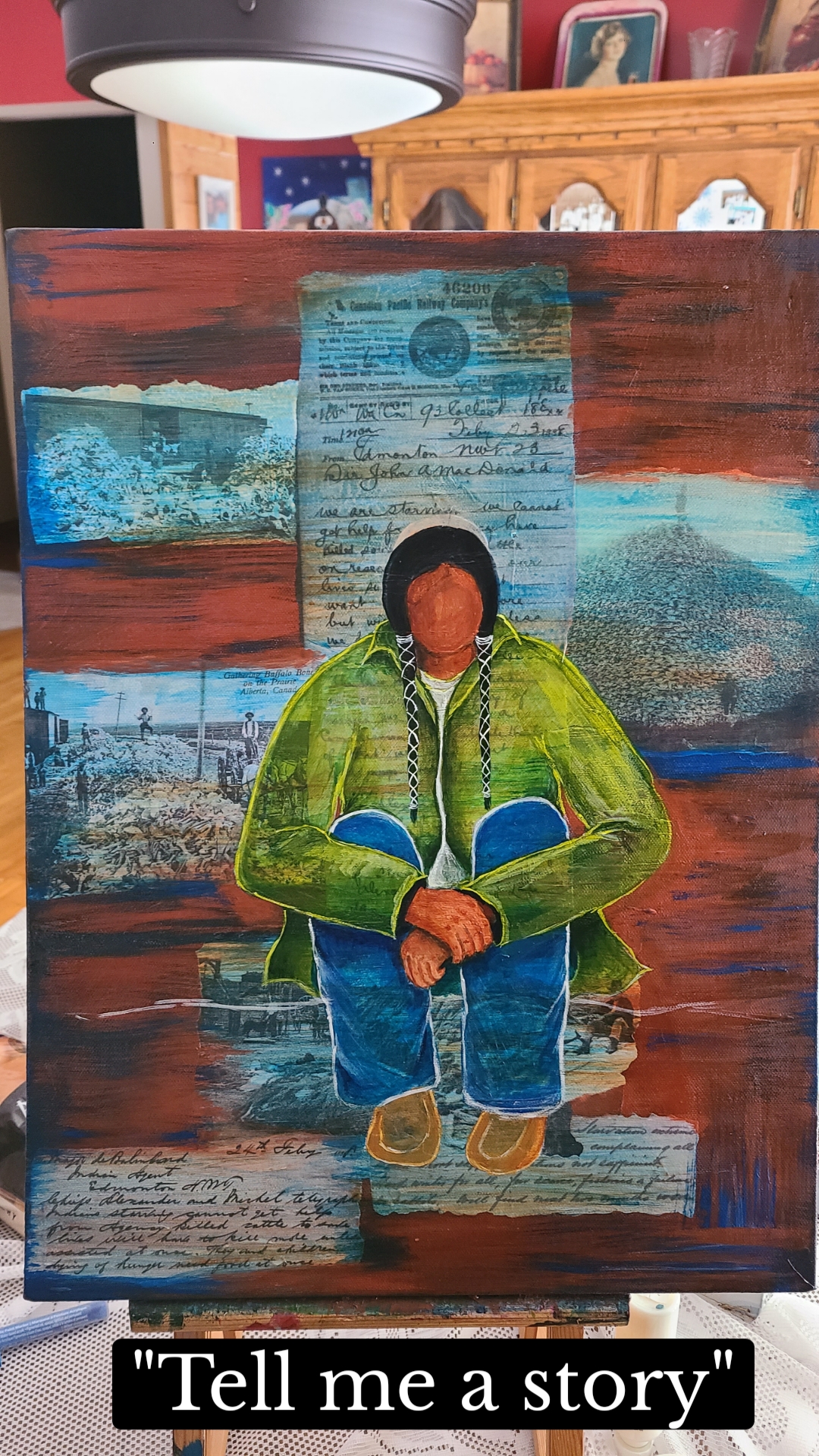
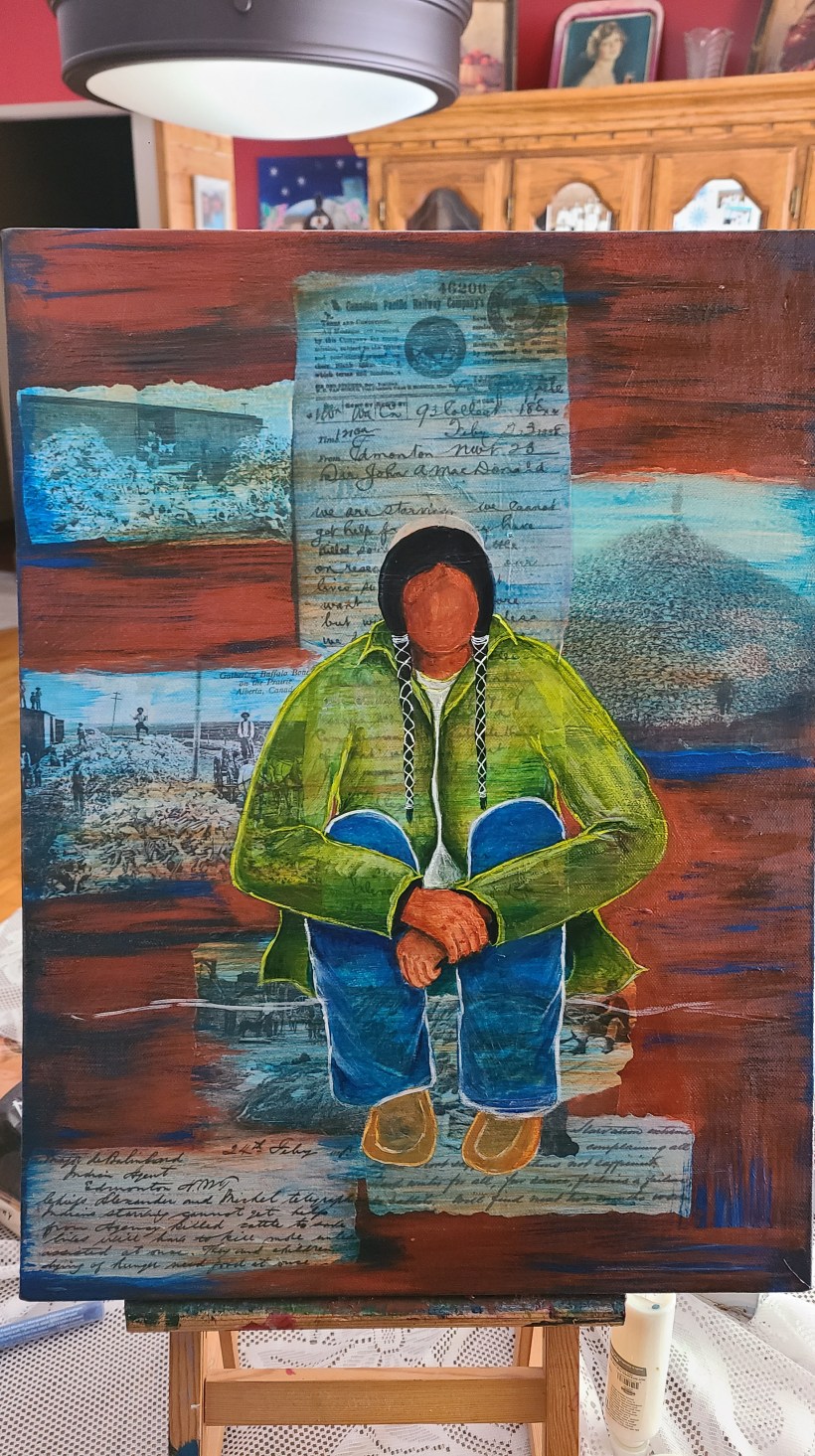
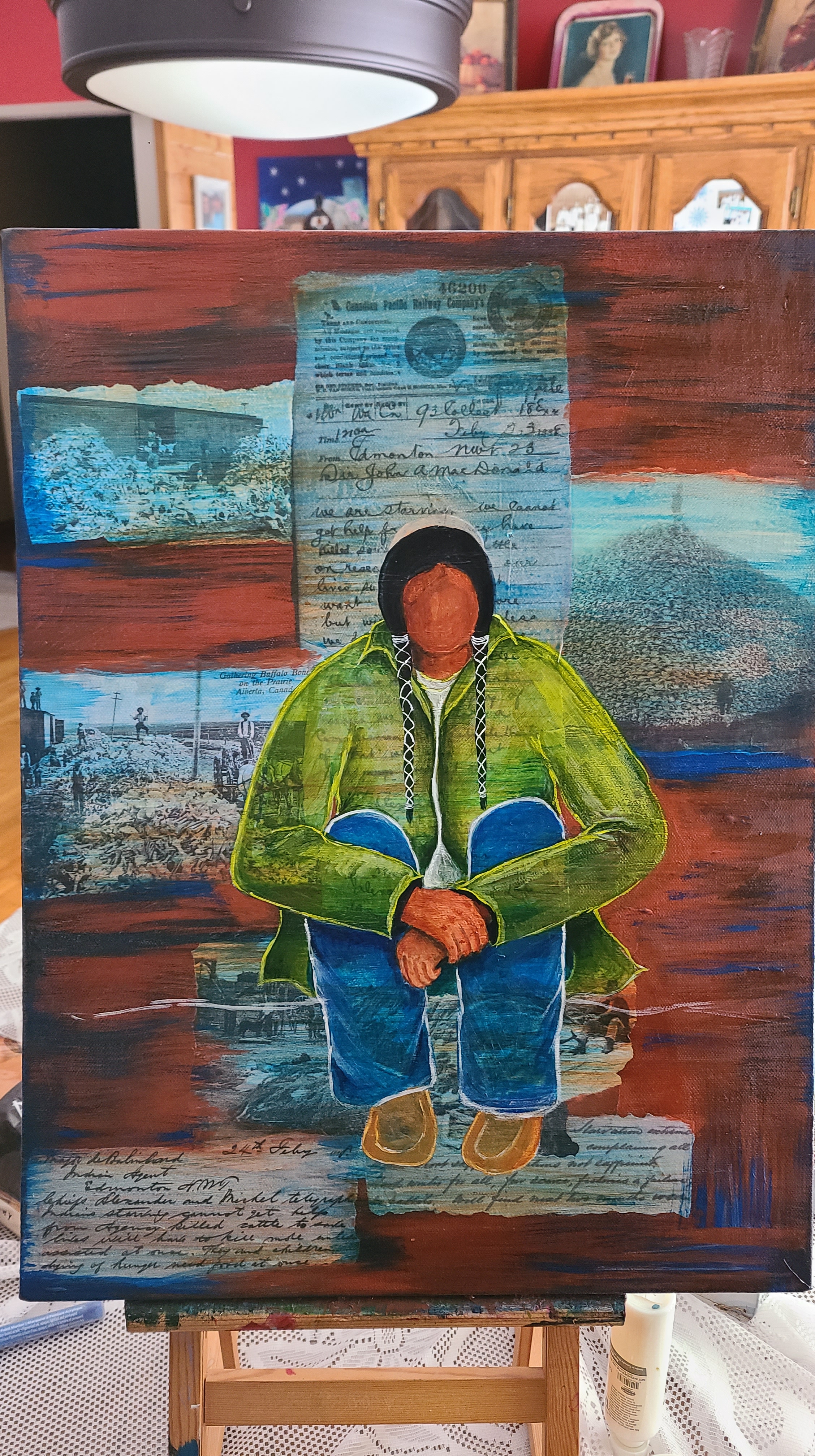
This mixed media piece includes a telegram sent in 1888 from the Chief’s Alexander, Alexis and Michael telling John A MacDonald that their community members are starving and that they had to break the law and kill the cattle in order to save the lives of they and their children and includes parts of the responses from the government. This piece includes images of piles of bison bones and hides from when the bison were slaughtered to show the impact of the loss of an important resource to all plains peoples. The pictures also show the use of the railway to transport the bones to factories to make fertilizer.
The man painted over top has his head down in reflection as he contemplates the telling of our history.
The words of the telegram show through to demonstrate how the history of colonization continues to impact us. The past will always sit with us, and it is important that we remember and tell our own history. The inclusion of archival documents shows a record supporting oral traditions about the impact of signing treaties, the neglect of treaty obligations especially after the 1885 resistance, the loss of access to the land and the loss traditional food resources. It demonstrates the loss of autonomy through the need to ask permission to slaughter their cattle and that without asking permission, they had broken the law and were at risk of being arrested. It is called “Tell me a story” because we continue to speak about our past and the impacts it has had on our communities.

Transcriptions of archive RG10, Volume 3794, File 46,205

Telegram:
Feb 23, 1888
From Edmonton, NWT
Sir John A. MacDonald. We are starving. We cannot get help from the agency, have killed cattle on reserve to save our lives so far. We don’t want to kill anymore but will have to unless we get help at once. We don’t want to break the law but we and our children are dying of hunger. We ask for a commission to investigate the truth of what we are saying but need food at once.
Alexander, Chief of River Qui Barre
Michael Callioux, Chief of Sturgeon river reserve
Alexis, Chief of Lake St. Ann Reserve

At that time, it was illegal for Indigenous people to slaughter their cattle without permission. Even though the cattle had been given to the people as their own to encourage farming, the Indian agent and the government did not consider the cattle the property of the people it was given to. The file this is from includes other documents that explain why the Indian agent decided not to have them arrest for fear it would cause another uprising.

This piece also includes the responses from the governments Indian department to this situation.

Response 1
Feb 24, 1888
To Major de Balinhard Indian Agent
Edmonton, NWT
Chiefs Alexander and Michael telegraph Indians are starving, cannot get help from agency. Killed cattle to save lives, will have to kill more unless assisted at once. They and children dying of hunger need food
at once. Please write facts. See Chiefs and inform them that you have been communicated with by dept. This reply questions the validity of the statement they are starving.

Response 2
Edmonton Feb 25, 1888
Contractors behind delivery provisions, Saddle Lake, Edmonton, and Whitefish Indians were hungry, now fully rationed, Lac La Biche also now receiving rations. Starvation extreme word. Edmonton and St Ann’s complaining all winter of short supplies of rations, not sufficient. Hard winter for all, fur scare, fisheries a
failure, no rabbits, will find next two months more. Samuel, member and spiritual advisor, [is] working this up
[This response downplays the lack of ration, providing an explanation for the provisions not being provided. This treaty
has a clause that stated provisions would be provided in times of famine. It also states that one member is overreacting and getting everyone worked up. It seeks to invalidate the experience of starving people.]

Kiyas ago, our mosom and kokoms; our grandfathers and grandmothers, told us this. We were starving, and our children were dying. We couldn’t get any help from the Indian agent. The law said we could not kill our own cattle. Lots of our traditional food was gone. We thought that we would also be gone.

We remember

We remember when we used to walk free to gather medicines, hunt for food, have our ceremonies and raise our families.

We remember.

We remember when we were asked to share the places where we walked free as a nation, where our ancestors walked before.

We remember.

We remember when freedom was taken, and we were confined.

We remember.

We remember when our children were taken and we had to have permission to visit them.

We remember.

We remember when after we were confined we needed permission to pick berries, gather medicines, hunt for food and practice traditions.

We remember.

We remember these things, we know how it impacts us. We remember. Now it’s time you learn our history, our losses and acknowledge your gain. We remember, you should too.

We remember.

Etikwe, I suppose

Etikwe, I suppose. I’m not sure why this word popped into my mind, I suppose there are lots of reasons for it.

I think about how many different times I’ve heard this word in my life. Etikwe, I suppose it’s a lot.

Etikwe, it means I suppose or maybe just suppose. Awina etikwe, I don’t know who or maybe I wonder who depending on the context. I suppose I should talk pîskiskwêw to my dad about it.

I suppose I’m supposed to use it more. I guess I need to use the words in Cree as they pop into my mind.

Etikwe it is to remind me that there are words that I know and that I need to learn more.

So that I can pê-pîkiskwêw
Ekosi, that’s all my thoughts for now, etikwe

Truth and Reconciliation

Generational Healing

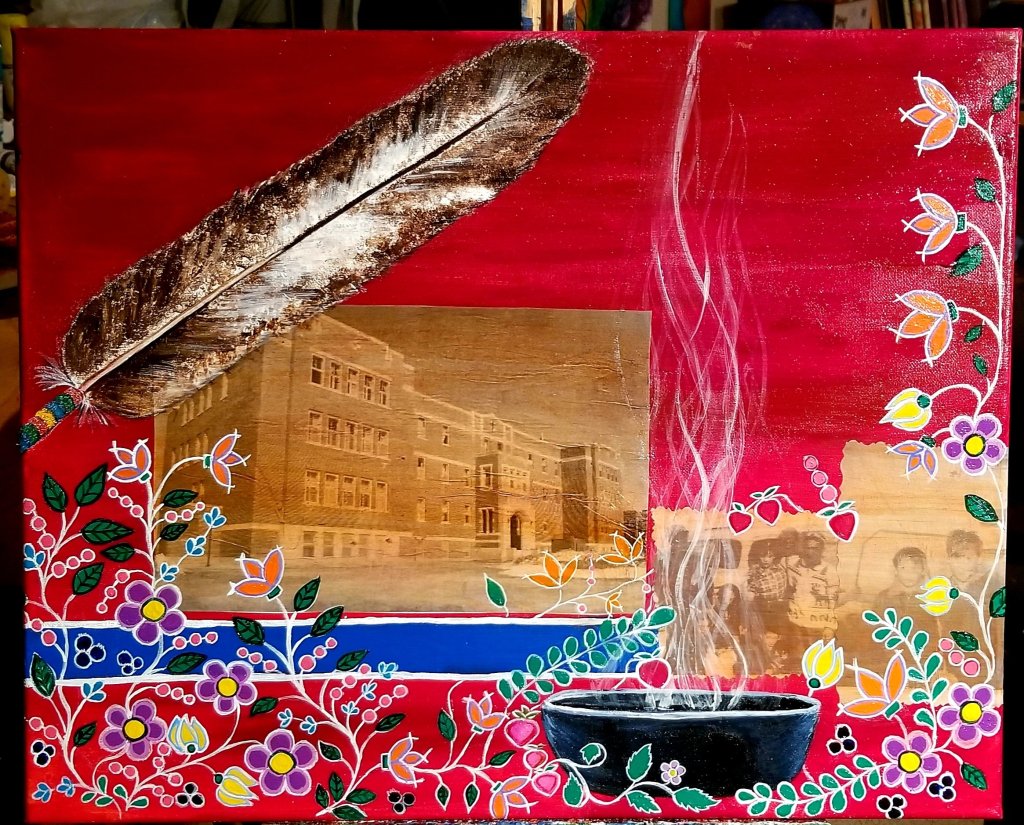
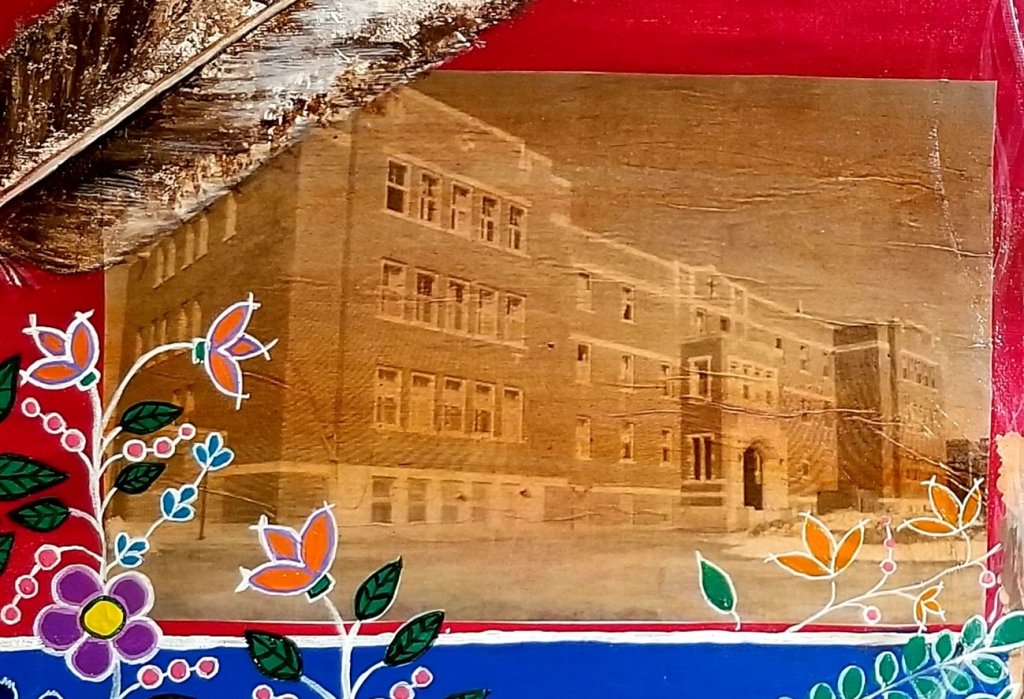
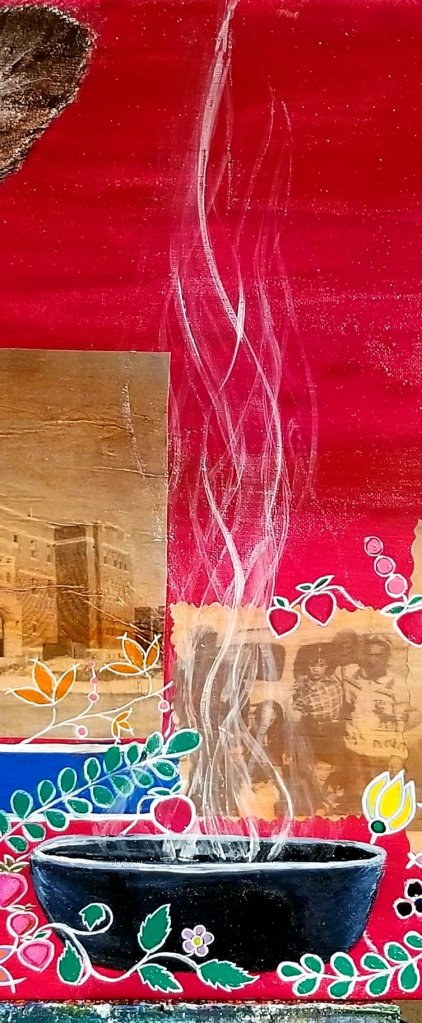
I paint as an expression of what I feel that I cannot always explain with words. Sometimes these paintings come to me very clearly as this one did. I had been thinking about how much my family has been impacted by residential schools, how colonization has affected us and how these things are passed on generationally.

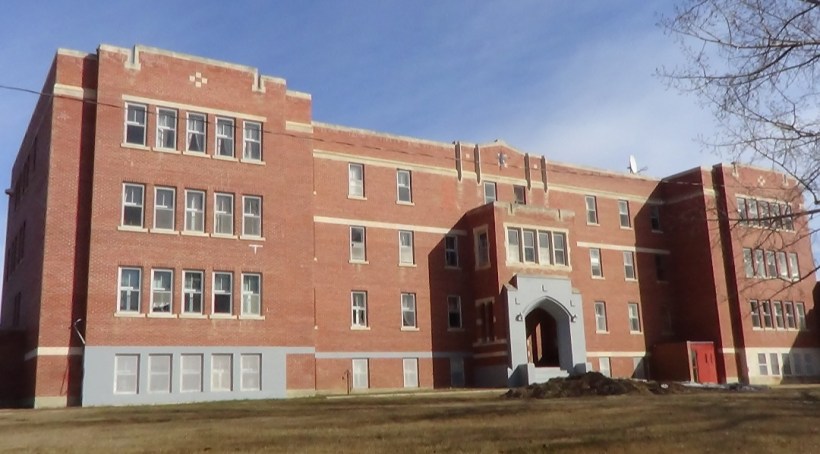
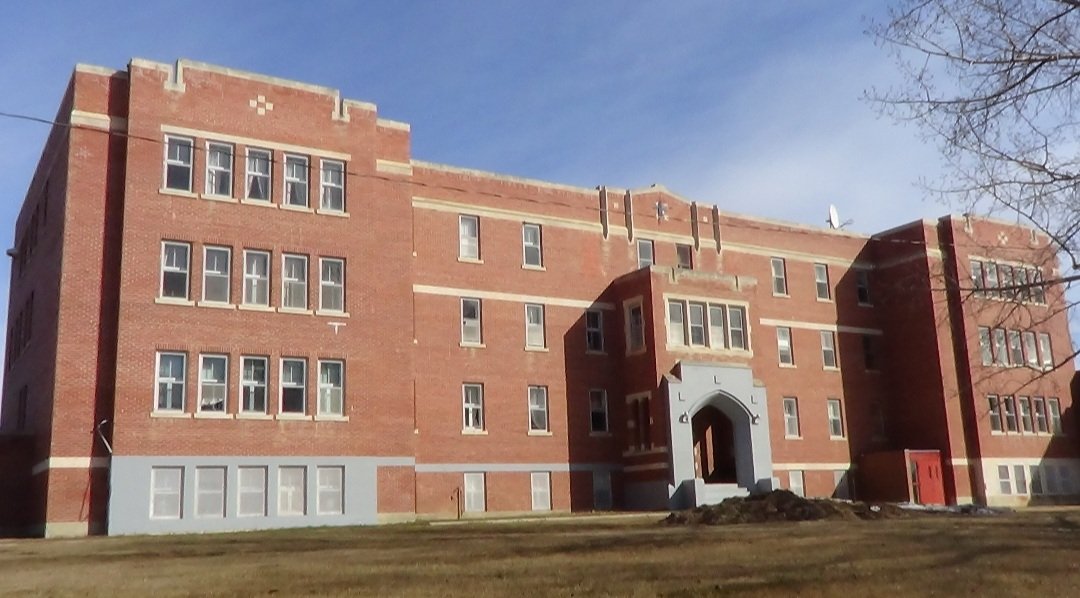
This painting represents how imposing blue quills has been on my family. There is a lot of intergenerational trauma because of it. We had multiple generations of family members attend this s hool.

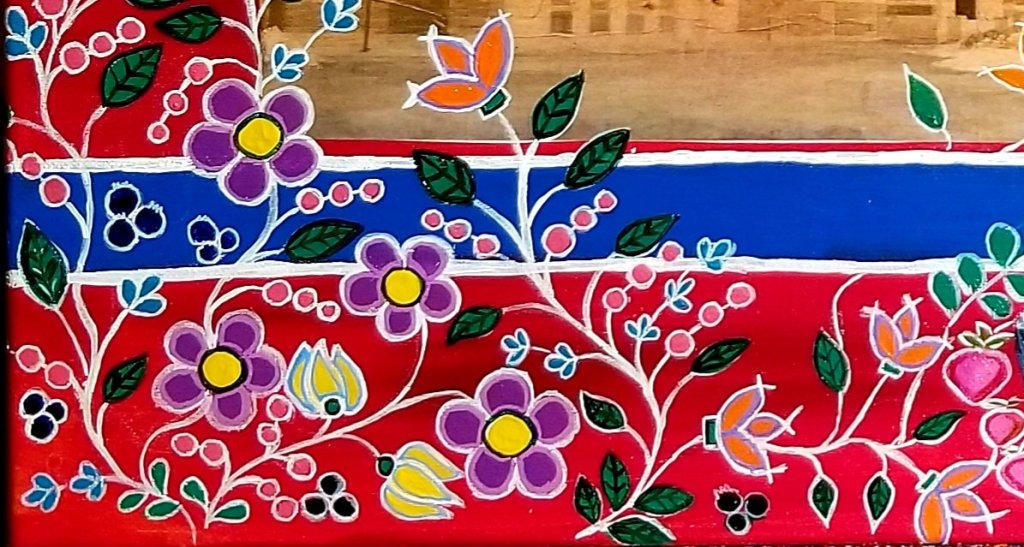
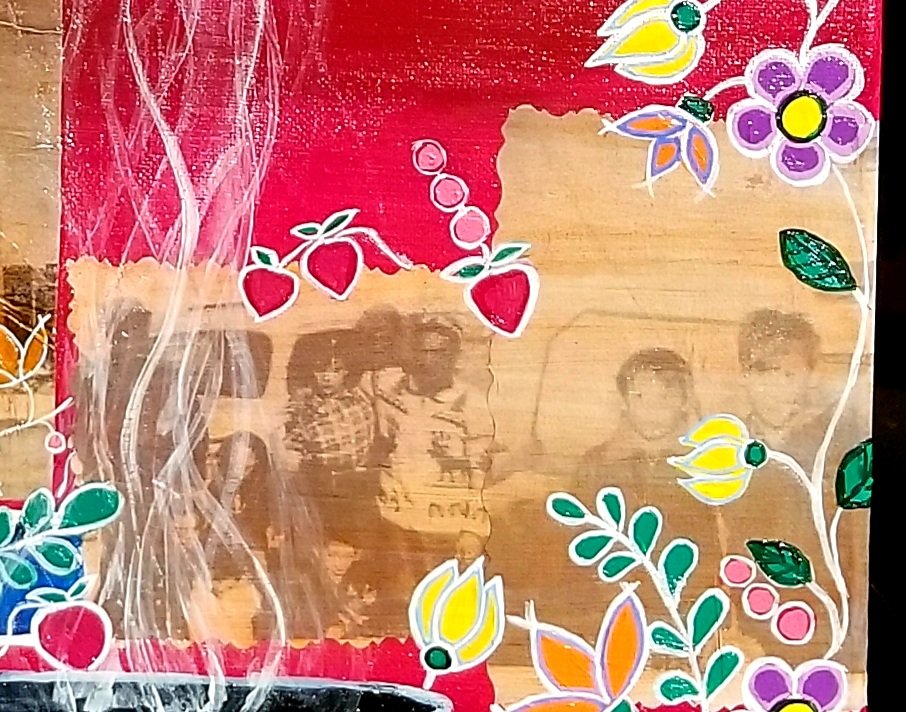
Flowers represent medicines to me. The flowers are growing over the photos and bringing healing and change. Medicine comes in many forms.

The photo of blue quills is large because it had a huge impact. It’s not covered because it will never go away.

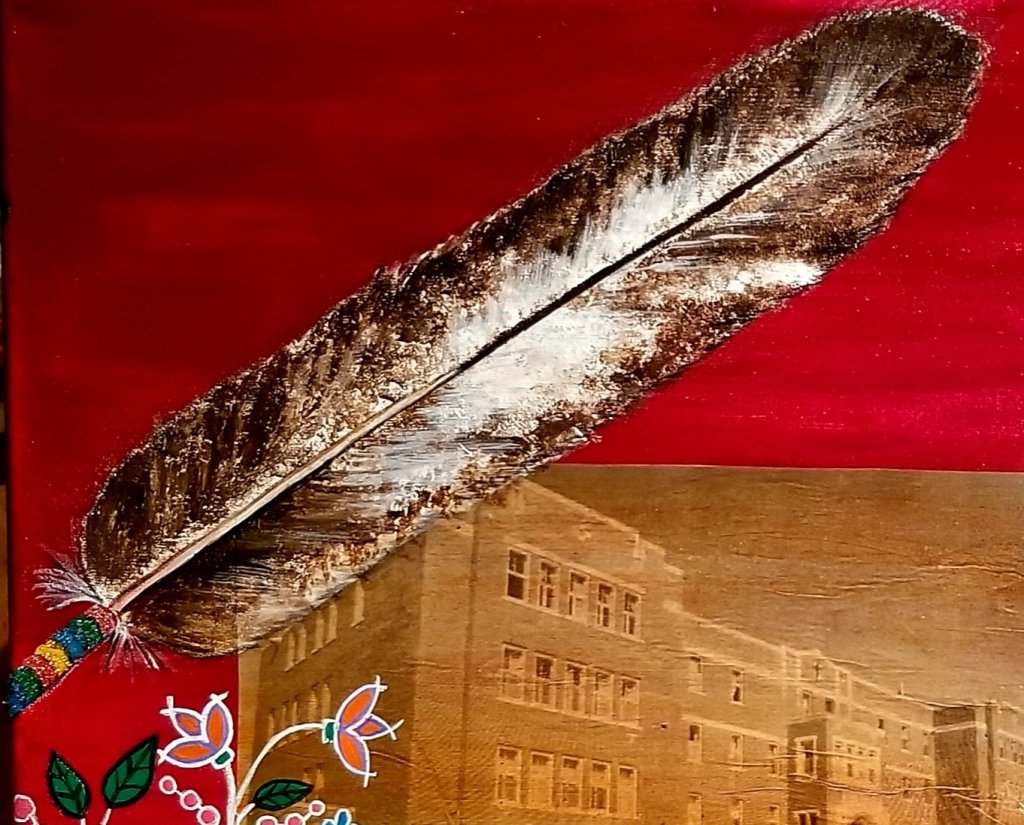
The smudge and eagle feather are clearing away the pain through reconnection to culture. Culture is medicine.

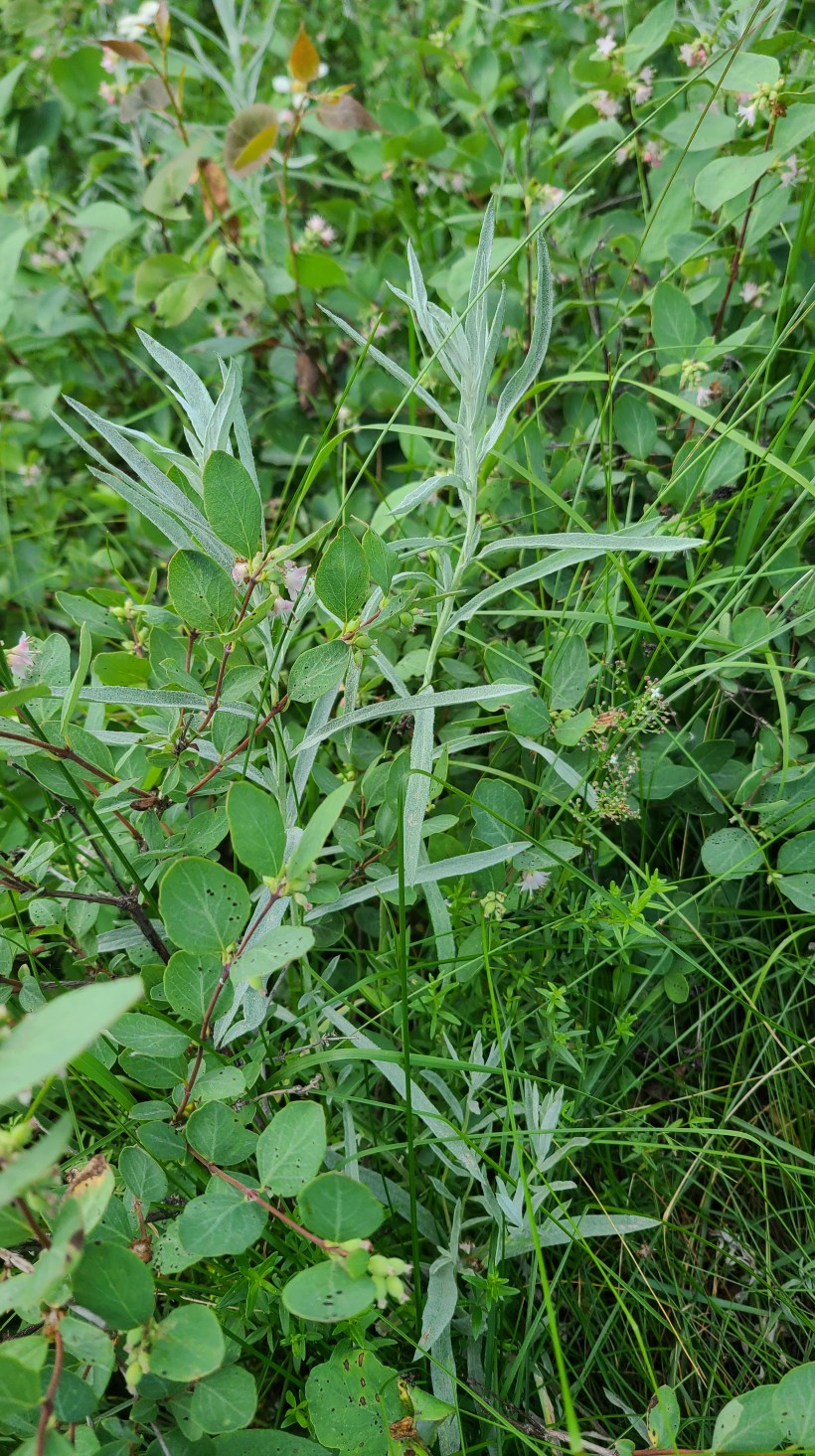
Each one of the flowers represents someone in my family. The purple ones are my dad and his siblings. The yellow ones represent myself and my siblings that’s why there are 5 of them. The orange ones are my parents grandchildren. The pink dots represent all of my cousins. The berries represent change and new growth. The sage also represents growth through healing. There are two photos of my family members as youth when they would’ve been in Blue Quills Indian Residential school

The background colours are there because of how this painting came me. Red is understood to be connected to healing, it is also understood to be the only colour that spirits can see.

Overall the painting is like a prayer for healing, separating my family from the school and the impact it’s trauma created.

It runs in the family

It runs in the family, terrible words to repeat but they need repeating. I knew that my dad’s sister, my aunt died from breast cancer. I knew his other sister had some kind of cancer and that she passed from it. I knew several of my cousins had cancer and passed from it and I knew that several of my dad’s cousins also had various cancers. That’s one side.

My mum’s mother, my grandmother had some kind of abdominal cancer that she died from before I was born. My mum had several aunts and cousins that also died from various abdominal cancers. My mum and her twin sister both survived colon cancer. Several of my cousins on my mum’s side have struggled  fought and survived cancer.

It runs in the family.

When you hear that you start to look at how many people in the family have had cancer. I knew these things and yet I hadn’t thought about it until I was diagnosed with ovarian cancer.  When I really looked at it, it kind of felt inevitable.  It runs in the family sounds like it’s fatal. It sounds like a bad thing. It forgets all the positives that exist too.

So what I’ve decided “it runs in the family” is going to mean to me is not something negative or awful or fatal.

Strength Sohkatisiwin

Strength is runs in the family. We’ve endured a lot of difficulty,  we’ve persevered and continued.

Hope Pakoseyimowin

Hope runs in the family. We keep going, we continue to fight, we keep trying.

Love Sâkihitowin

Love it runs in the family. We support each other. We are there for each other, we may disagree, we may live far from each other but our love is always there.

It runs in the family is all about how you choose to see what runs in the family. Yes our family has cancer but we also have strength, hope, love and we continue.

Ahkamēyimok, perseverance it runs in the family.

Reflections on Grief and the Journey to Ones True Self

There is sadness within the people. This is deep inside and even though one maybe happy there is still an unexplained sadness that over takes them. It is sometimes diagnosed in the western world as depression but I think it is more that that. It is grief. This grief is profoundly deep. The wounds cut like a knife; it is a people’s grief.

This grief transcends time and experience. It is unknowingly passed down through the generations. We see it in the young people today. It is expressed through anger, gangs, and violence. The young people have suffered a loss but they are so unfamiliar with traditions that they do not know for what they grieve. We do not provide the tools to the young people because many of us do not know that we too are grieving.

Grief in its classical description points to a profound and significant loss in ones life. This loss would be a loss of culture but is also more than cultural experiences. It is a profound loss of spirituality. It is the connection to the spirit, to the Creator. This profound form of alienation has created a separation of the spiritual self from the physical self. It has caused the separation from the ability to grieve and recover. Elders will tell you to pray. This is the first step in reconnecting with self in the spiritual aspect.

It has been said by many different people of many different belief systems, that prayer is a powerful thing. That connection to the Creator allows you to begin your journey home.

When you pray you begin to adopt a feeling/attitude of respect. This is because you are praying to someone who is greater than you. You acknowledge that you are unable to change things on your own and you know that you need the assistance of a being greater than you. The Grandfathers and the Grandmothers in that spiritual sense would be Angels; beings that connect you to the Creator. When you ask for help and guidance you begin to change how you react.  Your respect in prayer translates to your life. You begin to show respect to others as well as yourself. This respect further translates to respect for the earth who is liked to a mother because she provides for all her children, human and animal.  Once this aspect of respect is recovered and learned the grieving process is started. Healing begins, and you are open to other lessons. 

The sadness begins to lift. As you start your journey towards healing you begin to realize that the Creator has provided these experiences to you for a reason. You begin to realize that in every experience there is a lesson. It is simply finding it. Humility, thankfulness, love, compassion; all these experiences are brought forward. The profound sadness that once touched your life, the sadness that you couldn’t explain lifts. It sounds easier than it actually is because there are other processes involved too. There is forgiveness and letting go. This does not mean that you forget, it simply means that you treat others who may have done wrong to you with respect and love. If you continue to hold anger, hate (unforgiveness) in your heart it will continue to eat away at your spirit. Your spirit (soul) will suffer. You will believe that only bad things happen and that there is no love for you. The Creator loves all the children; the Creator forgives mistakes and wrongs. If you approach this life you have been given with love then situations will become easier to deal with.

First is respect, second is love. You cannot have love without also having respect. With love and forgiveness comes compassion. When someone deliberately tries to hurt you, you are able to recognise that his or her soul/spirit is in pain. Their pain is profound as yours once was. Therefore you treat them with respect, love and compassion. They will see that you have a new perspective and are able to treat them is a way that is right and honest. Your honesty may not be appreciated, depending on the depth of their pain. They may not be able to appreciate that you do not want anything, that you are not trying to manipulate them, that you are really and truly respecting them. Do not allow this to discourage you. You are living in truth. This truth is for your peace and balance and harmony not theirs. Your forgiveness is not conditional; it is for your own peace of mind.  Bringing peace to yourself is a way to bring forgiveness to yourself as well as forgiveness to others.

The sadness may never be gone. In truth it may always be with you but it becomes a different kind of sadness. It is a sadness that you watch others still struggling with their pain. Pain is very powerful. It can rule a person’s life for many years without them even realizing it. You feed your pain by allowing hate and anger to consume you. You numb your pain by self-medicating through addictions be it drug, alcohol or lifestyles that you really don’t want to live. To release the pain, you must confront it with love and respect. These experiences have brought you to this place. It is up to you to choose where you will journey next. The Creator has given us this freedom of choice. You can choose love or you can choose hate. Freedom from the pain is through the acknowledgement of your loss. It is understanding your grief. Listen to the truth of your loss, speak to it, this sometimes means sharing your grief with others, sometimes it is through self-reflection and meditation. It is your journey and only you can decide where to go. 

Madeline Belanger, March 2007 ©