There’s a thread

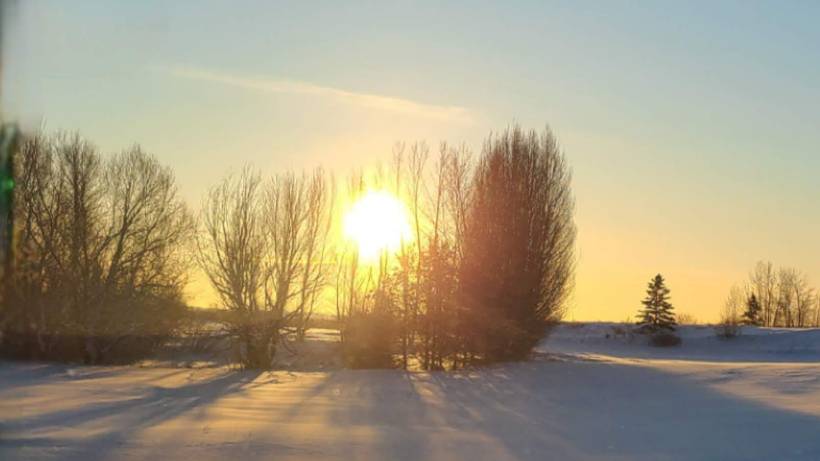
There’s a thread that runs through through me that connects me to the past. It joins my ancestors to me and defines who I am. This thread of golden light hits me and twists through connection. Wrapping me in the love that they had when they prayed for the future.

There is a thread that joins me, strong as it is. This thread is through song and ceremony. It’s made of golden light and connects my ancestral past to me. The light heals, the light sends love, and the golden thread of light keeps me connected. It reminds me that my ancestors prayed for me.

What I took with me to chemotherapy today.

Today, I carried the love my children, my nosim, and husband have for me, it help me feel connected to all my reasons for healing.

Today, I carried my parents’ hope with me to remind me that I am always prayed for.

Today, I carried my brothers familys love for me, and it helped me to know it’s ok to feel sad because there are people there to pick me up.

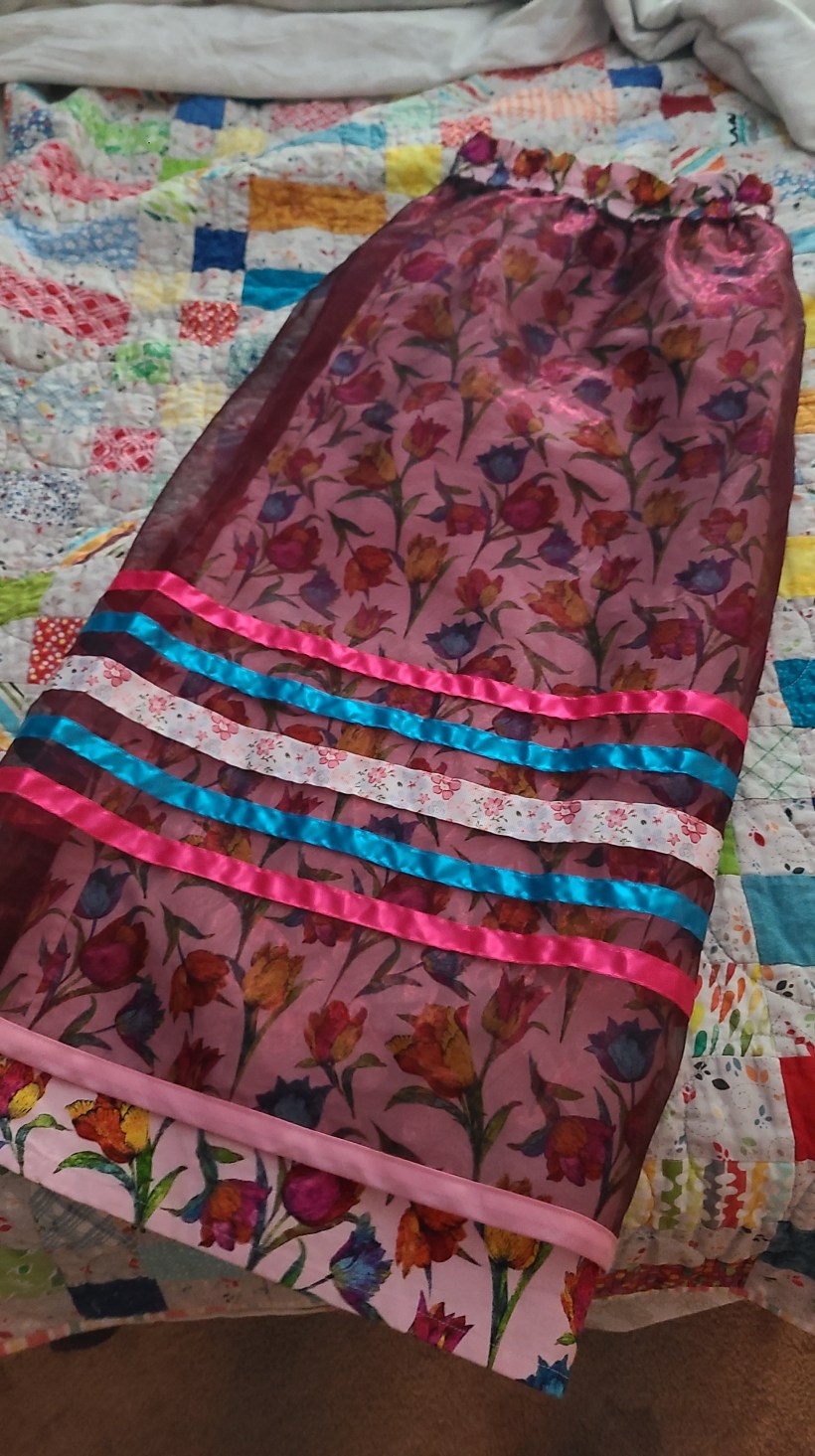
Today, I carried my sisters with me when I went to chemo. I wore a ribbon skirt made by one. It brought the healing love that they freely give me. It reminded me to live life with ceremony, culture, and love.

Today, I carried with me my aunties and uncles prayers. These prayers and their love support all my family during difficult times.

Today, I carried with me my in-laws love and support for my family. I know they hold us close.

Today, I carried with me the love of my nieces and nephews. Their laughter and joy reminded me of life.

Today, I carried with me my friends comfort. This reminds me that I always have people to help me.

Today I brought ahkamēyimok with me. It is the feeling of perseverance, to not give up, and to keep going in spite of difficult times. I am grateful and blessed.

Kinanâskomitin

History

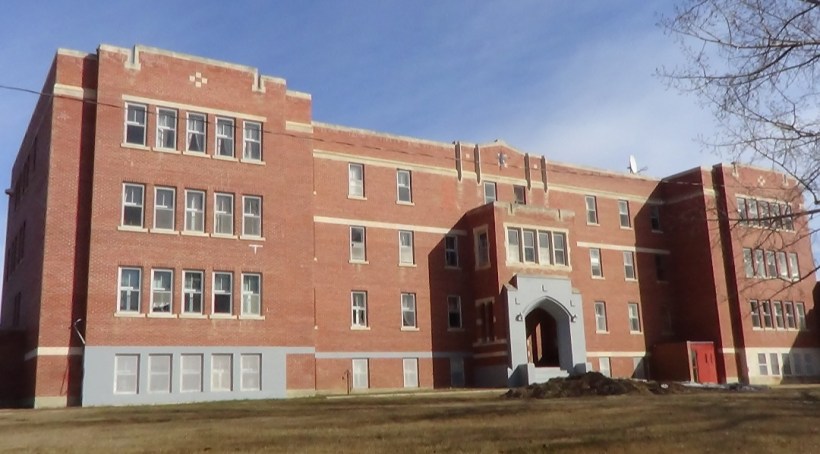
I am a survivor – yes, a survivor of history, a survivor of residential school. Though I did not attend, I was never the less there. I survived it. I was there, I was there before I was born.

This is not ancient history, a story, it is real and it is my history.

I survived the hurt, the anger, the fear – the tears – the sorrow – the betrayal of trust. A child’s trust, the loss of that innocence.

I survived. I survived the wicked behaviour called “discipline”. I survived the shame, humiliation, self-hatred and the loss. “You are nothing, you dirty Indian”

I survived the losses.
The loss of language, culture, history and pride.
THE LOSS, THE LOSS, THE LOSS!!!
The loss of safety, security, and the loss of family, for generations.

How can this be? How did I survive, you ask???

I did, I survived….
I am a survivor of my fathers pain and my Mosom’s shame. I am a survivor of the betrayal, two generations of “education”.

Yes, I did not go to residential school but my family did. My family was sentenced there. The terms were carried out over several generations, sentencing that carried a legacy, holding us, stealing life from us, slowing us, paining us.

It taught my family not just reading and writing. It taught shame, self-hatred and created the need to forget.
It taught my Mosom Self-loathing, it raised him up in foreign ways. It told him “remember your place” “say your prayers, you’ll go to hell” and it created shame, shame, shame.
It taught my father to forget. The only direction to turn – ANYTHING to help you forget. But it was not gone. It never leaves, it was ALWAYS there. It is always there.

It is there in the fear and the tears and the sorrow. It is there in the behaviours, the promises and the inter-generational sorrow. The trauma that still holds.

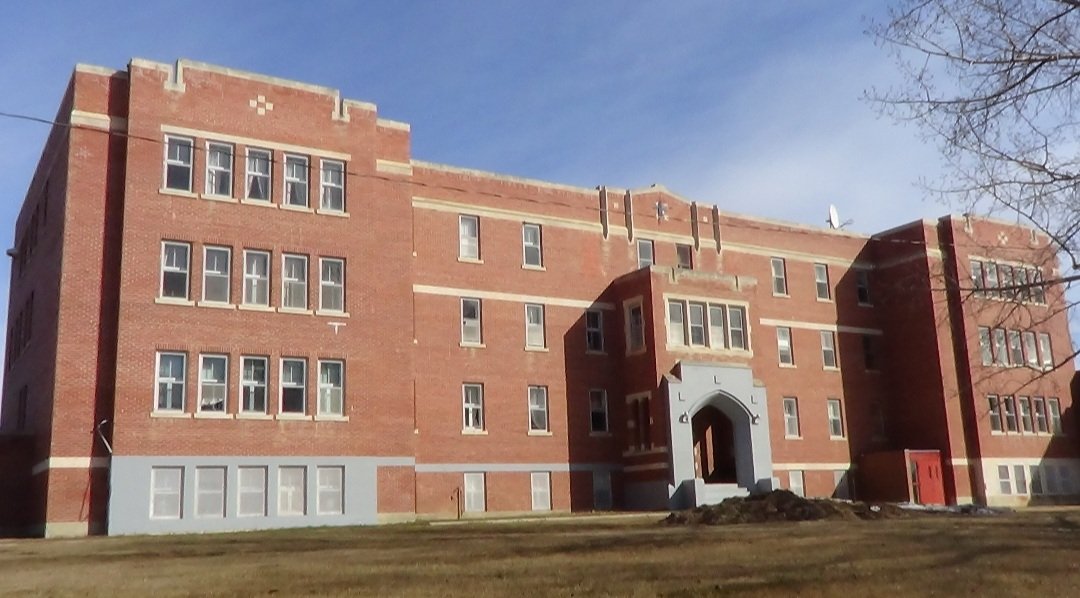
Yet I have survived. I walked into that building, feeling the fear, struggling to make myself go inside. I cried. I cried for those children who never left, whether that was through experience or death. I cried so that I could be free. I survived.

I will not let the former shame claim another generation. “I will be okay, we are okay” “TAPWE” this generation grows strong because I survived. My father and my Mosom lived and I am here in spite of the fear. I am a survivor of residential schools.
Tell me a story

“Tell me a story “

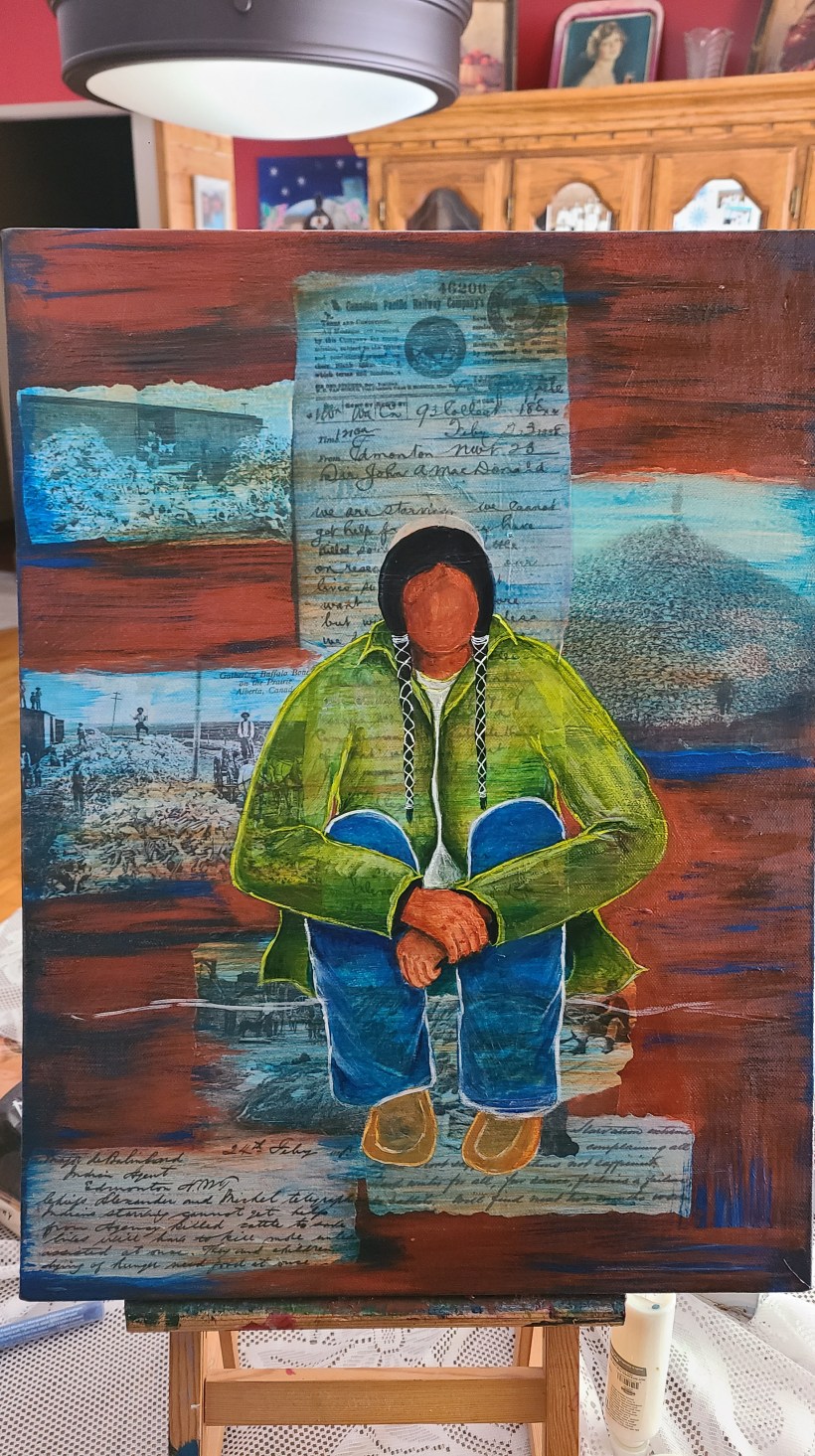
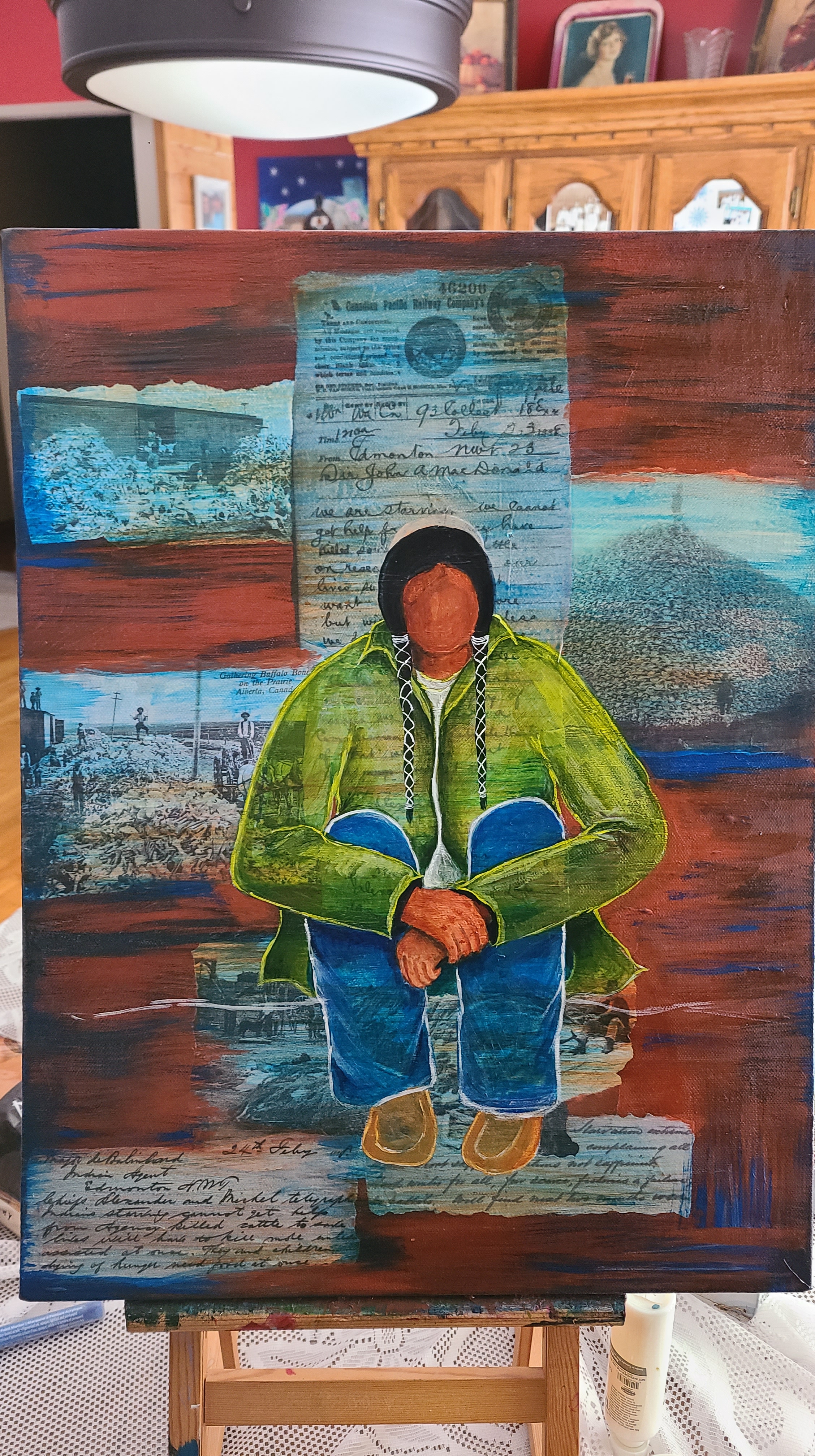
This mixed media piece includes a telegram sent in 1888 from the Chief’s Alexander, Alexis and Michael telling John A MacDonald that their community members are starving and that they had to break the law and kill the cattle in order to save the lives of they and their children and includes parts of the responses from the government. This piece includes images of piles of bison bones and hides from when the bison were slaughtered to show the impact of the loss of an important resource to all plains peoples. The pictures also show the use of the railway to transport the bones to factories to make fertilizer.
The man painted over top has his head down in reflection as he contemplates the telling of our history.
The words of the telegram show through to demonstrate how the history of colonization continues to impact us. The past will always sit with us, and it is important that we remember and tell our own history. The inclusion of archival documents shows a record supporting oral traditions about the impact of signing treaties, the neglect of treaty obligations especially after the 1885 resistance, the loss of access to the land and the loss traditional food resources. It demonstrates the loss of autonomy through the need to ask permission to slaughter their cattle and that without asking permission, they had broken the law and were at risk of being arrested. It is called “Tell me a story” because we continue to speak about our past and the impacts it has had on our communities.

Transcriptions of archive RG10, Volume 3794, File 46,205

Telegram:
Feb 23, 1888
From Edmonton, NWT
Sir John A. MacDonald. We are starving. We cannot get help from the agency, have killed cattle on reserve to save our lives so far. We don’t want to kill anymore but will have to unless we get help at once. We don’t want to break the law but we and our children are dying of hunger. We ask for a commission to investigate the truth of what we are saying but need food at once.
Alexander, Chief of River Qui Barre
Michael Callioux, Chief of Sturgeon river reserve
Alexis, Chief of Lake St. Ann Reserve

At that time, it was illegal for Indigenous people to slaughter their cattle without permission. Even though the cattle had been given to the people as their own to encourage farming, the Indian agent and the government did not consider the cattle the property of the people it was given to. The file this is from includes other documents that explain why the Indian agent decided not to have them arrest for fear it would cause another uprising.

This piece also includes the responses from the governments Indian department to this situation.

Response 1
Feb 24, 1888
To Major de Balinhard Indian Agent
Edmonton, NWT
Chiefs Alexander and Michael telegraph Indians are starving, cannot get help from agency. Killed cattle to save lives, will have to kill more unless assisted at once. They and children dying of hunger need food
at once. Please write facts. See Chiefs and inform them that you have been communicated with by dept. This reply questions the validity of the statement they are starving.

Response 2
Edmonton Feb 25, 1888
Contractors behind delivery provisions, Saddle Lake, Edmonton, and Whitefish Indians were hungry, now fully rationed, Lac La Biche also now receiving rations. Starvation extreme word. Edmonton and St Ann’s complaining all winter of short supplies of rations, not sufficient. Hard winter for all, fur scare, fisheries a
failure, no rabbits, will find next two months more. Samuel, member and spiritual advisor, [is] working this up
[This response downplays the lack of ration, providing an explanation for the provisions not being provided. This treaty
has a clause that stated provisions would be provided in times of famine. It also states that one member is overreacting and getting everyone worked up. It seeks to invalidate the experience of starving people.]

Kiyas ago, our mosom and kokoms; our grandfathers and grandmothers, told us this. We were starving, and our children were dying. We couldn’t get any help from the Indian agent. The law said we could not kill our own cattle. Lots of our traditional food was gone. We thought that we would also be gone.

Medicine Gifts

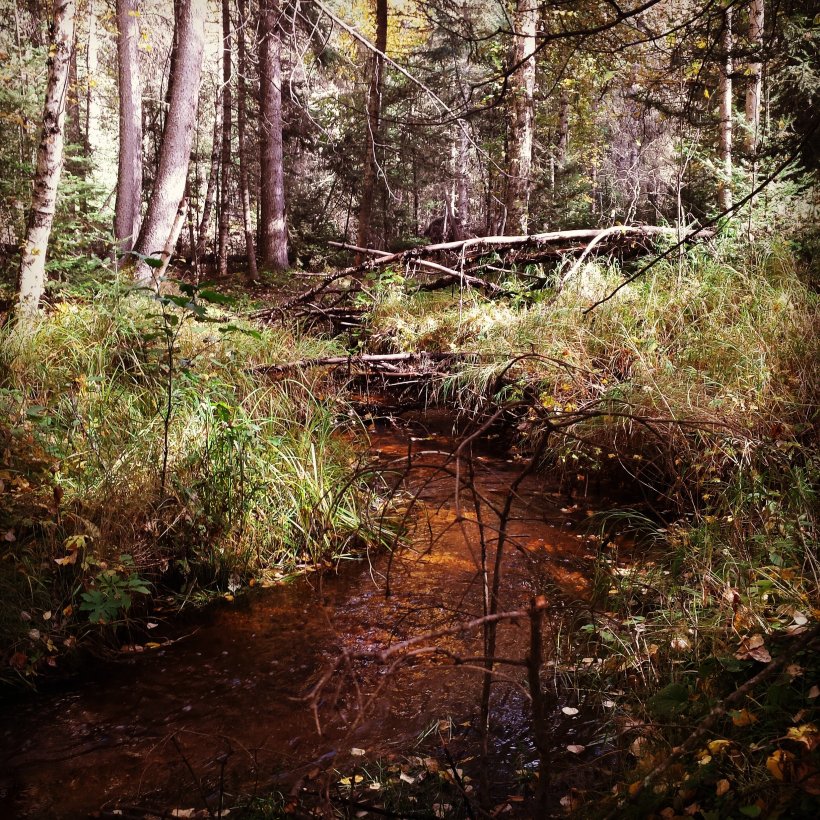
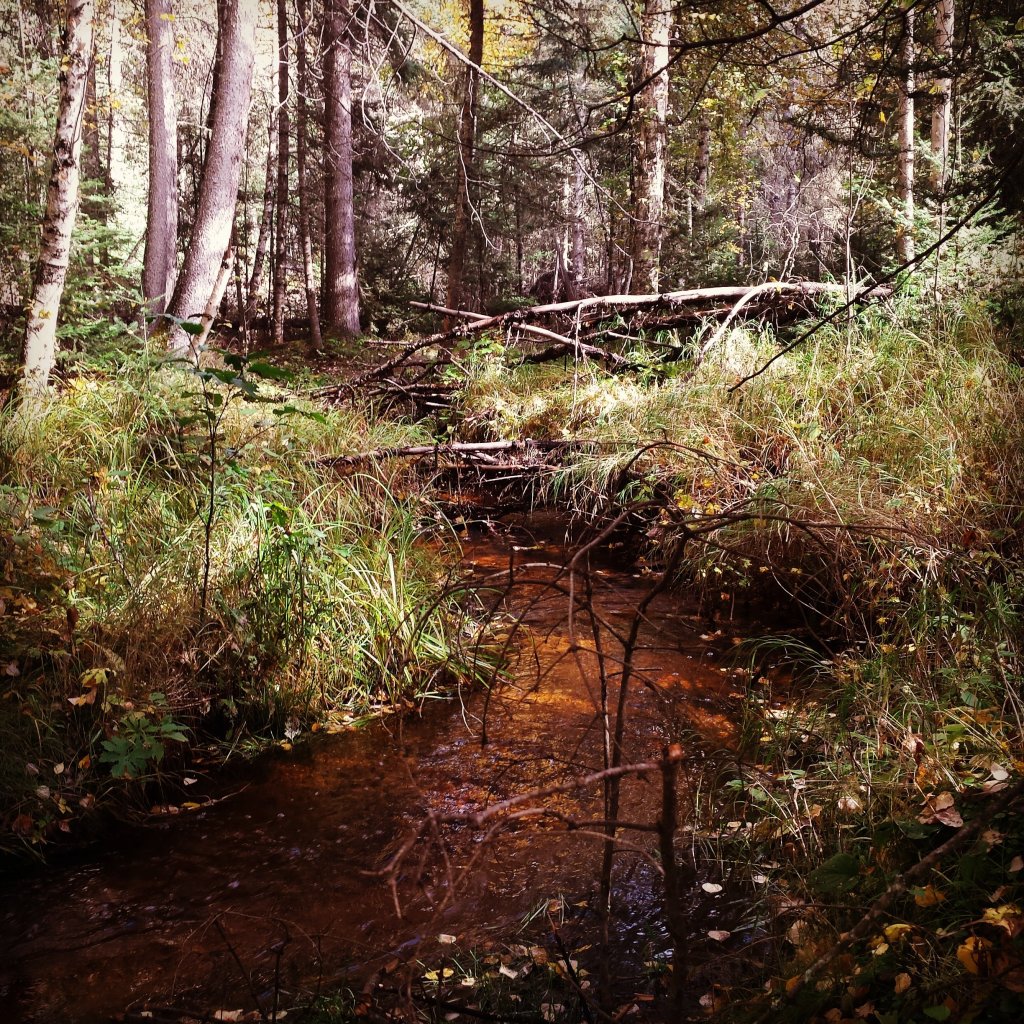
Touchwood creek

Medicine has been gifted to people. Every culture has its own understandings of medicine and what that means. Medicine is learned, it is taught, it is lived. In Nehiyawak culture medicine can be plants, it can be ceremony, it can be spending time in nature or with others. The word medicine has many different meanings. In this way there are many different ways to seek healing. Medicine is what makes you better.

One summer several years ago we went camping at mile seven. My Aunt Alsena, my father’s first cousin, met us there. Our purpose in going there’s was to pick medicines, there are several different kinds in that area.

We had spent the afternoon picking medicines and auntie Alsena told us that her friend Diane was going to meet up with us. She had camped there with us before. When Dianne showed up she had brought sage and sweet grass with her.

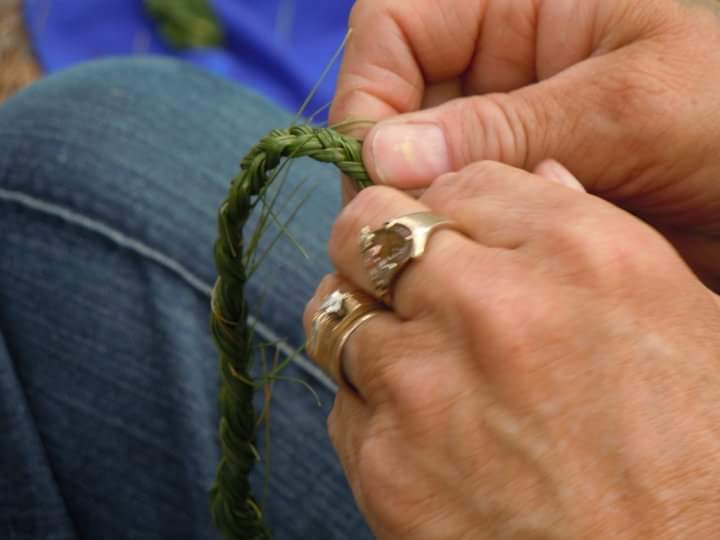
We learned about creating sage bundles and sweetgrass braids. Once we finished making the braids and bundles we took them and hung them up to dry in the breeze off the lake. 

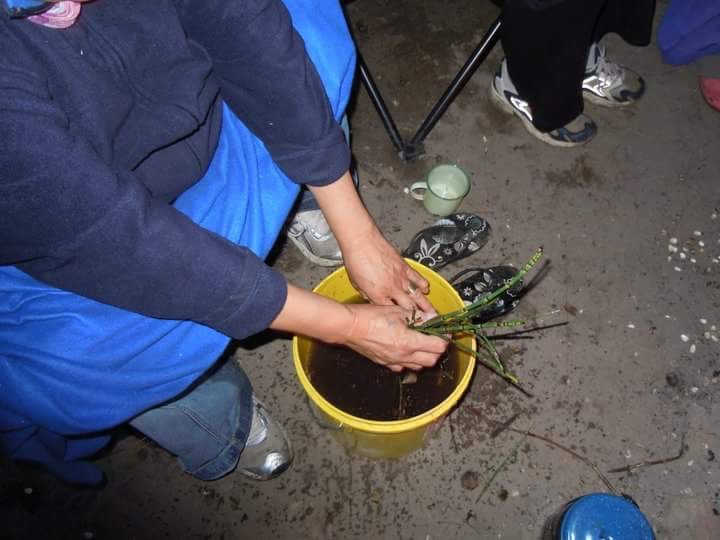
Then we began to clean the roots and preparing the medicines. As we were cleaning the medicines, Dianne and auntie Alsena were telling stories of the medicines and how we got them.  We learned how the medicinal plants were used and why we are so connected to the land. This connection itself is a form of medicine. Just being out on the land brings healing in various ways.

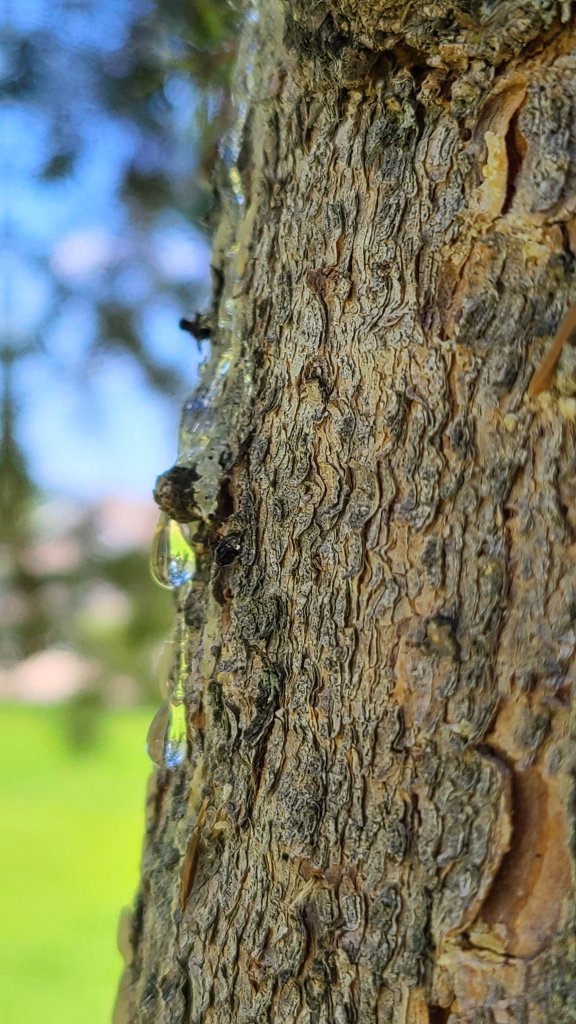
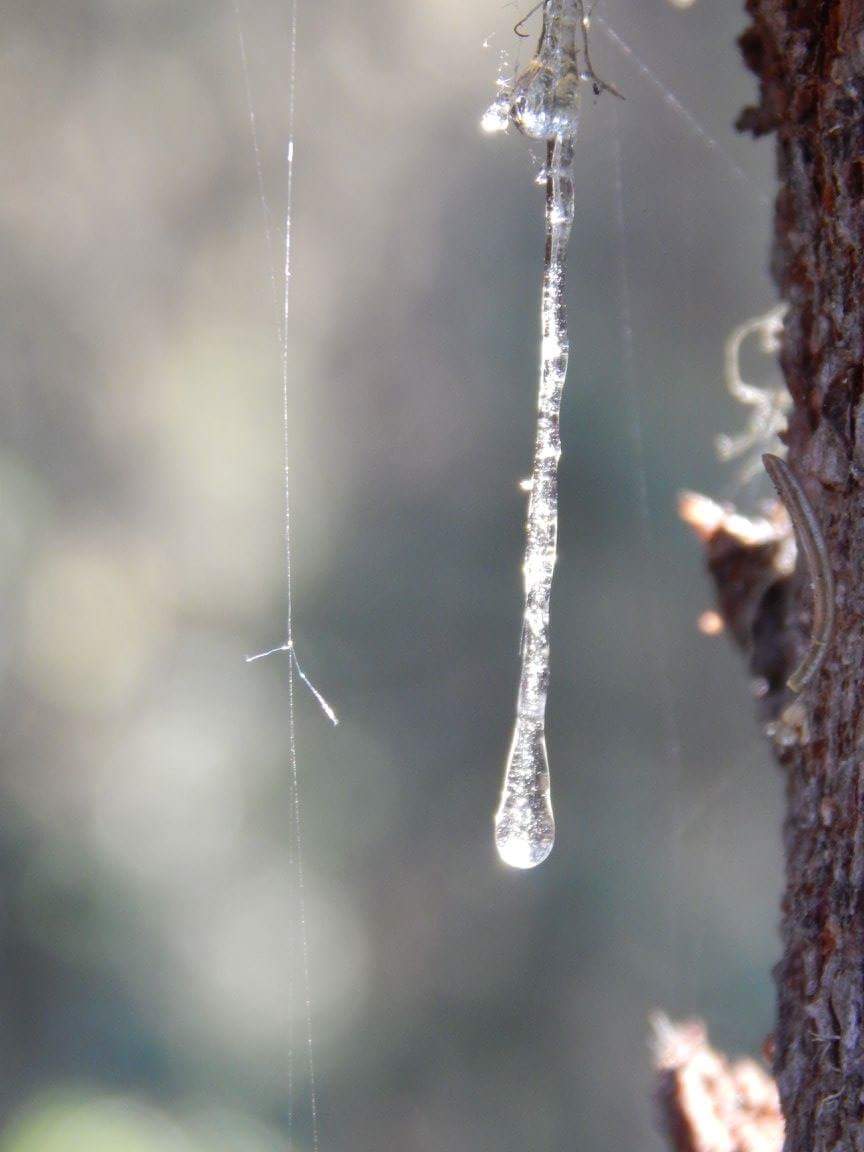
One of the medicines we learned about was spruce gum. This spruce gum is used as an antiseptic. It fights infection. It helps to hold skin together when someone is injured. It is used to treat colds and is added to other medicines. It can be used for food too.

We were told the story of the gift of spruce gum and how badger gave it to us. Badgers are fierce and dangerous animals. A long time ago they were very big, much larger than they are now. They were bigger than people, and they used to kill and hurt people. The people prayed to the Creator for help, because we are weak and we need help to survive. The Creator told badger to stop harming people. That did not happen. Eventually the Creator had to do something about badger. The people had chased two baby badgers up a tree. Creator told them that because badger had not respected the request to live peacefully they would be changed. They would no longer be bigger than the people, they would remain the size of their babies. They would provide help to the people through the warmth of their fur, etc. The baby badgers were grateful that the Creator allowed them to live and they promised to help the people. When they slid down the spruce tree their claws cut open the bark and the tree sap came out. The badgers told the people that this was their medicine that they were sharing it with the people as a way to make amends. They taught the people what its used for and how to use it. There are stories for all medicines. Storytelling helps you to remember the medicines and how and why they are used.

Auntie Alsena also told us about a man was lost in the bush for two weeks in the winter. His snowmobile ran out of gas and he tried to hike out of the bush. He got lost and ran out of food and water. To survive he ate spruce gum and drank melted snow to help sustain his body. He survived and was rescued. She told us all that spruce gum is full of vitamin c and will help us if we need it.

All of these activities were each a form of medicine. Each thing gave us something different to heal us. It balanced our spirits through the camping and story telling. It taught us ways to help ourselves in a crisis. We learned the medicinal properties and usage of plants. We laughed and found purpose in what we did. We built connections and created memories that will last a lifetime. All this is good medicine.

Truth and Reconciliation

Generational Healing

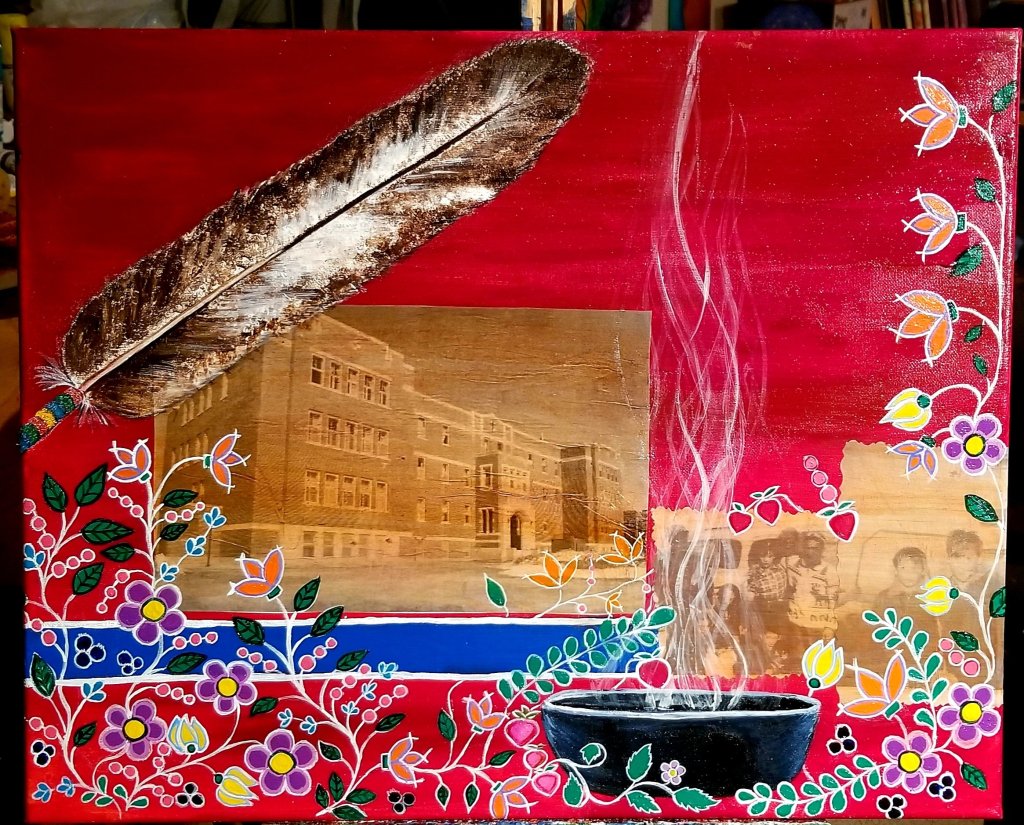
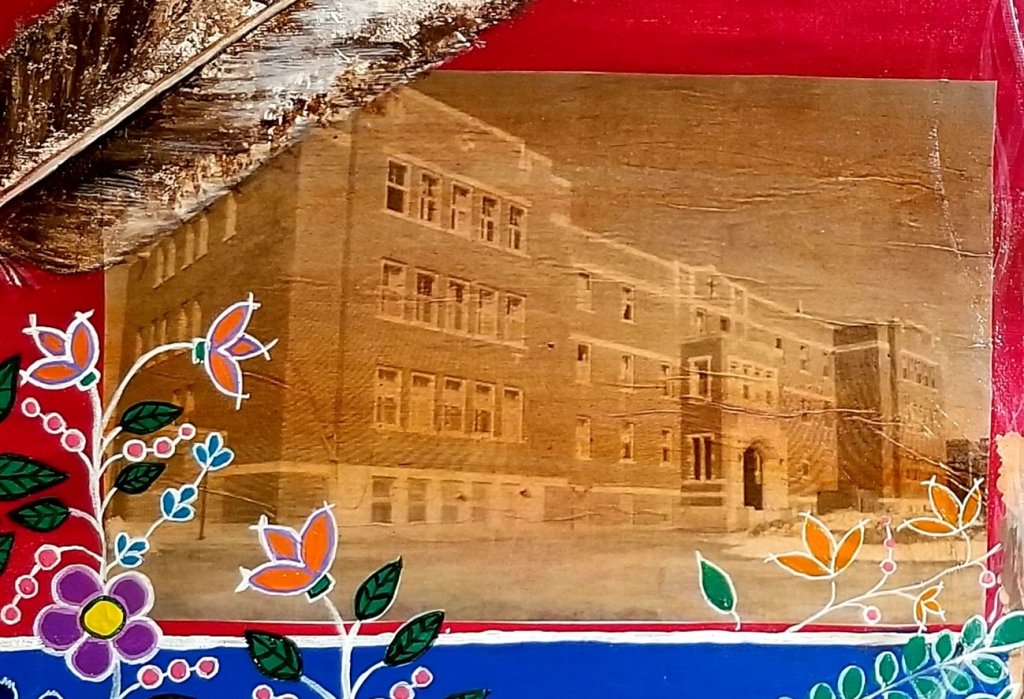
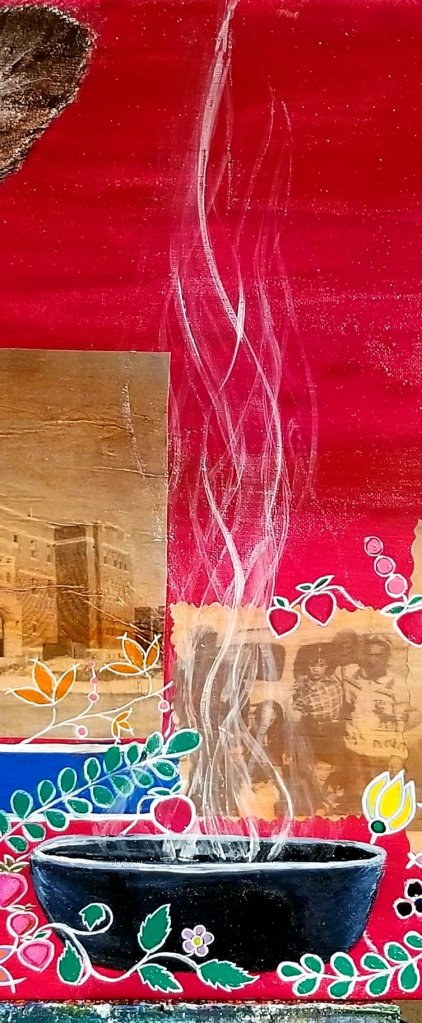
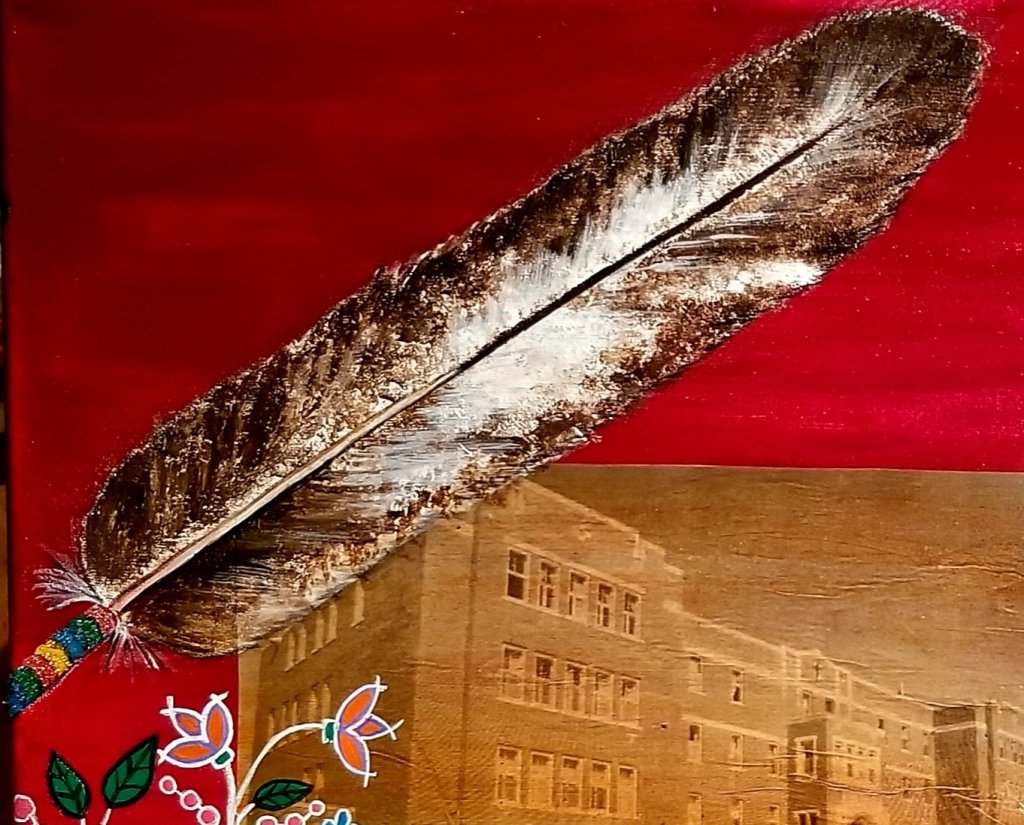
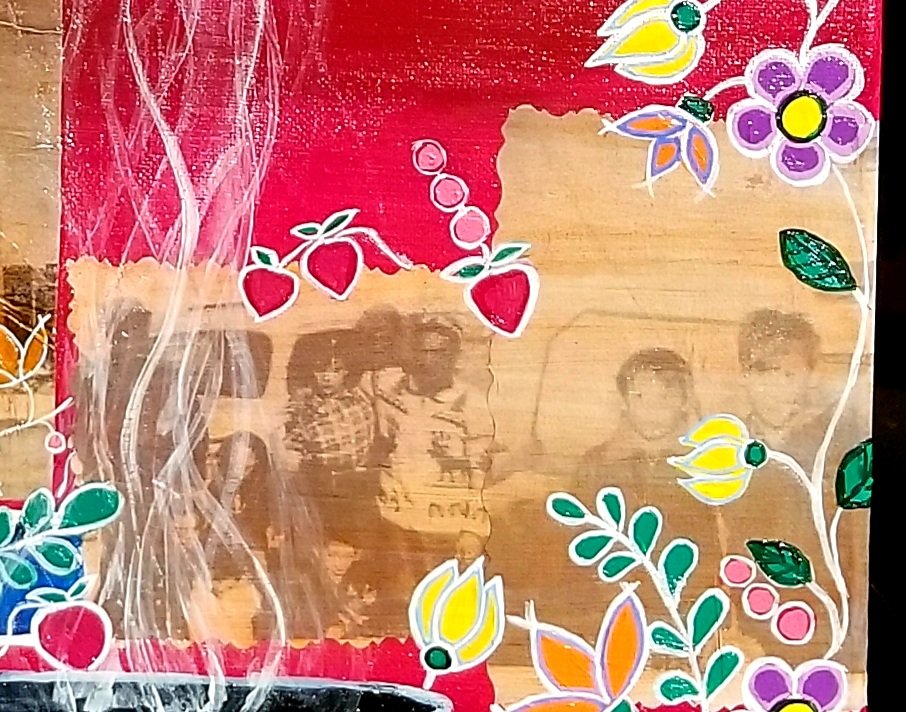
I paint as an expression of what I feel that I cannot always explain with words. Sometimes these paintings come to me very clearly as this one did. I had been thinking about how much my family has been impacted by residential schools, how colonization has affected us and how these things are passed on generationally.

This painting represents how imposing blue quills has been on my family. There is a lot of intergenerational trauma because of it. We had multiple generations of family members attend this s hool.

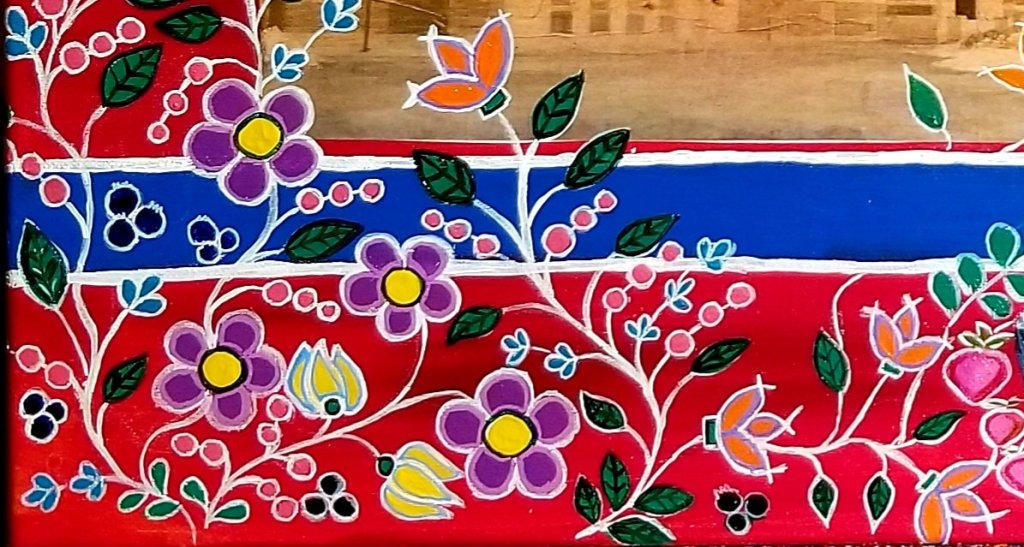
Flowers represent medicines to me. The flowers are growing over the photos and bringing healing and change. Medicine comes in many forms.

The photo of blue quills is large because it had a huge impact. It’s not covered because it will never go away.

The smudge and eagle feather are clearing away the pain through reconnection to culture. Culture is medicine.

Each one of the flowers represents someone in my family. The purple ones are my dad and his siblings. The yellow ones represent myself and my siblings that’s why there are 5 of them. The orange ones are my parents grandchildren. The pink dots represent all of my cousins. The berries represent change and new growth. The sage also represents growth through healing. There are two photos of my family members as youth when they would’ve been in Blue Quills Indian Residential school

The background colours are there because of how this painting came me. Red is understood to be connected to healing, it is also understood to be the only colour that spirits can see.

Overall the painting is like a prayer for healing, separating my family from the school and the impact it’s trauma created.

Connections with the Land

Do you carry the land or does the land carry you?
Are you immersed and infused? Do you feel it in your blood?

Do you carry the land?

Does it walk with you?

Does it heal you?

Do you feel it within you? I feel the land, it is ever present in its beauty, in its calm and even in its wild freedom. The land exists in my heart and my spirit.
Where is the land in you?

Do you carry the land or does the land carry you?

When you walk through the bush do you feel the land? Can you see its gifts, it medicines, its life?

Do you feel it carrying you, sustaining you and healing you?

Does the land carry you? Are you connected to the land? Are you part of the land? Is it part of you? Do you hear it speak and feel its heartbeat?

It speaks through the rustles of the wind in the trees and grasses. It heals through connection. It heals through plant medicine and the water. It heals through its spirit. When I walk barefoot on the land, it sustains me with its gifts. I am infused within the land. My ancestors walked here, healed here, bled here, ate here. This land gifted my ancestors with life.

The land speaks to me. In the winter it speaks in the cold and the silence. The the spring it speaks when it awakens with new life.  In summer it speaks in its beauty. In the fall the land speaks, with its gifts, relaxation and promise of restoration.

It carries me, it sustains me, it heals me.

I feel the land, it flows within me, I carry the land with me.

I carry the land and the land carries me.
What about you?

Do you carry the land or does the land carry you?

Silence

Silence,

It is deafening in its stillness and quiet

Kista?

Awina?

Neya.

I am silent.

I am mute.

What do I say?

These words are lost to me.
These words I should know.
Tapwe.

I should be able to speak but I am silenced.

The nuns and the priests they took away the language.

I heard it in my youth.

My father’s first language. He learned not to speak and to remain silent.

It is spoken to others, who also spoke…those not totally mute, not totally silenced but still they did not speak it to me. I am silenced.

Sometimes words want to come, not lots of words only some. Then fear takes hold and they go away.

I do not know enough language to get by.
I know a few words but still fear gets in the way so I remain mute.

Silenced.

The silence is deafening in its stillness and quiet.

Thanks to that school I am silent. I am mute.

Walking

I am walking, feeling the rhythm, I hear the distant beat of drums. They call to me, telling me to come home.

I try to find my way, I stumble and fall, I rise and follow the sound, growing stronger like a heartbeat. I hear the voices of my ancestors calling me, “Nosim, you will be ok, granddaughter do not be afraid, you will find the way.” 

I walk closer to the earth, feeling more grounded and connected as I stand barefoot on the earth. I search, sometimes stumbling as my walk gets closer. I feel the heartbeat of the earth as I walk under the sky. I know that Creator is showing me the way. I am walking back to myself, back home, finding comfort in the old ways. 

Ceremony calls. I let go of my pain. I let go of my fear. I am walking a new yet old road.

I am walking, feeling the rhythm, I hear the not so distant beat of drums. They call to me, telling me I am home. 

Medicine Gifts 

One summer several years ago when we were camping at mile seven. My Aunt, my fathers first cousin, Alsena met us there. We had been camping for several days when Auntie Alsena joined us. One afternoon we spent picking medicines and ĺearning about the plants that we were picking when Alsena told us that her friend Diane was going to meet up with us. She had camped there with us before. When Dianne showed up she had brought sage and sweet grass with her. We learned about creating sage bundles and sweetgrass braids. Once we finished making the braids and bundles we took them and hung them up to dry in the breeze off the lake. 

Then we began to clean the roots and prep the medicines. As we were cleaning the medicines Dianne and Alsena were telling stories of the medicines and how we got them. 

One of the medicines was spruce gum. This medicine, spruce gum, was/is used as an antiseptic. It helped to hold skin together when someone was injured. It was/is used to treat colds and is added to other medicines depending on the need.  The story we were told was about the gift of spruce gum and how badger gave it to us. The badger told the people how to use it for medicine and food. Alsena said that one man was lost in the bush for two weeks in the winter and he ate spruce gum to help sustain his body. 

There are so many plants that can help people with their health, it’s important that we keep this knowledge strong and that we spend time with those who know how to treat people.