Family history

I’ve been told about my family’s history and told I should remember it, so I do. This is how we start.

In the beginning… we were here, we were here from time immemorial, from before colonization, before Canada and before the treaties. We come from people who were autonomous and independent. We had our own creation story, our own history, our own math and science. We hand our own medicines and medical practices. We educated ourselves. We took care of ourselves. We knew our history, our laws, and practiced our culture freely.  As time continued we experienced changes and made contact with new cultures and new ideas. We considered ourselves equal to these people. They did not consider us their equal and sought to exploit us.

We found the changes that were occurring were faster than we expected, and we were asked to enter into agreements to share the land.  So we entered into ceremony, prayed, and asked for guidance towards this end. In 1876, we were guided and therefore agreed to enter into a sacred treaty. This was done to benefit the people. We thought that because we we had entered into an agreement through Sacred Ceremony, that they would honour the sacredness and truth of the treaty. We thought they would follow through on their word to help us.

We did not agree to give up our independence, nor did we agree to give up who we were, our laws, our traditions, and our ways of being. We did not think they would continue to steal from us, not only taking all the land we agreed to share but also eventually our children. We did not think we would lose our autonomy, nor did we think we would be forced to give up our culture, language, and traditions to fit into another nations society. Their society.

So our family history is always told with the prefaced context of what happens next. This is the story of our family and its journey to now. It’s about how history has impacted us as best as I can tell. It’s about our relatives and who we come from. It’s the story of us.
Love and sorrow

Another round of chemotherapy

It has been a long 3 years since I was first diagnosed with stage 3B ovarian cancer. I’ve riden a Rollercoaster of emotions, and those who know me well know I’m not fond of rollercoasters, but you can not run away from it. You put your safety harness on and hope for the best.

During this time, I have had lots of family members also get diagnosed with cancer. It’s a scary place to be. You begin to live with a lot of sorrow. You feel like the darkest of darkness has swept around you, and you wonder if you will survive. Those people in your life tell you to fight the good fight, to be strong, to find the light and hope, and to remind you of how much they love you. All great messages. What we also need to remember is that it’s also ok to feel angry, to feel sadness or sorrow, and to wonder if things will ever go back to the way it was. There’s no such thing as negative emotions. It’s ok to feel your feelings. They’re only there to visit. They don’t need to stay. We need balance in our lives, and these feeling often balance themselves out in the end.

I think love and sorrow travel hand in hand.  It’s what brings joy into our lives. Without sorrow, you can not see the beauty that walks and exists around you. Sometimes, I think we get caught up in the sorrow and need people to show us the way back to love and show us how to see the beauty. It’s the nature of like. I also believe that when we don’t acknowledge what causes us sorrow, that’s when we begin to live in anger. As I’ve said many times to my lo ed ones, I don’t want to live in anger. However, it is ok to feel angry. I just believe that we acknowledge it and then move forward, returning to our love state of being. I know it sounds easy, but I also know it’s hard to do. 

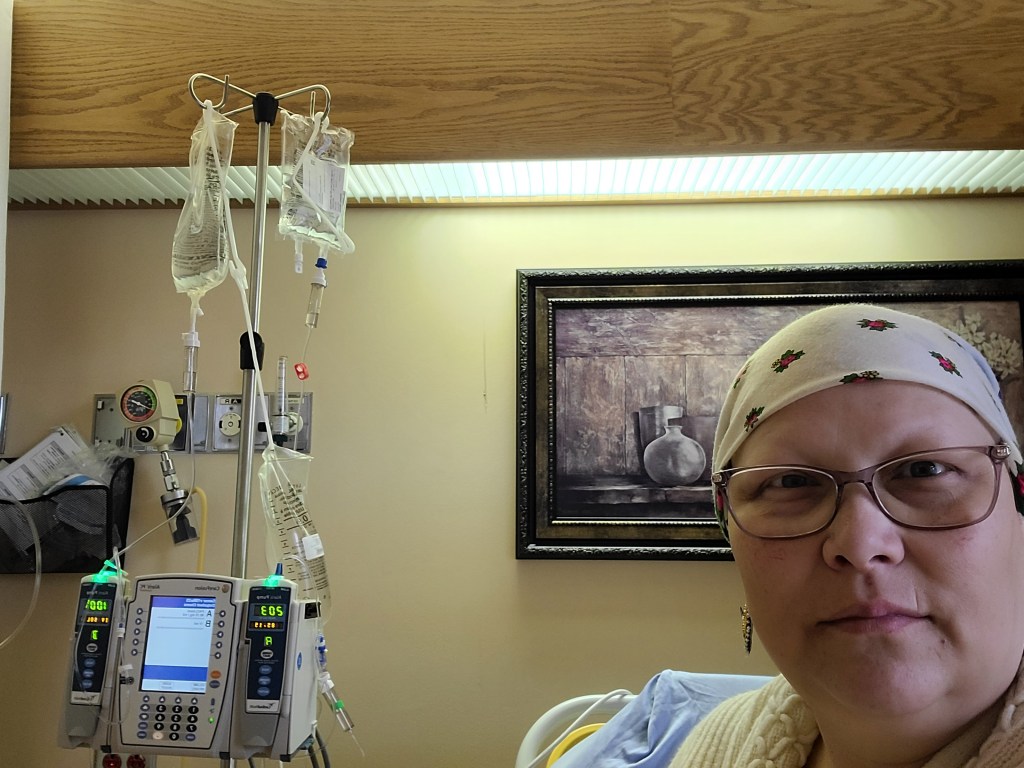
So, as I sit here receiving the 6th chemotherapy for my remission (I’ve had 12 total now). I think of all I’ve learned through this process. I’ve learned that while I’m the one with cancer, all my loved ones are also going through this journey. I’ve learned a lot about my body and health. I’m grateful for a bunch of blessings. The medical people in my life and the medical discoveries over the many years of research. I am grateful for healing, even if it’s slow. I’m grateful for my family and friends who bring me light and love every day. I’m grateful to the Creator who gives me strength every day to keep going. I’m grateful to those who have dropped off meals to help us out. I am for the kindness of strangers who remind me that there is still love in a world full of sorrow. Most of all, I am grateful for my life with all its sorrows and all its love.

Kinanâskomitin, I am grateful, ahkamēyimok, keep going. Kiyam, let go, miyo-pimâtisiwin, it’s a good life. Live it in a beautiful way. Ekosimaka, that’s all for now.

“We don’t say goodbye”

Describe the last difficult “goodbye” you said.

I’ve always been told by my elders that we don’t say goodbye. We say see you later or we’ll see you again or see you soon. My understanding of this is because goodbye is final. Goodbye is what you say when you will no longer see a person.

There have been many times when it felt like I was never going to see a person or speak to them again. The last truly difficult goodbye was the last time I spoke to my cousin on the phone. He was in the hospital with covid. He was immunocompromised as he’d had a double lung transplant several years before.

When he got his new lungs, he was so grateful. He told me, “These lungs belonged to a young man, I’m going to live a life because of his gift.” He did. He and his girlfriend got married. They went places and most of all he went fishing. He loved fishing.

When he got sick with covid, he couldn’t have lots of visitors. He had his wife and my dad on his list. We talked a lot. He would send me photos of the treatments they gave him. Then he wasn’t getting better. The last time we talked on the phone when we were close to saying goodbye, I said “well we’d better say goodbye soon.” I didn’t even think about what I had just said to him, but he did. He said, “Ho, remember we don’t ever say goodbye. Don’t ever say goodbye. I’ll see you again.” “Yes, I forgot, ” was my reply. We talked a lot longer, and I told him my husband was taking me to Jasper for my 50th birthday and that I wasn’t sure what the cell service was going to be like. I told him I’d talk to him when I got back.

On my birthday my parents called me, they said that his wife had called and asked them to come to the city to be with them. My cousin passed away the next day. When my mum called me to tell me he had died, all I could think of was, “we don’t say goodbye, we never say goodbye, I’ll see you again.” On our hike that day, I walked to a beautiful spot, took a photo, put some tobacco, and prayed for him. When we buried him, it was hard. That was the last difficult goodbye.

History

I am a survivor – yes, a survivor of history, a survivor of residential school. Though I did not attend, I was never the less there. I survived it. I was there, I was there before I was born.

This is not ancient history, a story, it is real and it is my history.

I survived the hurt, the anger, the fear – the tears – the sorrow – the betrayal of trust. A child’s trust, the loss of that innocence.

I survived. I survived the wicked behaviour called “discipline”. I survived the shame, humiliation, self-hatred and the loss. “You are nothing, you dirty Indian”

I survived the losses.
The loss of language, culture, history and pride.
THE LOSS, THE LOSS, THE LOSS!!!
The loss of safety, security, and the loss of family, for generations.

How can this be? How did I survive, you ask???

I did, I survived….
I am a survivor of my fathers pain and my Mosom’s shame. I am a survivor of the betrayal, two generations of “education”.

Yes, I did not go to residential school but my family did. My family was sentenced there. The terms were carried out over several generations, sentencing that carried a legacy, holding us, stealing life from us, slowing us, paining us.

It taught my family not just reading and writing. It taught shame, self-hatred and created the need to forget.
It taught my Mosom Self-loathing, it raised him up in foreign ways. It told him “remember your place” “say your prayers, you’ll go to hell” and it created shame, shame, shame.
It taught my father to forget. The only direction to turn – ANYTHING to help you forget. But it was not gone. It never leaves, it was ALWAYS there. It is always there.

It is there in the fear and the tears and the sorrow. It is there in the behaviours, the promises and the inter-generational sorrow. The trauma that still holds.

Yet I have survived. I walked into that building, feeling the fear, struggling to make myself go inside. I cried. I cried for those children who never left, whether that was through experience or death. I cried so that I could be free. I survived.

I will not let the former shame claim another generation. “I will be okay, we are okay” “TAPWE” this generation grows strong because I survived. My father and my Mosom lived and I am here in spite of the fear. I am a survivor of residential schools.

Kewaytinok

The going home snow, kewaytinok

Tell me about the going home snow, kewaytinok

The last snow before spring. One last moment to remind you to take a breath in the stillness of winter.

Tell me how the geese have returned and the birds sing. Kewaytinok

Tell me about life renewed.

Tell me about the going home snow and what it means.

Kewaytinok

Medicine Gifts

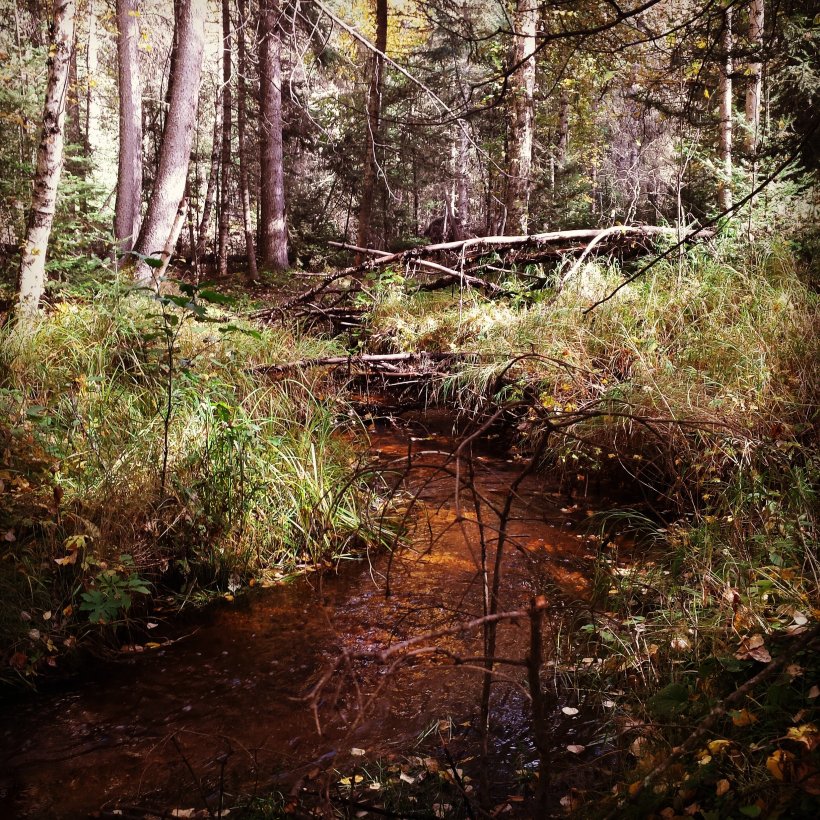
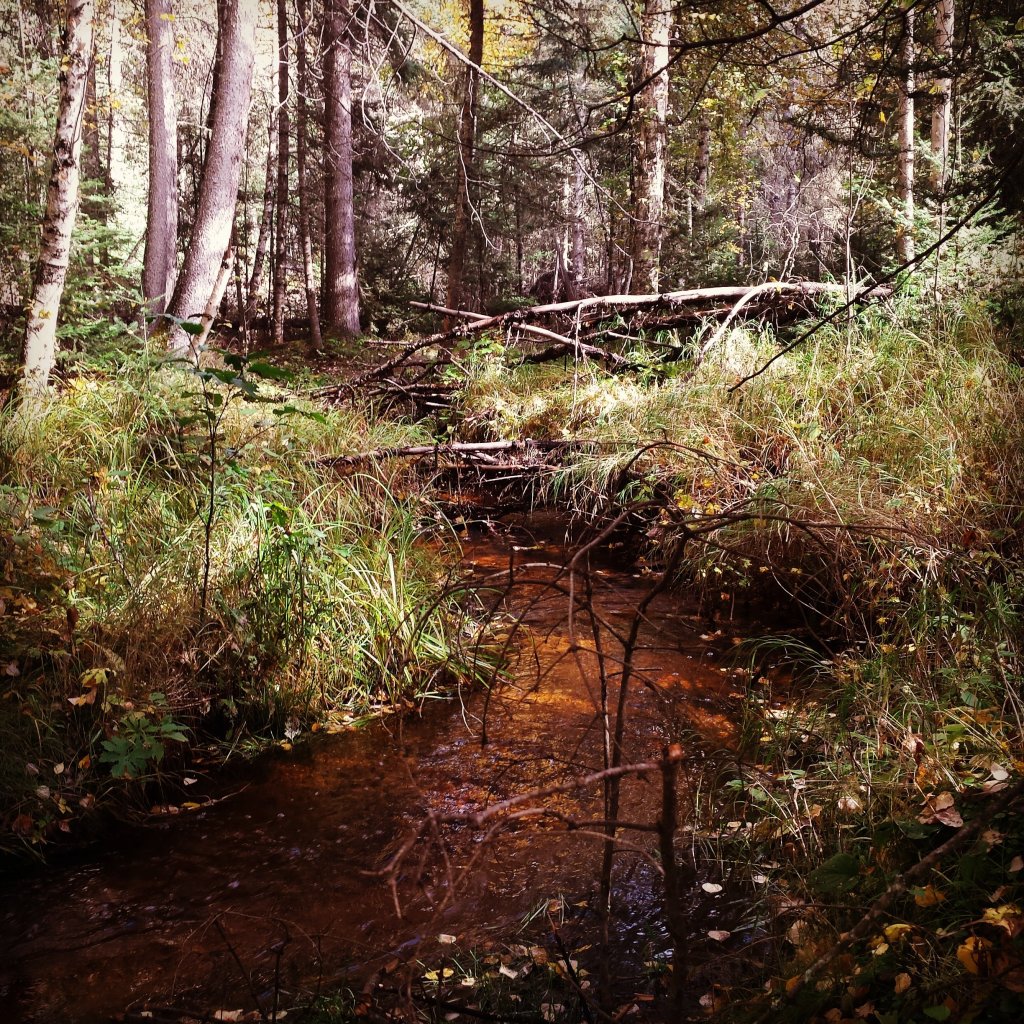
Touchwood creek

Medicine has been gifted to people. Every culture has its own understandings of medicine and what that means. Medicine is learned, it is taught, it is lived. In Nehiyawak culture medicine can be plants, it can be ceremony, it can be spending time in nature or with others. The word medicine has many different meanings. In this way there are many different ways to seek healing. Medicine is what makes you better.

One summer several years ago we went camping at mile seven. My Aunt Alsena, my father’s first cousin, met us there. Our purpose in going there’s was to pick medicines, there are several different kinds in that area.

We had spent the afternoon picking medicines and auntie Alsena told us that her friend Diane was going to meet up with us. She had camped there with us before. When Dianne showed up she had brought sage and sweet grass with her.

We learned about creating sage bundles and sweetgrass braids. Once we finished making the braids and bundles we took them and hung them up to dry in the breeze off the lake. 

Then we began to clean the roots and preparing the medicines. As we were cleaning the medicines, Dianne and auntie Alsena were telling stories of the medicines and how we got them.  We learned how the medicinal plants were used and why we are so connected to the land. This connection itself is a form of medicine. Just being out on the land brings healing in various ways.

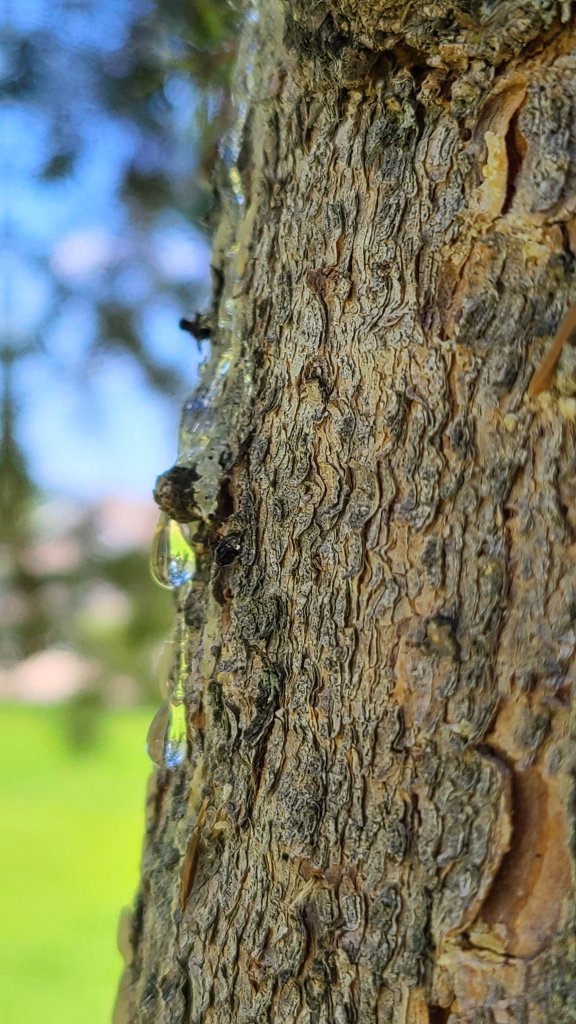
One of the medicines we learned about was spruce gum. This spruce gum is used as an antiseptic. It fights infection. It helps to hold skin together when someone is injured. It is used to treat colds and is added to other medicines. It can be used for food too.

We were told the story of the gift of spruce gum and how badger gave it to us. Badgers are fierce and dangerous animals. A long time ago they were very big, much larger than they are now. They were bigger than people, and they used to kill and hurt people. The people prayed to the Creator for help, because we are weak and we need help to survive. The Creator told badger to stop harming people. That did not happen. Eventually the Creator had to do something about badger. The people had chased two baby badgers up a tree. Creator told them that because badger had not respected the request to live peacefully they would be changed. They would no longer be bigger than the people, they would remain the size of their babies. They would provide help to the people through the warmth of their fur, etc. The baby badgers were grateful that the Creator allowed them to live and they promised to help the people. When they slid down the spruce tree their claws cut open the bark and the tree sap came out. The badgers told the people that this was their medicine that they were sharing it with the people as a way to make amends. They taught the people what its used for and how to use it. There are stories for all medicines. Storytelling helps you to remember the medicines and how and why they are used.

Auntie Alsena also told us about a man was lost in the bush for two weeks in the winter. His snowmobile ran out of gas and he tried to hike out of the bush. He got lost and ran out of food and water. To survive he ate spruce gum and drank melted snow to help sustain his body. He survived and was rescued. She told us all that spruce gum is full of vitamin c and will help us if we need it.

All of these activities were each a form of medicine. Each thing gave us something different to heal us. It balanced our spirits through the camping and story telling. It taught us ways to help ourselves in a crisis. We learned the medicinal properties and usage of plants. We laughed and found purpose in what we did. We built connections and created memories that will last a lifetime. All this is good medicine.

Etikwe, I suppose

Etikwe, I suppose. I’m not sure why this word popped into my mind, I suppose there are lots of reasons for it.

I think about how many different times I’ve heard this word in my life. Etikwe, I suppose it’s a lot.

Etikwe, it means I suppose or maybe just suppose. Awina etikwe, I don’t know who or maybe I wonder who depending on the context. I suppose I should talk pîskiskwêw to my dad about it.

I suppose I’m supposed to use it more. I guess I need to use the words in Cree as they pop into my mind.

Etikwe it is to remind me that there are words that I know and that I need to learn more.

So that I can pê-pîkiskwêw
Ekosi, that’s all my thoughts for now, etikwe

Truth and Reconciliation

Generational Healing

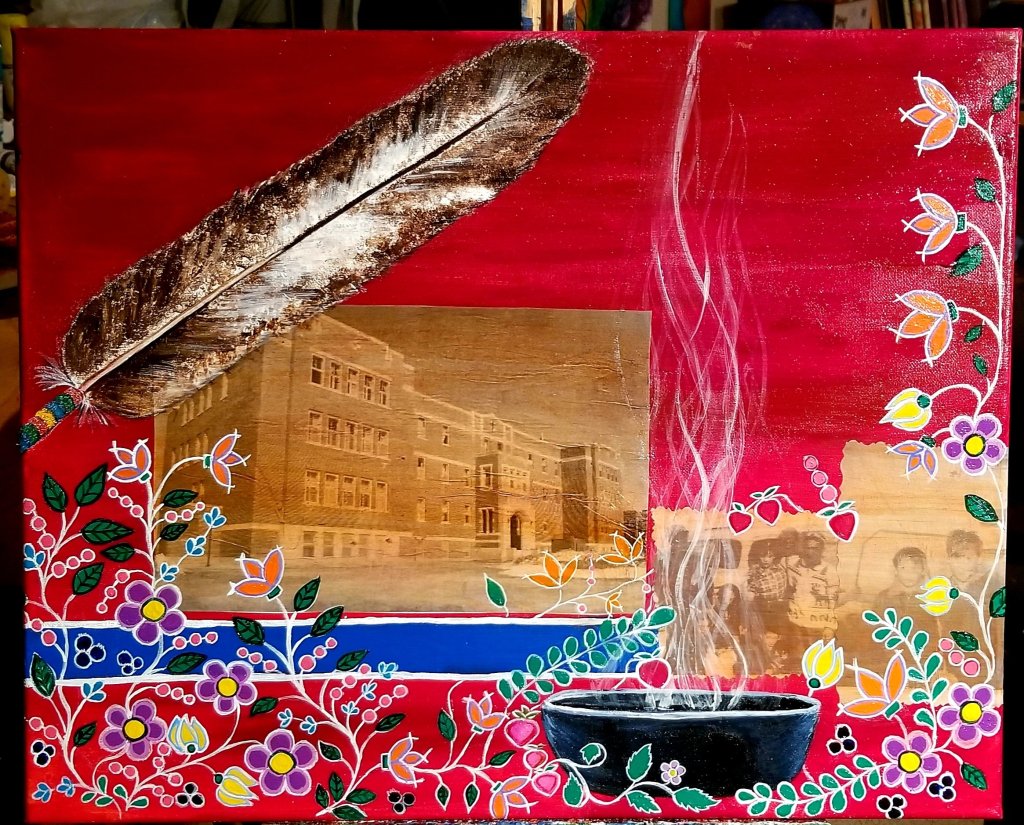
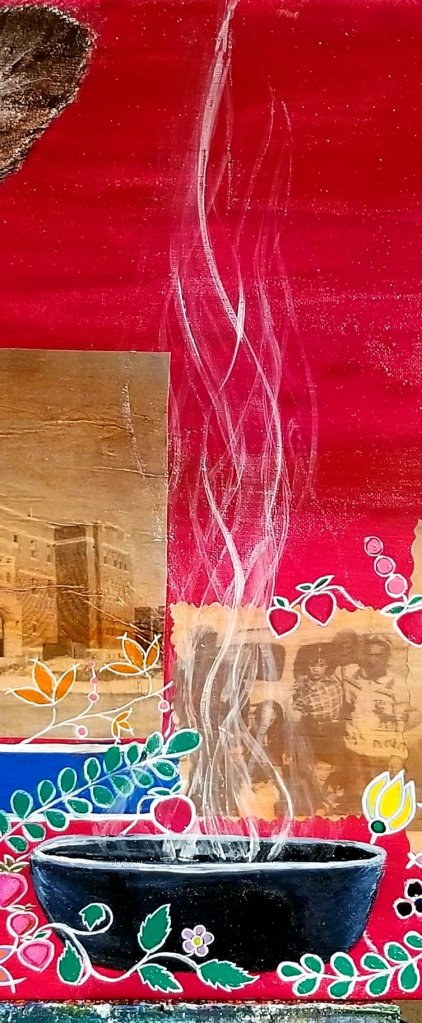
I paint as an expression of what I feel that I cannot always explain with words. Sometimes these paintings come to me very clearly as this one did. I had been thinking about how much my family has been impacted by residential schools, how colonization has affected us and how these things are passed on generationally.

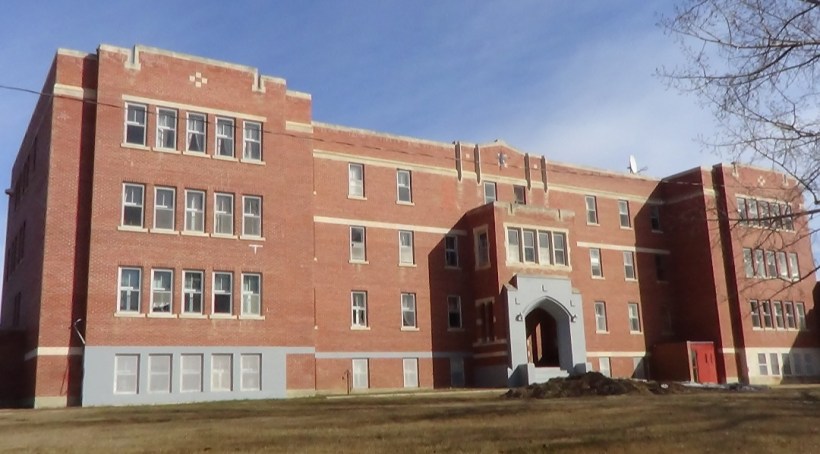
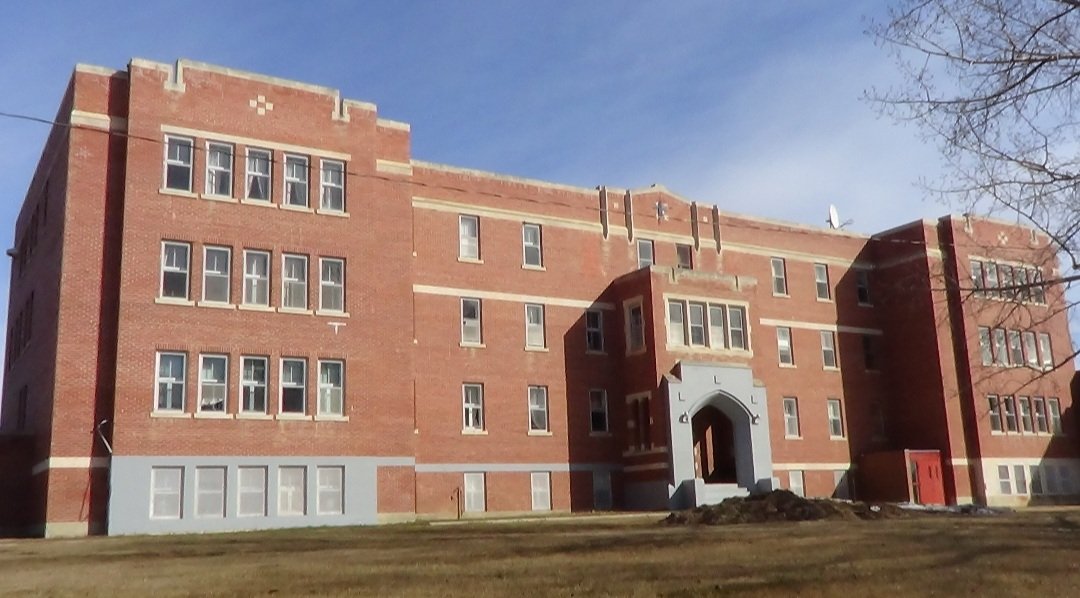
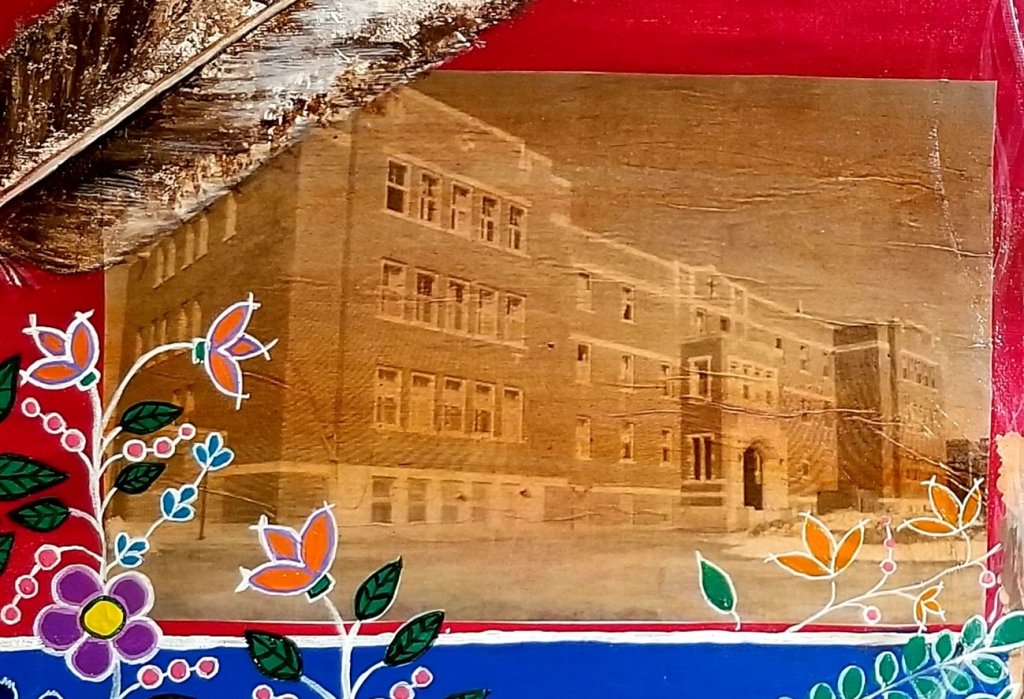
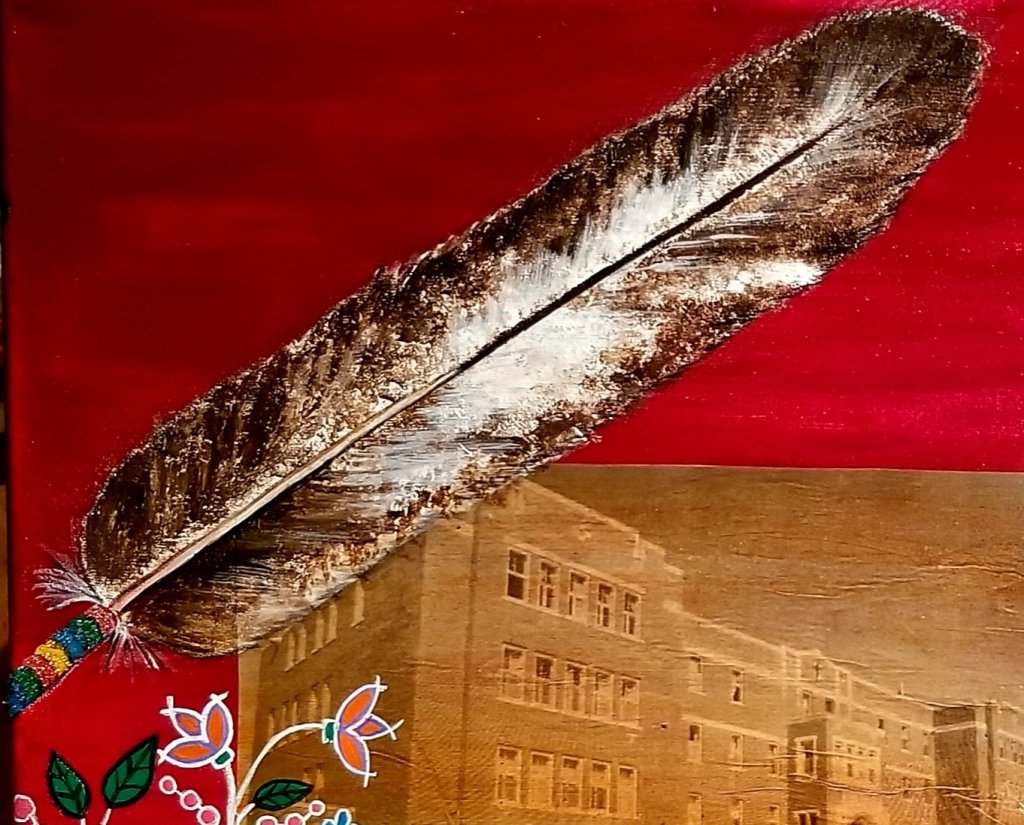
This painting represents how imposing blue quills has been on my family. There is a lot of intergenerational trauma because of it. We had multiple generations of family members attend this s hool.

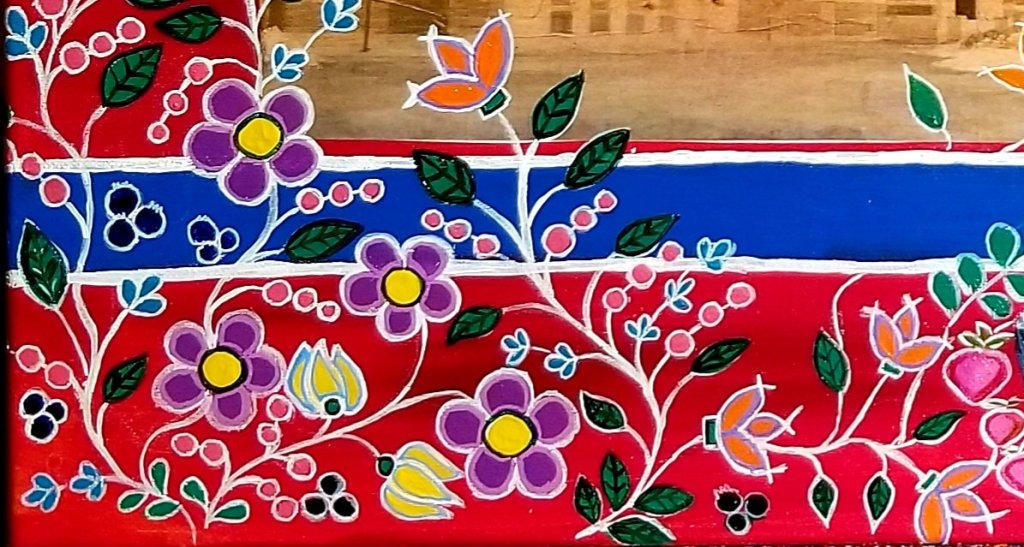
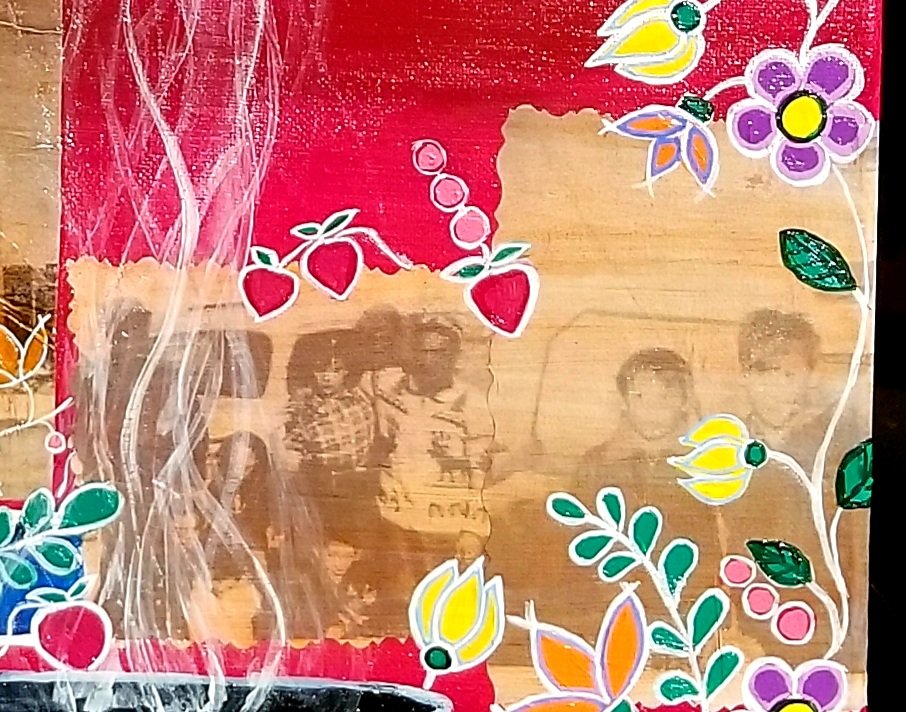
Flowers represent medicines to me. The flowers are growing over the photos and bringing healing and change. Medicine comes in many forms.

The photo of blue quills is large because it had a huge impact. It’s not covered because it will never go away.

The smudge and eagle feather are clearing away the pain through reconnection to culture. Culture is medicine.

Each one of the flowers represents someone in my family. The purple ones are my dad and his siblings. The yellow ones represent myself and my siblings that’s why there are 5 of them. The orange ones are my parents grandchildren. The pink dots represent all of my cousins. The berries represent change and new growth. The sage also represents growth through healing. There are two photos of my family members as youth when they would’ve been in Blue Quills Indian Residential school

The background colours are there because of how this painting came me. Red is understood to be connected to healing, it is also understood to be the only colour that spirits can see.

Overall the painting is like a prayer for healing, separating my family from the school and the impact it’s trauma created.