Nista Mina

I wish I could speak my language. I know words but not conversations. I hear words I recognize but cannot understand. Some words come to me.

Pikiskwe – speak

Astum ota – come here

Awas – go away

Mitsoh – eat

I know words and sometimes I hear answers in my mind…

Tansi -namoyananto ekwa kiya

…but my mind says “I’m fine, how about you?”

Someone gives me something, my mind says ay-aye but I answer in English and say thank-you.

Kekeway oma? What is this?

I have lost my words. I have lost my conversations and now only in my mind I speak.

Connections with the Land

Do you carry the land or does the land carry you?
Are you immersed and infused? Do you feel it in your blood?

Do you carry the land?

Does it walk with you?

Does it heal you?

Do you feel it within you? I feel the land, it is ever present in its beauty, in its calm and even in its wild freedom. The land exists in my heart and my spirit.
Where is the land in you?

Do you carry the land or does the land carry you?

When you walk through the bush do you feel the land? Can you see its gifts, it medicines, its life?

Do you feel it carrying you, sustaining you and healing you?

Does the land carry you? Are you connected to the land? Are you part of the land? Is it part of you? Do you hear it speak and feel its heartbeat?

It speaks through the rustles of the wind in the trees and grasses. It heals through connection. It heals through plant medicine and the water. It heals through its spirit. When I walk barefoot on the land, it sustains me with its gifts. I am infused within the land. My ancestors walked here, healed here, bled here, ate here. This land gifted my ancestors with life.

The land speaks to me. In the winter it speaks in the cold and the silence. The the spring it speaks when it awakens with new life.  In summer it speaks in its beauty. In the fall the land speaks, with its gifts, relaxation and promise of restoration.

It carries me, it sustains me, it heals me.

I feel the land, it flows within me, I carry the land with me.

I carry the land and the land carries me.
What about you?

Do you carry the land or does the land carry you?

Returns

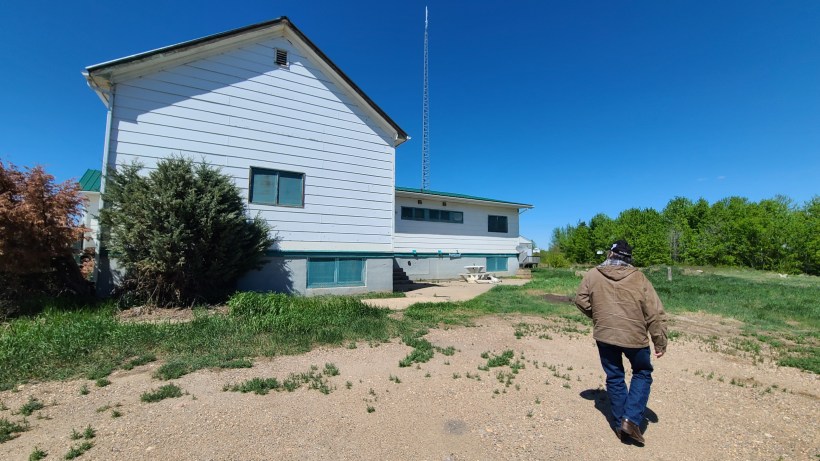
I walked into the school my father once attended never knowing he had been there before. I saw the Nehiyaw culture every where I looked but I felt something there that was unexpected. I felt dread and emotion that I did not understand and I thought it was because this was a residential school.

I thought that because I knew this had been hallways and dorms

where children were brought,

where they did not feel safe,

where bad things had happened,

that this was the reason for my fear.

I walked down the hall to where the library now stood, where once a chapel had been. I felt dread and disconnected from the reality of where I stood. I left and felt glad to be shedding the feeling of this place. Perhaps it was all in my head.

I returned home and told my father where I had been and where I had stood. He asked me why would I ever go there. I said I was there to learn about its history and its place now, as it tries to return culture to the people it stole from. I said “you should come there with me some time. There’s culture and language everywhere.” He looked at me and in a shaky voice half shouted “I will never go back to that fucking place.” I was shocked and shook to my core. I did not even think about my dad being in school there.

I remembered then the stories he told, brief though they were, of the nuns and how mean they were in school. I paused and I questioned, “I thought you didn’t go to school there.” He said quietly “It was only two weeks.” I did not say anything else but I thought his reaction was too strong for only two weeks. I didn’t ask again.

I went back there…to the school of two weeks…wondering how this place connected to me and my history. How was it connected to the pain my family experienced and as if the school could read my thoughts, I could not find a way into the building. None of the doors would open although there were clearly people inside. Someone came out and I caught the door and went in. The same feeling of dread surrounding me as I walked down the hall. I went to meet the person I had come to see, unfortunately, she had been called away for a family emergency. I left the building and immediately felt better.

Twice more I came to the building and was shut out. Twice more I left without answers. Then I went to a ceremony being held on the school grounds and I prayed that my dad would feel safe enough to tell me something; I shed tears for him.

A few days later my parents called. They said “can you please come here, we need you to look at some papers.” I went to their home and my dad handed me a brown envelope; he turned and walked away. I sat down at their kitchen table and asked my mum what it was. She said its about the time your dad spent at residential school. I said oh. I felt emotionally flat. I said I thought it was only 2 weeks. My mum said “no its longer and they only know he was there because other people identified him”. The school otherwise had no real records of him.” I felt anger burn in the pit of my stomach but I also felt sick. I asked “how old was he”….my mum said “just read the papers.” So I did.

It identified his timeline as at least two years and two months. I felt sick. I asked “What does this mean” I felt bewildered and confused. My dad came and sat down next to me. He asked “what should I do?” “They want me to go and make a statement.” I asked him “Do you want to?” He was unsure, unsure if he should open old wounds, unsure if he should talk about it, unsure if it was safe to do so. We smudged and prayed and I went home with even more questions.

I knew my uncles and aunties had gone to school there, they had said. My Auntie told me that they didn’t learn to read or write, that they had learned how to pray and to know that they weren’t good enough. She said my uncles learned how to work farm jobs. My Kokom had told me that they had been treated worse than dogs and that everything was rationed, they had to make do. Yet I couldn’t figure out why I didn’t think my dad had gone to school there. I guess because he never really said anything about it and because he had a substance use disorder, it wasn’t something that every crossed my mind. Now I had more unanswered questions. I also knew why my dad would walk away when anyone talked about going to school.

My dad called me a couple of days later and said “I’m going to do it but only if you and your brother will come with me and please ask your friend Wanda to come with us.” I said ok. nothing more, no questions just ok.

The day came for the independent hearing and I was nervous. We smudged and prayed. I gave my dad the things my children had given to me for Mosom; rocks for strength and a letter telling him that they knew he would be ok.

I listened to my dad’s story, the terrible things that had happened to him, the fear he felt, the pain he experienced and how it impacted his life. He he had suffered from depression, anger and suicidal thoughts for years. How he couldn’t be the father that he wanted to be but how he wanted to be a better Mosom. He showed them the gifts the kids had sent for him. WE were all crying. I understood my sense of dread and fear connected to that place.

I heard his story and understood my father on a different level. I saw him as a child, who had survived a horrible experience. How his dependence on alcohol for so long had kept him from thinking about those experiences and how his years of sobriety had helped him tell his truth.

I continued to go to that school to participate in the ceremonies every year that are held there. I always asked him if he would come. He always said no until about 5 years ago when he said maybe. Then he came with me. He was nervous and scared. As we drove closer he talked about the evil of the place and how much he didn’t want to be there. I asked him “do you want me to turn around?” He said no. We arrived.

He had returned. My nephew, the youngest grandchild at the time, was with us. He took his Mosom’s hand and we walked towards the building. My dad walked up to the building, took a breath and walked in. He had returned to his place of terror. He could only get through the door but that was more than I had expected. I felt proud of him. My mum looked at me as my dad said I need to leave the building and my nephew walked out with him. They walked around the grounds and we gave them time. Then we left. My dad seemed somehow lighter as we left.

The return was powerful, as was the ability to choose to leave. He had gained some freedom and I told him he didn’t ever have to go back there unless he chose to again. My parents, my nephew and I have gone back only once since then to attend a ceremony on the grounds but never to the building. I doubt if he will ever return to the building now that he has freely walked away from it.

Forgotten histories

I’ve always been interested in history. I think it’s a family thing, my parents always told stories about historic events. There was a day my late uncle Archie brought me a bunch of old papers he found at the dump. He asked me to look through them and see what I could find. They were photocopies of black files from the Saddle Lake agency. These were a history that validated a lot of the stories.  These records were of the interactions between the Canadian governments Indian Agent and the department of Indian affairs. They told a story of what happened in the community but are very one sided. These files are available through the Canadian archives. 

This selection of papers my uncle gave me started me to looking for more information as i wondered if there was anything directly related to my family.  When I was looking for more records online I somehow became distracted by old photos. I began looking at these old black and white photos online and became increasingly annoyed by what I saw.

What bothered me was that the photographers took the time to take photos but not the time to know whose photo they took. Sometimes if there was a European person in the picture, his name was included. Most often the pictures of the indigenous people said “unknown Indian”, sometimes “anonymous indian” or sometimes they named the tribe from where the person originated. What bothered me was that these were someone’s family members. They lived, they were loved and not forgotten when they died.

It bothered me because my great great grandparents could have been in those photos and I would never have known. It bothered me because the history I had been told about my dads side of the family is a sad tragic tale. It is inherently one of loss, loss of land, loss of culture, loss of freedom, loss of language, and loss of life.

My mosom Mumstahp’s father Memnook (sometimes spelled Maymenook) was killed in the great war. This isn’t world war 1, this is the 1885 northwest rebellion or resistance. Our family called it a great war. The story of his death is another tale. His father was named Witokan. We are told that he passed before treaty 6 was signed. We are told that he and his 6 brothers were the first to sign on the treaty at Saddle Lake. It was agreed to by them and ceremony was held at the corner where our family has their land. 

After the treaty was signed all the family members received registration numbers, their names were included on the new band list. Maymenook was number 9 on the Saddle Lake band list. He was killed in May of 1885. His story was forgotten, not part of the Canadian history I learned in school. My mosom Mumstahp was given number 91 when he got married in 1904. 

After the war the government, which had already broken many of their treaty promises created a list of “disloyal Indians”. 

They needed permission from the Indian agent to leave the reserve, they needed permission to sell their produce. It was illegal for them to buy stamps, to hire a lawyer, to vote, and to gather, to practice culture and traditional beliefs. The government was trying to erase everything about who they were. 

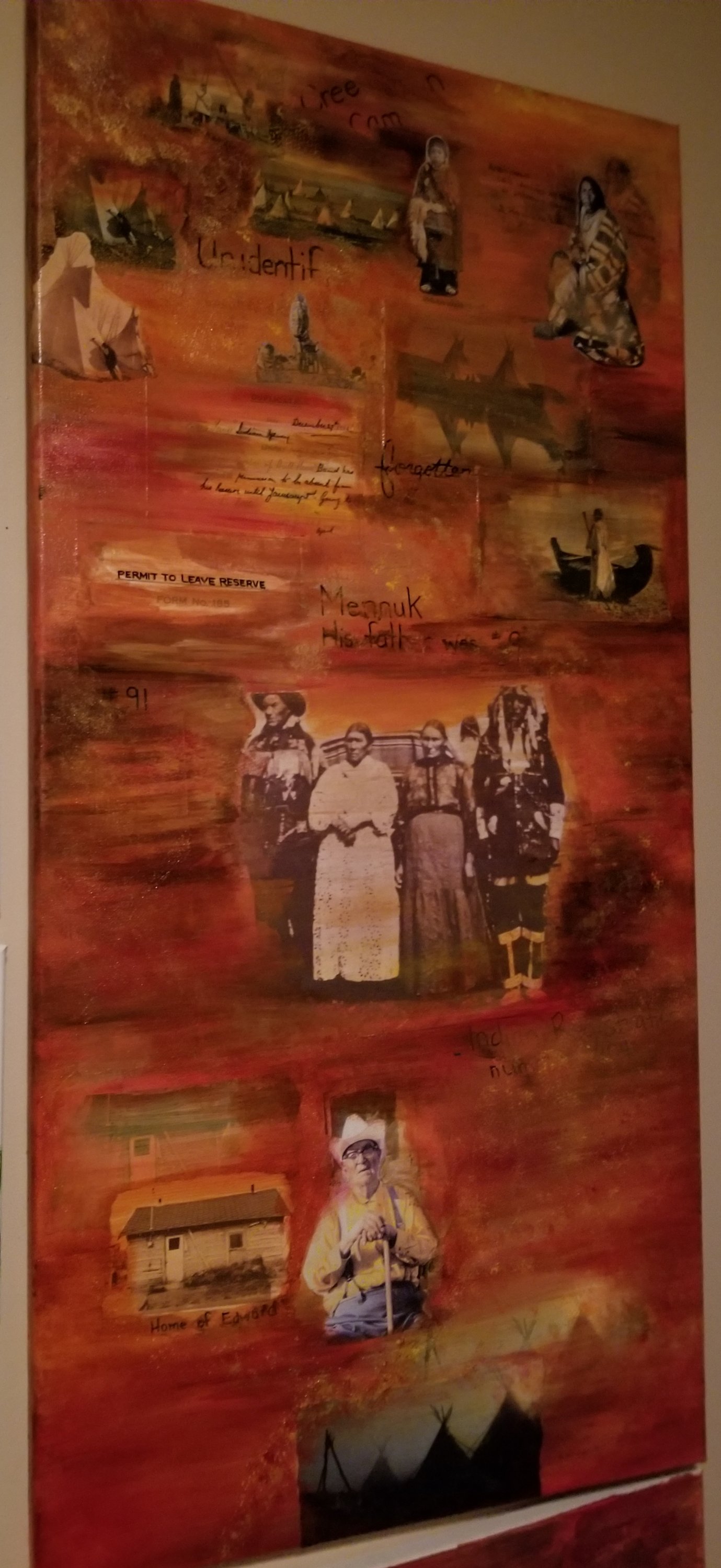
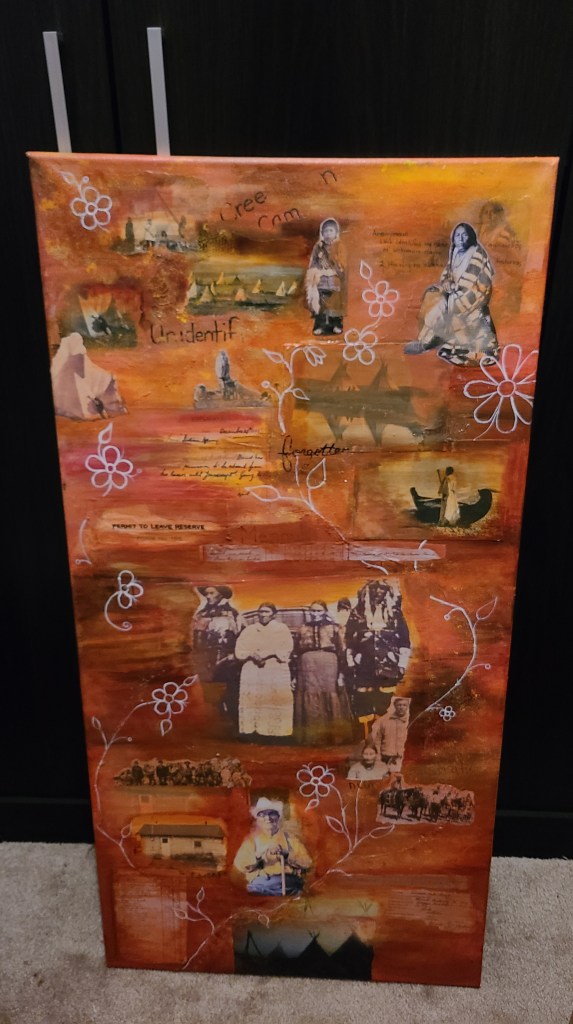
This painting is my way of illustrating that we are always connected to the past. We are connected by stories and shared history. Mosom Mumstahp was at least 106 years old when he passed away. I was 6.

This painting travels through history to connect with him with both the past and the present and it ends with the photo of tipi’s. The connection is illustrated through the flowers that wind through the painting. The tipi’s are a picture I took one morning when I was at the Saddle Lake cultural camp.

To me it shows resilience, that though much had been oppressed, we survived inspite of those who tried to erase Nehiyawak/Cree culture. It shows that those in the past are still connected to who we are today.

This painting represents hope. That although society saw a group of people and wasn’t interested in them; that society would rather forget about them, we are still here. It shows that the strength of our ancestors still resides in us.

I recently added to this painting, as I’ve learned more of my family history. I wanted to include elements that occurred to Mosom Mamstahp during his lifetime. I included a paylist, photos from life events and images on their numbers on the paylist. 

We are still connected to what our ancestors experienced.  It is part of who we are. The photos of those unnamed group of Cree people are still who we come from. 


Silence

Silence,

It is deafening in its stillness and quiet

Kista?

Awina?

Neya.

I am silent.

I am mute.

What do I say?

These words are lost to me.
These words I should know.
Tapwe.

I should be able to speak but I am silenced.

The nuns and the priests they took away the language.

I heard it in my youth.

My father’s first language. He learned not to speak and to remain silent.

It is spoken to others, who also spoke…those not totally mute, not totally silenced but still they did not speak it to me. I am silenced.

Sometimes words want to come, not lots of words only some. Then fear takes hold and they go away.

I do not know enough language to get by.
I know a few words but still fear gets in the way so I remain mute.

Silenced.

The silence is deafening in its stillness and quiet.

Thanks to that school I am silent. I am mute.

Walking

I am walking, feeling the rhythm, I hear the distant beat of drums. They call to me, telling me to come home.

I try to find my way, I stumble and fall, I rise and follow the sound, growing stronger like a heartbeat. I hear the voices of my ancestors calling me, “Nosim, you will be ok, granddaughter do not be afraid, you will find the way.” 

I walk closer to the earth, feeling more grounded and connected as I stand barefoot on the earth. I search, sometimes stumbling as my walk gets closer. I feel the heartbeat of the earth as I walk under the sky. I know that Creator is showing me the way. I am walking back to myself, back home, finding comfort in the old ways. 

Ceremony calls. I let go of my pain. I let go of my fear. I am walking a new yet old road.

I am walking, feeling the rhythm, I hear the not so distant beat of drums. They call to me, telling me I am home. 

Medicine Gifts 

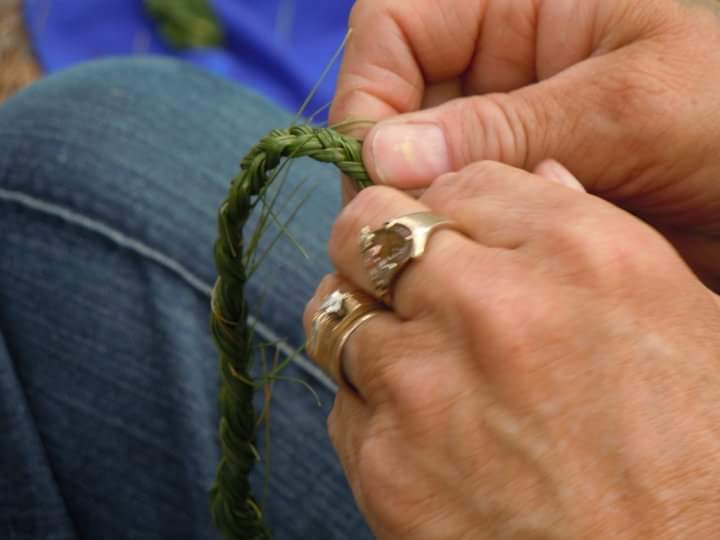
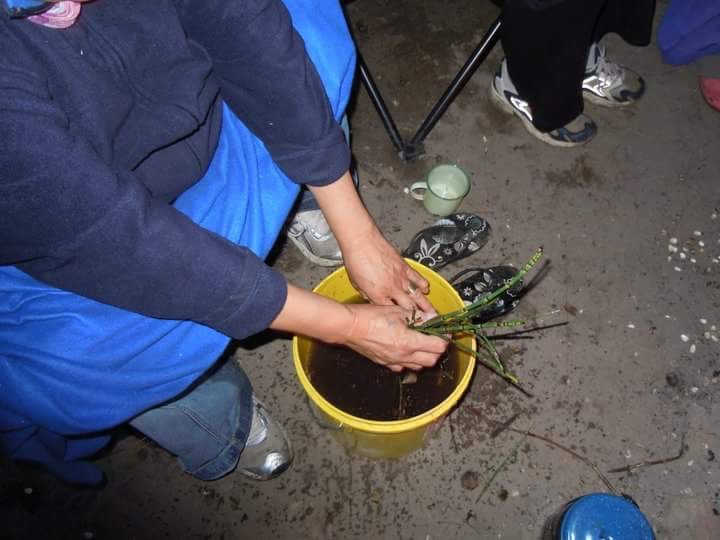
One summer several years ago when we were camping at mile seven. My Aunt, my fathers first cousin, Alsena met us there. We had been camping for several days when Auntie Alsena joined us. One afternoon we spent picking medicines and ĺearning about the plants that we were picking when Alsena told us that her friend Diane was going to meet up with us. She had camped there with us before. When Dianne showed up she had brought sage and sweet grass with her. We learned about creating sage bundles and sweetgrass braids. Once we finished making the braids and bundles we took them and hung them up to dry in the breeze off the lake. 

Then we began to clean the roots and prep the medicines. As we were cleaning the medicines Dianne and Alsena were telling stories of the medicines and how we got them. 

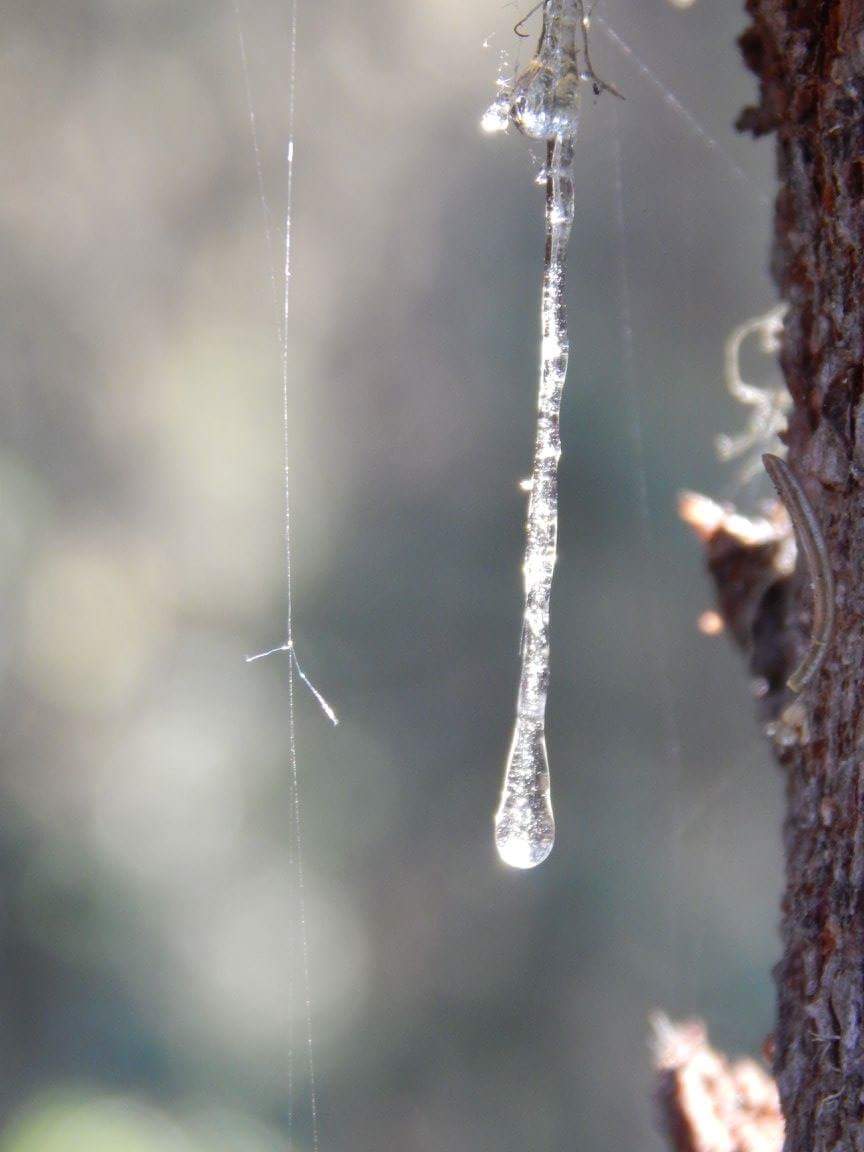
One of the medicines was spruce gum. This medicine, spruce gum, was/is used as an antiseptic. It helped to hold skin together when someone was injured. It was/is used to treat colds and is added to other medicines depending on the need.  The story we were told was about the gift of spruce gum and how badger gave it to us. The badger told the people how to use it for medicine and food. Alsena said that one man was lost in the bush for two weeks in the winter and he ate spruce gum to help sustain his body. 

There are so many plants that can help people with their health, it’s important that we keep this knowledge strong and that we spend time with those who know how to treat people. 

First time for everything

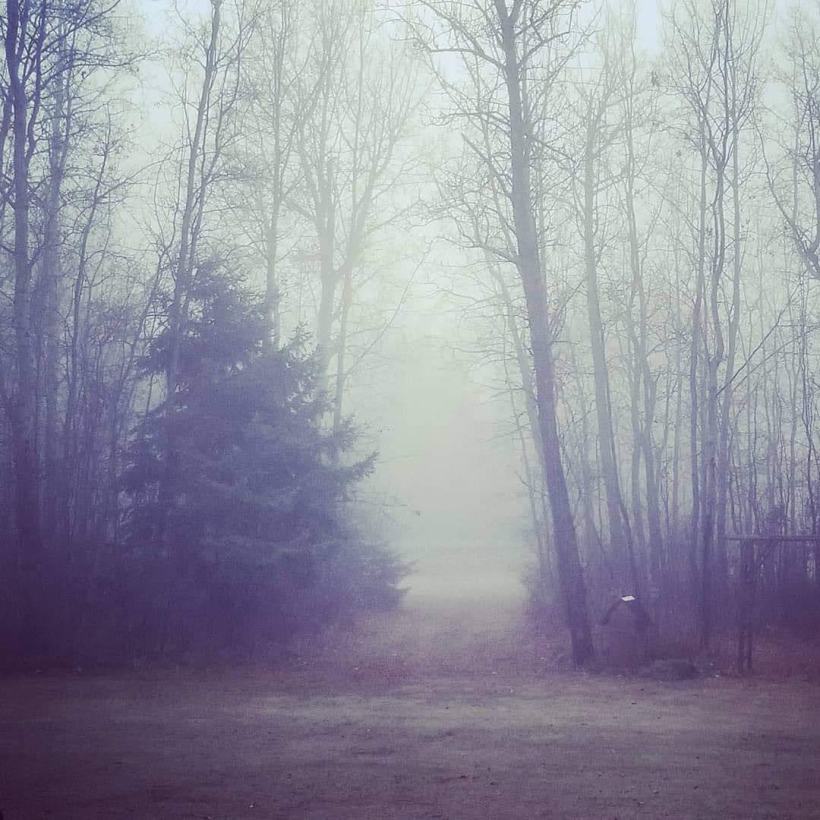
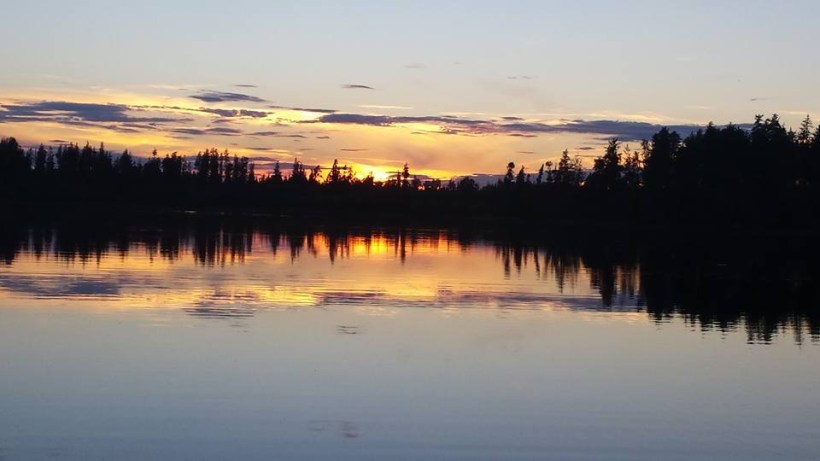
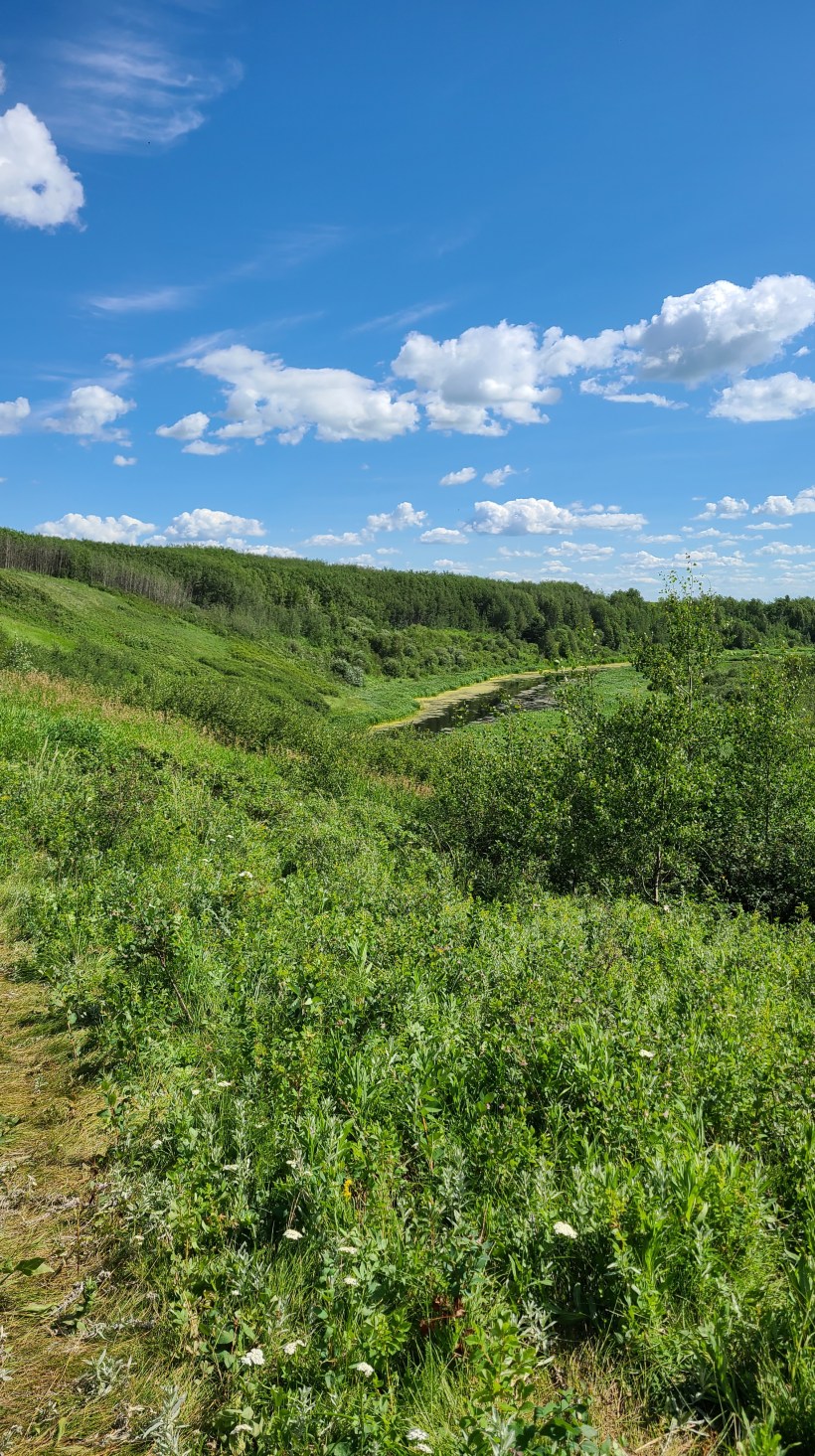
This is a picture of my favorite place. I thought that since this is my first post I’d write about a place I love. This is Mile 7. To me it is a sacred place, to most others it’s just a place where they camp and have a party in the bush. There is something about being there that renews me. I feel as though I can continue with all the things that stress me out as long as I just make it to Mile 7 at least a couple of times during the summer.

Last summer I camped there, went there with friends and family. I picked medicines there. I picked berries, swam in the lake, listened to the loon and heard a wolf. All this revived my soul. Mile 7 is where I first understood why my dad called me Sakaw Iskwew, it means bush woman in Nehiyawak (Cree). It was the name of my great great grandmother. I sat one evening by the fire, listening to the birds, the sun was setting and I breathed deeply with my eyes closed and said to my husband and kids “I just love the bush.” It was at that moment I understood why my dad called me by her name. It wasn’t to make fun of me as some might think, it was because I genuinely connected with being in nature. It makes me feel better.

The very first time I went to mile 7  was to go camping for the weekend. That was 25 years ago. I have seen it change a lot since then. The beach has disappeared, a forest fire burned a lot of the surrounding woodlands and people have left garbage while others have cleaned up after them. Many people who regularly go camping there talk about people who learn about it from locals and then leave a mess. There even used to be two outhouses there when we started camping there. Anyway, the first time you do something will always be the first time. After that first experience you decide whether it’s worth trying again. Camping out in the bush is always worth repeating for me and I guess this will be too.