Family history

I’ve been told about my family’s history and told I should remember it, so I do. This is how we start.

In the beginning… we were here, we were here from time immemorial, from before colonization, before Canada and before the treaties. We come from people who were autonomous and independent. We had our own creation story, our own history, our own math and science. We hand our own medicines and medical practices. We educated ourselves. We took care of ourselves. We knew our history, our laws, and practiced our culture freely.  As time continued we experienced changes and made contact with new cultures and new ideas. We considered ourselves equal to these people. They did not consider us their equal and sought to exploit us.

We found the changes that were occurring were faster than we expected, and we were asked to enter into agreements to share the land.  So we entered into ceremony, prayed, and asked for guidance towards this end. In 1876, we were guided and therefore agreed to enter into a sacred treaty. This was done to benefit the people. We thought that because we we had entered into an agreement through Sacred Ceremony, that they would honour the sacredness and truth of the treaty. We thought they would follow through on their word to help us.

We did not agree to give up our independence, nor did we agree to give up who we were, our laws, our traditions, and our ways of being. We did not think they would continue to steal from us, not only taking all the land we agreed to share but also eventually our children. We did not think we would lose our autonomy, nor did we think we would be forced to give up our culture, language, and traditions to fit into another nations society. Their society.

So our family history is always told with the prefaced context of what happens next. This is the story of our family and its journey to now. It’s about how history has impacted us as best as I can tell. It’s about our relatives and who we come from. It’s the story of us.

“Tell me a story – Acimowin”

"Tell me a story"

History

I am a survivor – yes, a survivor of history, a survivor of residential school. Though I did not attend, I was never the less there. I survived it. I was there, I was there before I was born.

This is not ancient history, a story, it is real and it is my history.

I survived the hurt, the anger, the fear – the tears – the sorrow – the betrayal of trust. A child’s trust, the loss of that innocence.

I survived. I survived the wicked behaviour called “discipline”. I survived the shame, humiliation, self-hatred and the loss. “You are nothing, you dirty Indian”

I survived the losses.
The loss of language, culture, history and pride.
THE LOSS, THE LOSS, THE LOSS!!!
The loss of safety, security, and the loss of family, for generations.

How can this be? How did I survive, you ask???

I did, I survived….
I am a survivor of my fathers pain and my Mosom’s shame. I am a survivor of the betrayal, two generations of “education”.

Yes, I did not go to residential school but my family did. My family was sentenced there. The terms were carried out over several generations, sentencing that carried a legacy, holding us, stealing life from us, slowing us, paining us.

It taught my family not just reading and writing. It taught shame, self-hatred and created the need to forget.
It taught my Mosom Self-loathing, it raised him up in foreign ways. It told him “remember your place” “say your prayers, you’ll go to hell” and it created shame, shame, shame.
It taught my father to forget. The only direction to turn – ANYTHING to help you forget. But it was not gone. It never leaves, it was ALWAYS there. It is always there.

It is there in the fear and the tears and the sorrow. It is there in the behaviours, the promises and the inter-generational sorrow. The trauma that still holds.

Yet I have survived. I walked into that building, feeling the fear, struggling to make myself go inside. I cried. I cried for those children who never left, whether that was through experience or death. I cried so that I could be free. I survived.

I will not let the former shame claim another generation. “I will be okay, we are okay” “TAPWE” this generation grows strong because I survived. My father and my Mosom lived and I am here in spite of the fear. I am a survivor of residential schools.

Tell me a story

“Tell me a story “

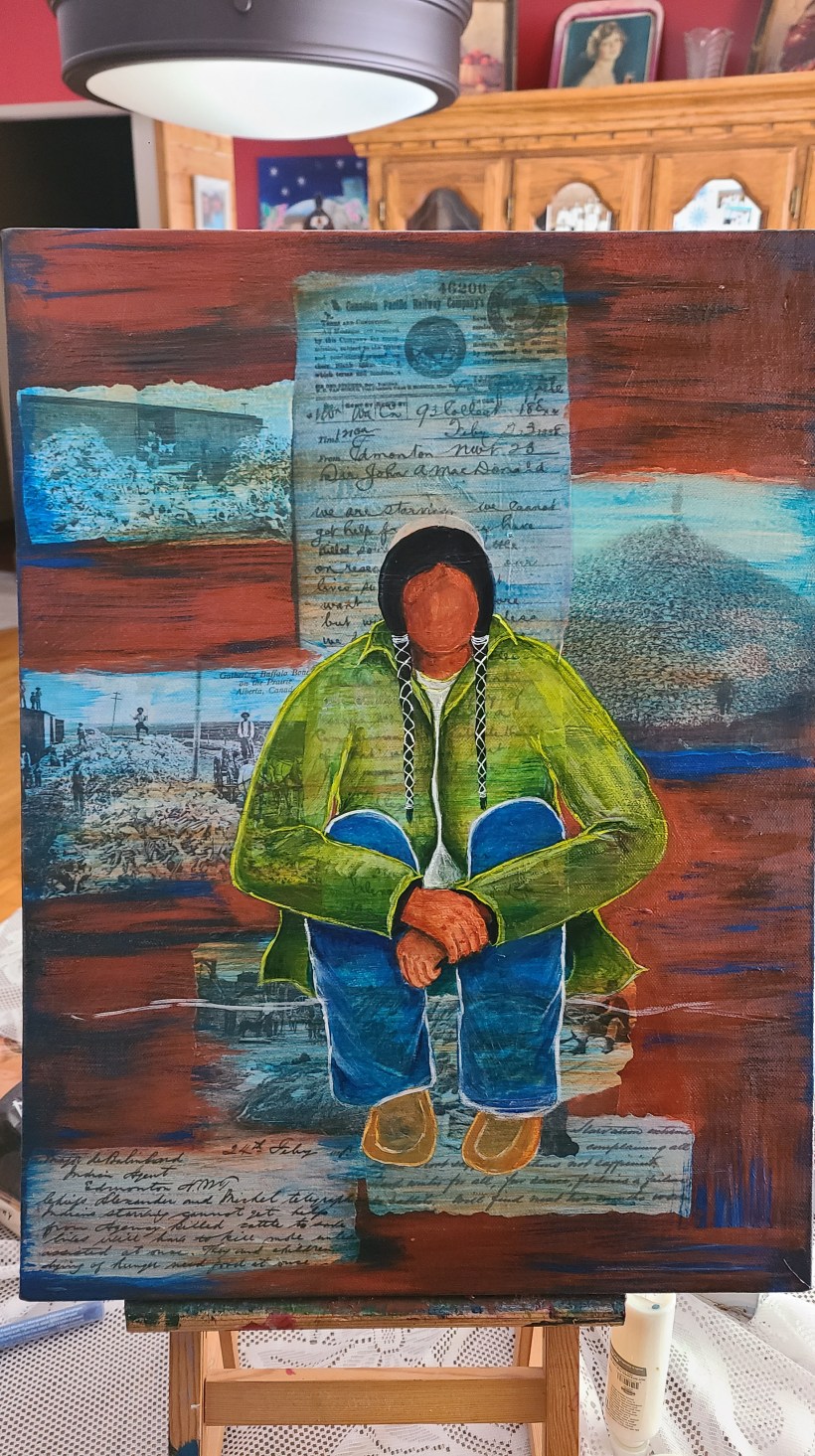
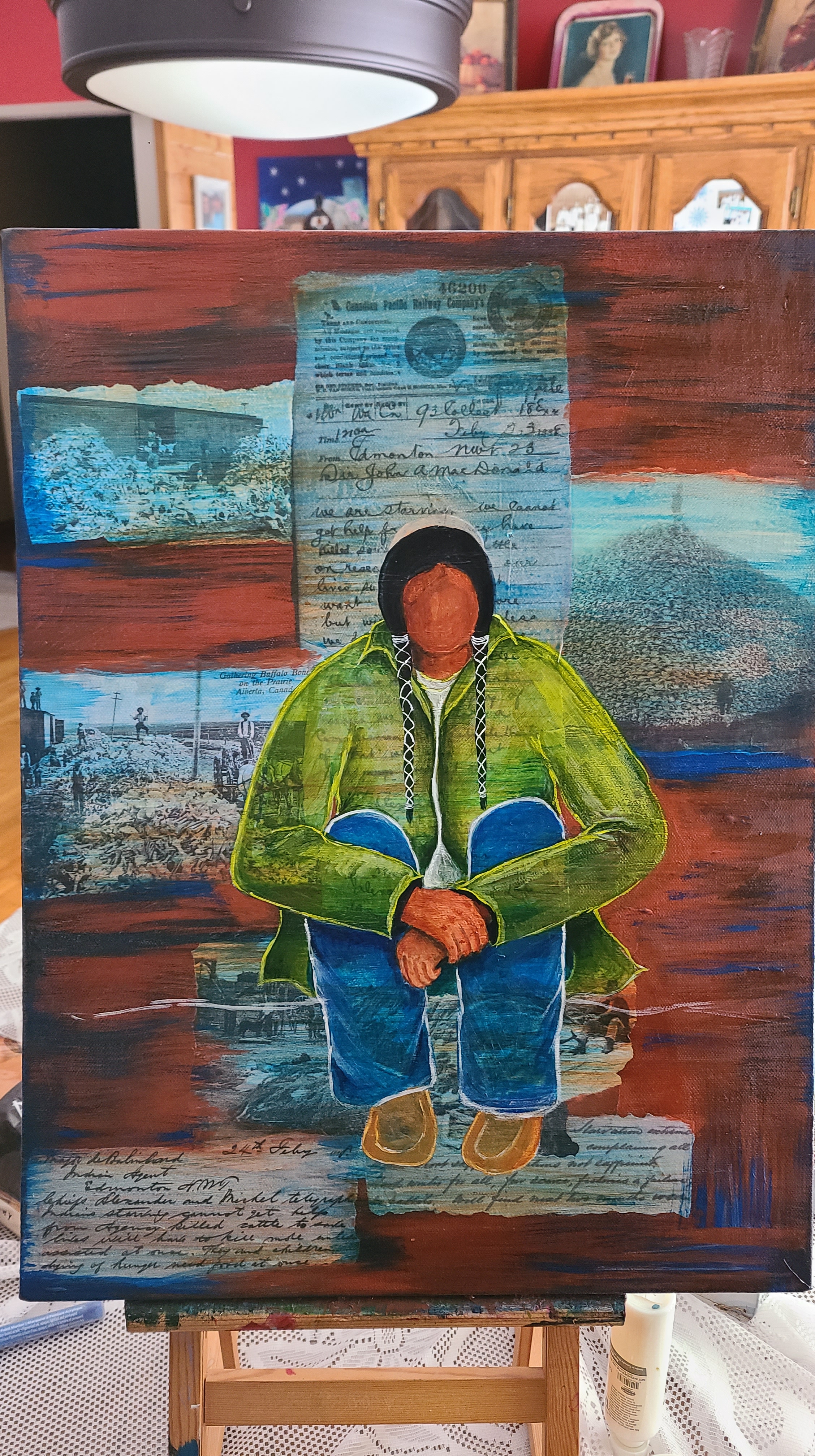
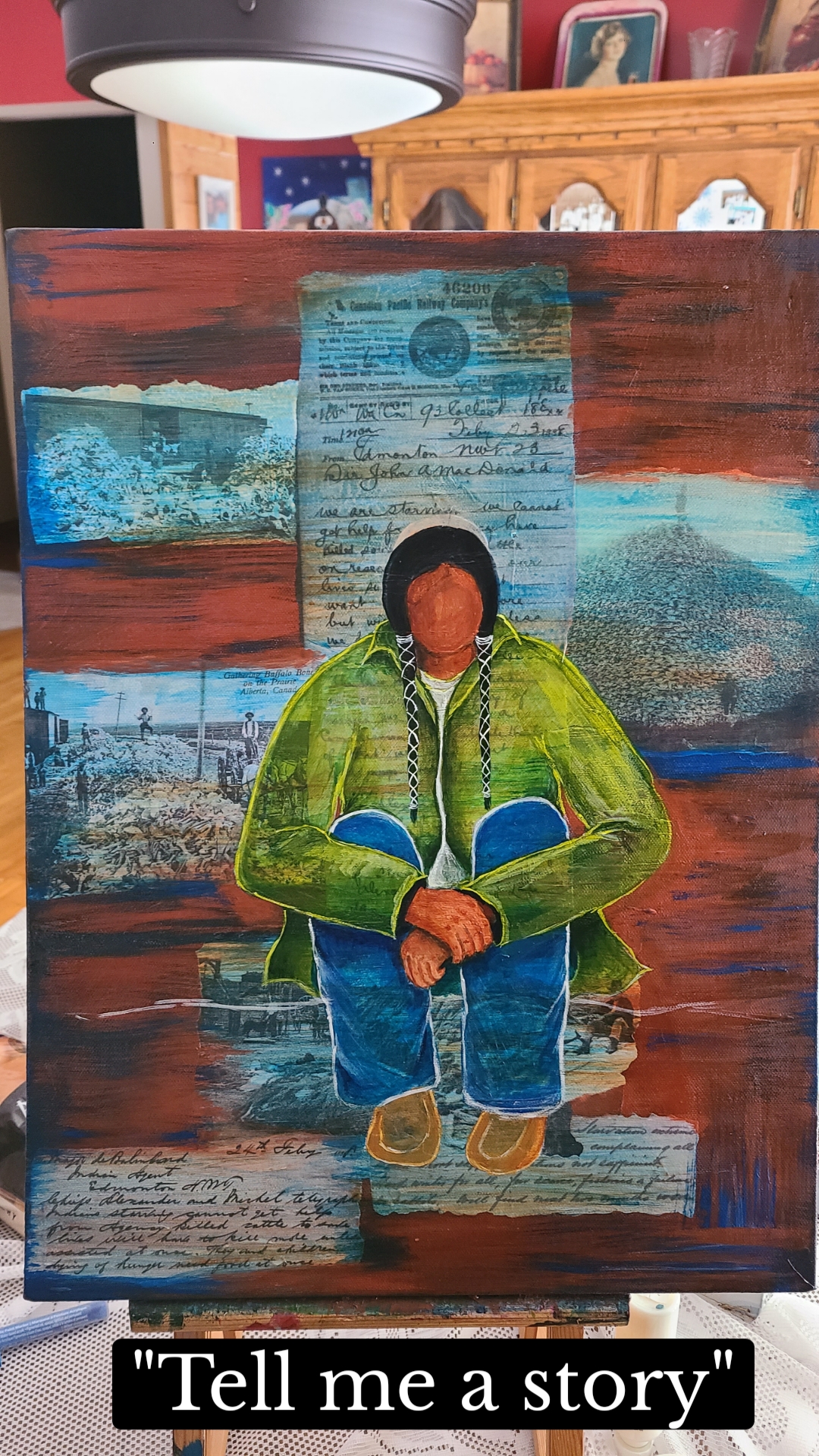
This mixed media piece includes a telegram sent in 1888 from the Chief’s Alexander, Alexis and Michael telling John A MacDonald that their community members are starving and that they had to break the law and kill the cattle in order to save the lives of they and their children and includes parts of the responses from the government. This piece includes images of piles of bison bones and hides from when the bison were slaughtered to show the impact of the loss of an important resource to all plains peoples. The pictures also show the use of the railway to transport the bones to factories to make fertilizer.
The man painted over top has his head down in reflection as he contemplates the telling of our history.
The words of the telegram show through to demonstrate how the history of colonization continues to impact us. The past will always sit with us, and it is important that we remember and tell our own history. The inclusion of archival documents shows a record supporting oral traditions about the impact of signing treaties, the neglect of treaty obligations especially after the 1885 resistance, the loss of access to the land and the loss traditional food resources. It demonstrates the loss of autonomy through the need to ask permission to slaughter their cattle and that without asking permission, they had broken the law and were at risk of being arrested. It is called “Tell me a story” because we continue to speak about our past and the impacts it has had on our communities.

Transcriptions of archive RG10, Volume 3794, File 46,205

Telegram:
Feb 23, 1888
From Edmonton, NWT
Sir John A. MacDonald. We are starving. We cannot get help from the agency, have killed cattle on reserve to save our lives so far. We don’t want to kill anymore but will have to unless we get help at once. We don’t want to break the law but we and our children are dying of hunger. We ask for a commission to investigate the truth of what we are saying but need food at once.
Alexander, Chief of River Qui Barre
Michael Callioux, Chief of Sturgeon river reserve
Alexis, Chief of Lake St. Ann Reserve

At that time, it was illegal for Indigenous people to slaughter their cattle without permission. Even though the cattle had been given to the people as their own to encourage farming, the Indian agent and the government did not consider the cattle the property of the people it was given to. The file this is from includes other documents that explain why the Indian agent decided not to have them arrest for fear it would cause another uprising.

This piece also includes the responses from the governments Indian department to this situation.

Response 1
Feb 24, 1888
To Major de Balinhard Indian Agent
Edmonton, NWT
Chiefs Alexander and Michael telegraph Indians are starving, cannot get help from agency. Killed cattle to save lives, will have to kill more unless assisted at once. They and children dying of hunger need food
at once. Please write facts. See Chiefs and inform them that you have been communicated with by dept. This reply questions the validity of the statement they are starving.

Response 2
Edmonton Feb 25, 1888
Contractors behind delivery provisions, Saddle Lake, Edmonton, and Whitefish Indians were hungry, now fully rationed, Lac La Biche also now receiving rations. Starvation extreme word. Edmonton and St Ann’s complaining all winter of short supplies of rations, not sufficient. Hard winter for all, fur scare, fisheries a
failure, no rabbits, will find next two months more. Samuel, member and spiritual advisor, [is] working this up
[This response downplays the lack of ration, providing an explanation for the provisions not being provided. This treaty
has a clause that stated provisions would be provided in times of famine. It also states that one member is overreacting and getting everyone worked up. It seeks to invalidate the experience of starving people.]

Kiyas ago, our mosom and kokoms; our grandfathers and grandmothers, told us this. We were starving, and our children were dying. We couldn’t get any help from the Indian agent. The law said we could not kill our own cattle. Lots of our traditional food was gone. We thought that we would also be gone.

Truth and Reconciliation

Generational Healing

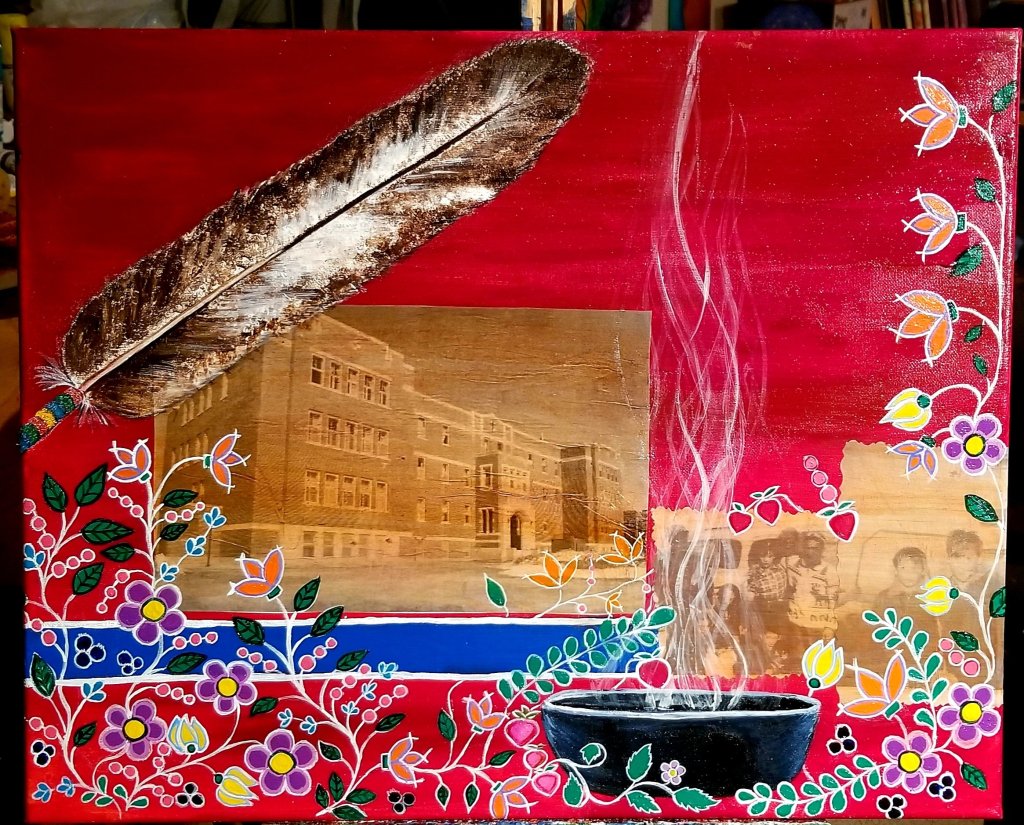
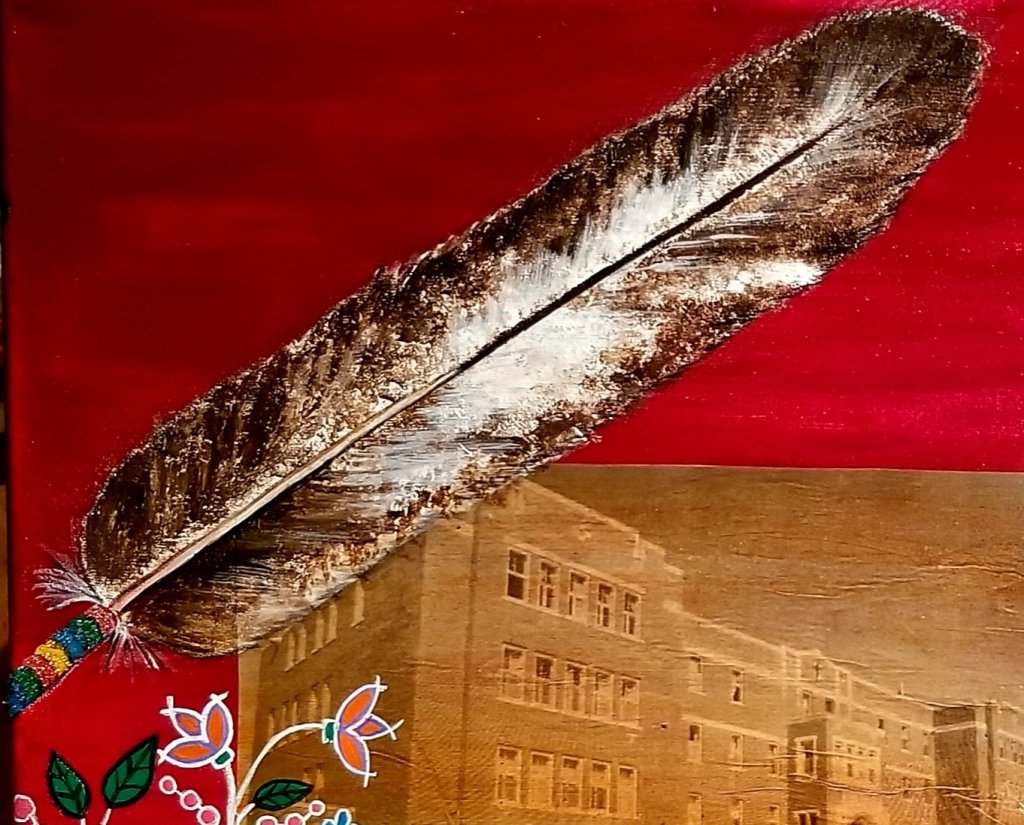
I paint as an expression of what I feel that I cannot always explain with words. Sometimes these paintings come to me very clearly as this one did. I had been thinking about how much my family has been impacted by residential schools, how colonization has affected us and how these things are passed on generationally.

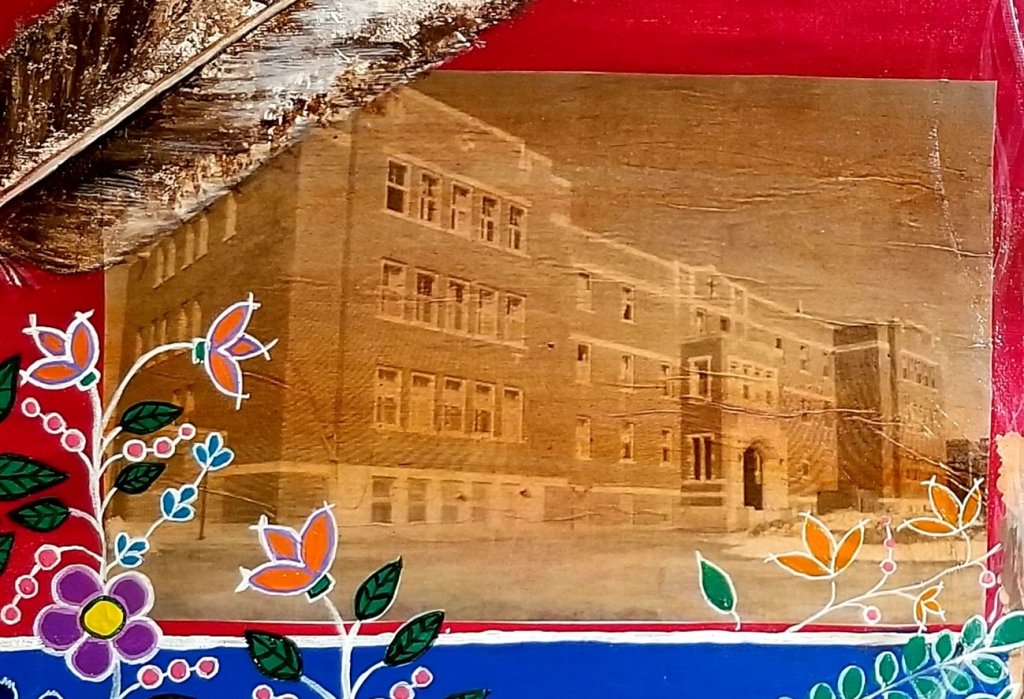
This painting represents how imposing blue quills has been on my family. There is a lot of intergenerational trauma because of it. We had multiple generations of family members attend this s hool.

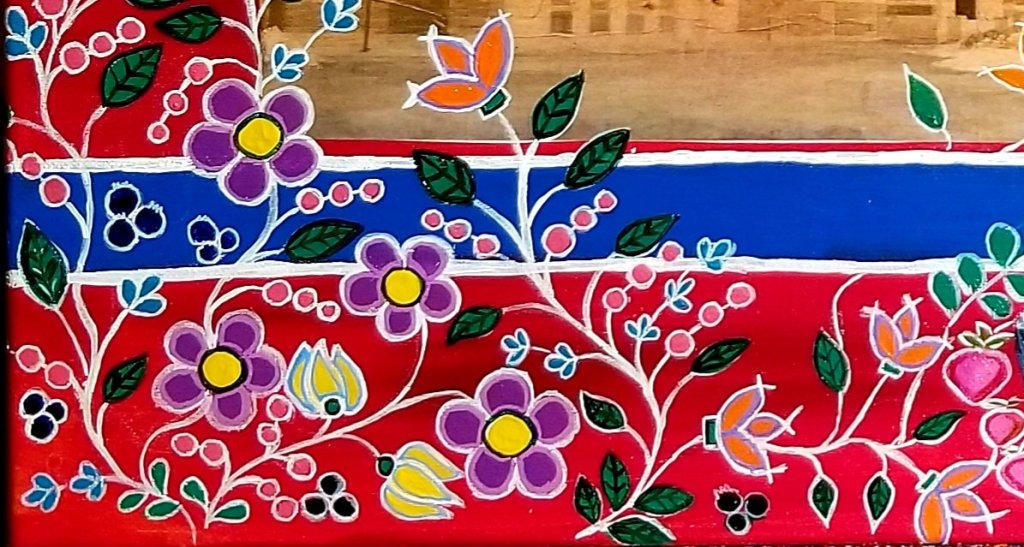
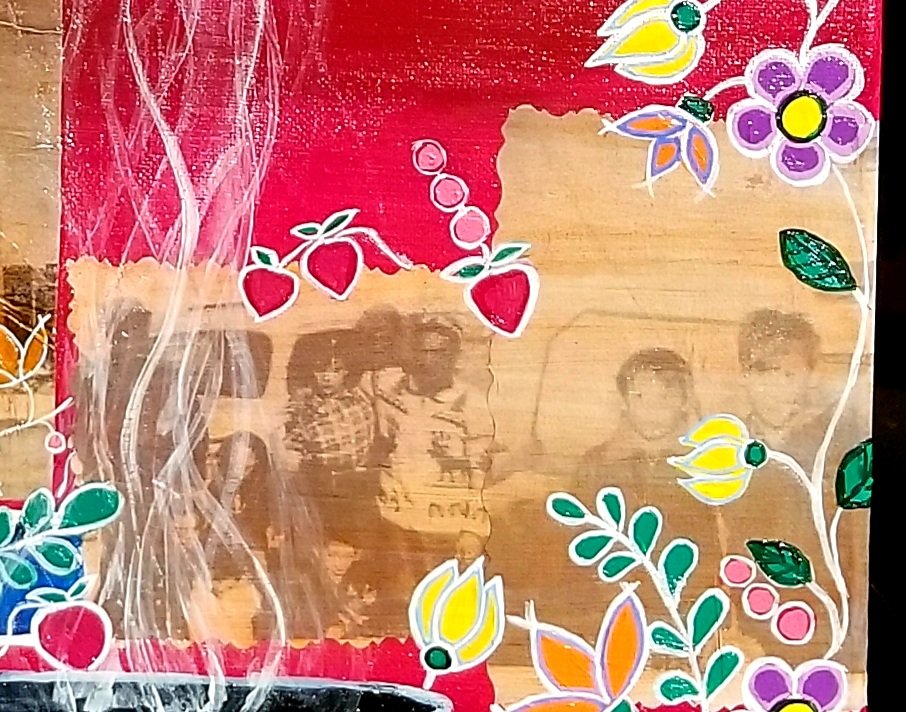
Flowers represent medicines to me. The flowers are growing over the photos and bringing healing and change. Medicine comes in many forms.

The photo of blue quills is large because it had a huge impact. It’s not covered because it will never go away.

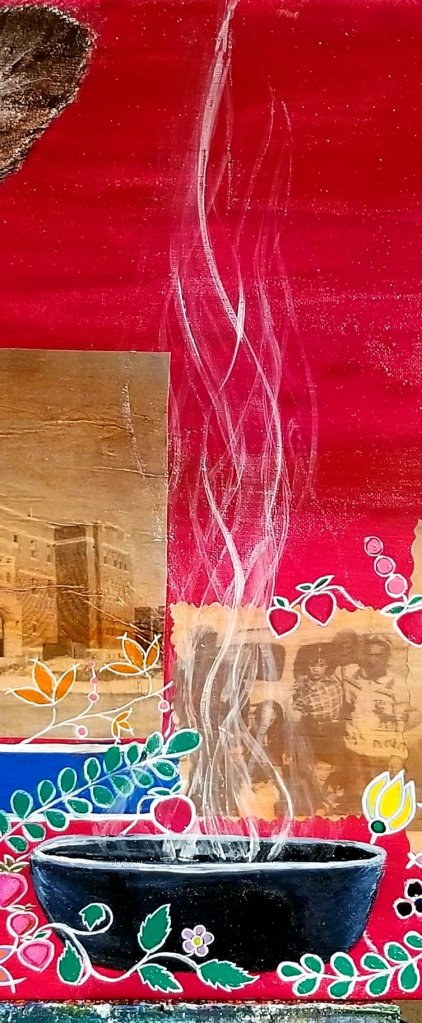
The smudge and eagle feather are clearing away the pain through reconnection to culture. Culture is medicine.

Each one of the flowers represents someone in my family. The purple ones are my dad and his siblings. The yellow ones represent myself and my siblings that’s why there are 5 of them. The orange ones are my parents grandchildren. The pink dots represent all of my cousins. The berries represent change and new growth. The sage also represents growth through healing. There are two photos of my family members as youth when they would’ve been in Blue Quills Indian Residential school

The background colours are there because of how this painting came me. Red is understood to be connected to healing, it is also understood to be the only colour that spirits can see.

Overall the painting is like a prayer for healing, separating my family from the school and the impact it’s trauma created.

Returns

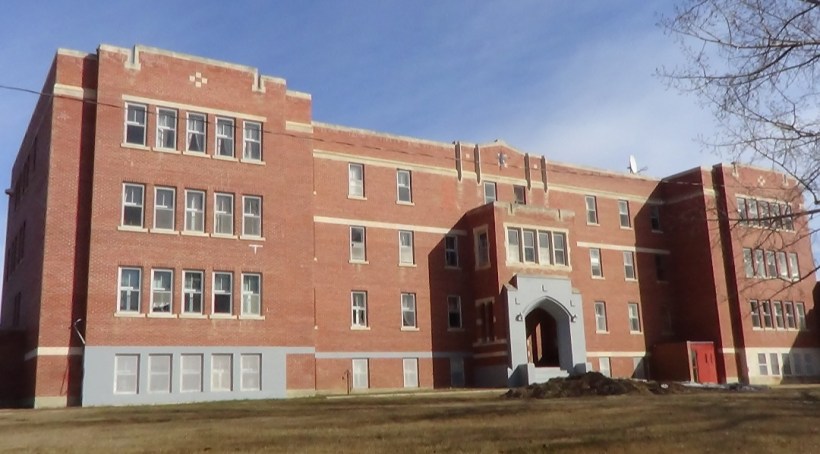
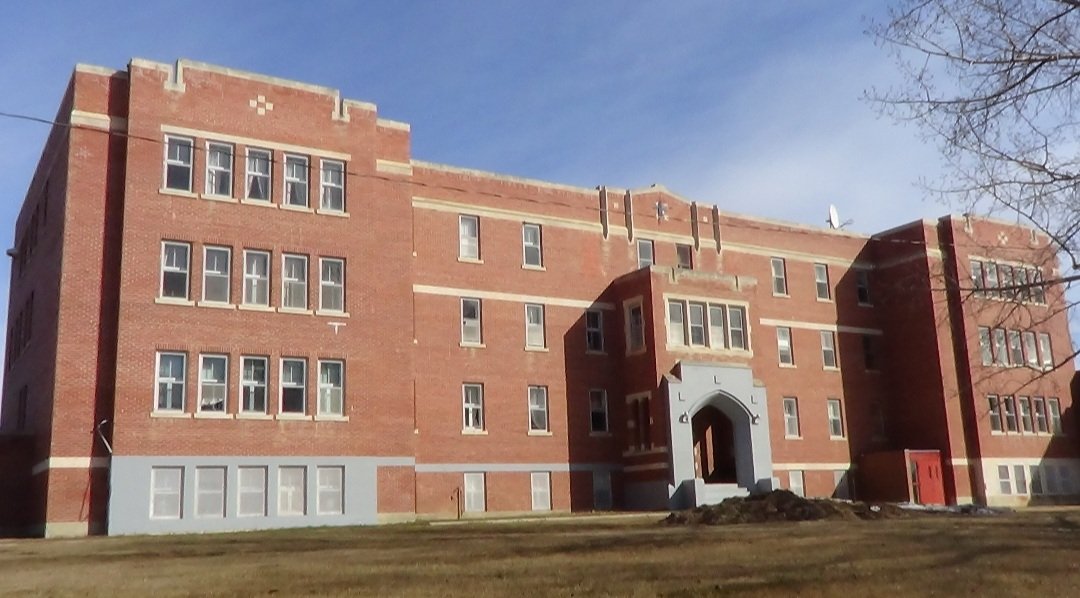
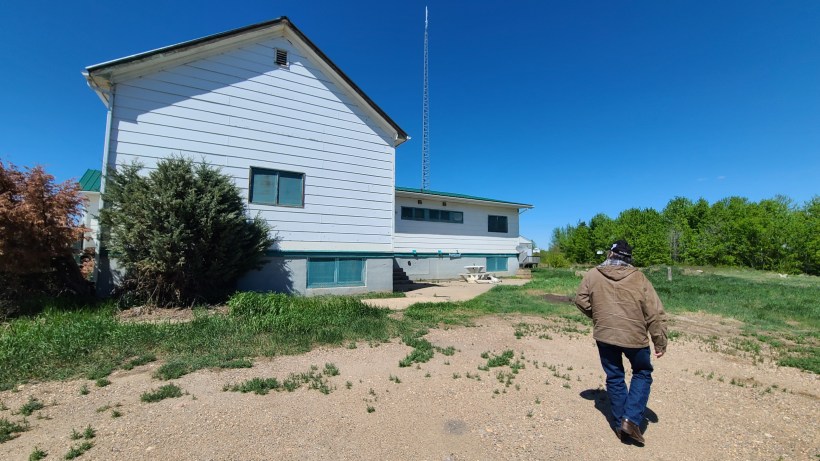
I walked into the school my father once attended never knowing he had been there before. I saw the Nehiyaw culture every where I looked but I felt something there that was unexpected. I felt dread and emotion that I did not understand and I thought it was because this was a residential school.

I thought that because I knew this had been hallways and dorms

where children were brought,

where they did not feel safe,

where bad things had happened,

that this was the reason for my fear.

I walked down the hall to where the library now stood, where once a chapel had been. I felt dread and disconnected from the reality of where I stood. I left and felt glad to be shedding the feeling of this place. Perhaps it was all in my head.

I returned home and told my father where I had been and where I had stood. He asked me why would I ever go there. I said I was there to learn about its history and its place now, as it tries to return culture to the people it stole from. I said “you should come there with me some time. There’s culture and language everywhere.” He looked at me and in a shaky voice half shouted “I will never go back to that fucking place.” I was shocked and shook to my core. I did not even think about my dad being in school there.

I remembered then the stories he told, brief though they were, of the nuns and how mean they were in school. I paused and I questioned, “I thought you didn’t go to school there.” He said quietly “It was only two weeks.” I did not say anything else but I thought his reaction was too strong for only two weeks. I didn’t ask again.

I went back there…to the school of two weeks…wondering how this place connected to me and my history. How was it connected to the pain my family experienced and as if the school could read my thoughts, I could not find a way into the building. None of the doors would open although there were clearly people inside. Someone came out and I caught the door and went in. The same feeling of dread surrounding me as I walked down the hall. I went to meet the person I had come to see, unfortunately, she had been called away for a family emergency. I left the building and immediately felt better.

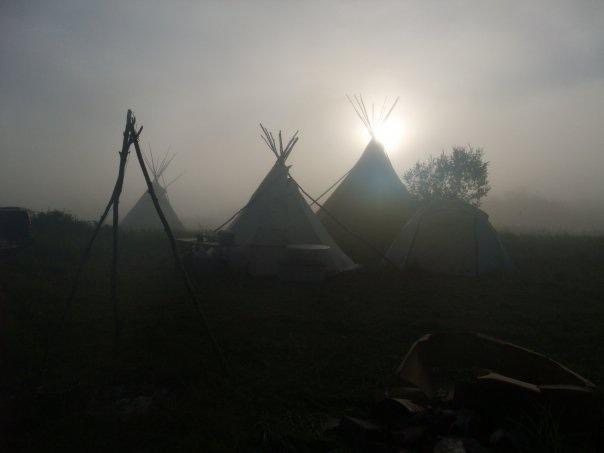
Twice more I came to the building and was shut out. Twice more I left without answers. Then I went to a ceremony being held on the school grounds and I prayed that my dad would feel safe enough to tell me something; I shed tears for him.

A few days later my parents called. They said “can you please come here, we need you to look at some papers.” I went to their home and my dad handed me a brown envelope; he turned and walked away. I sat down at their kitchen table and asked my mum what it was. She said its about the time your dad spent at residential school. I said oh. I felt emotionally flat. I said I thought it was only 2 weeks. My mum said “no its longer and they only know he was there because other people identified him”. The school otherwise had no real records of him.” I felt anger burn in the pit of my stomach but I also felt sick. I asked “how old was he”….my mum said “just read the papers.” So I did.

It identified his timeline as at least two years and two months. I felt sick. I asked “What does this mean” I felt bewildered and confused. My dad came and sat down next to me. He asked “what should I do?” “They want me to go and make a statement.” I asked him “Do you want to?” He was unsure, unsure if he should open old wounds, unsure if he should talk about it, unsure if it was safe to do so. We smudged and prayed and I went home with even more questions.

I knew my uncles and aunties had gone to school there, they had said. My Auntie told me that they didn’t learn to read or write, that they had learned how to pray and to know that they weren’t good enough. She said my uncles learned how to work farm jobs. My Kokom had told me that they had been treated worse than dogs and that everything was rationed, they had to make do. Yet I couldn’t figure out why I didn’t think my dad had gone to school there. I guess because he never really said anything about it and because he had a substance use disorder, it wasn’t something that every crossed my mind. Now I had more unanswered questions. I also knew why my dad would walk away when anyone talked about going to school.

My dad called me a couple of days later and said “I’m going to do it but only if you and your brother will come with me and please ask your friend Wanda to come with us.” I said ok. nothing more, no questions just ok.

The day came for the independent hearing and I was nervous. We smudged and prayed. I gave my dad the things my children had given to me for Mosom; rocks for strength and a letter telling him that they knew he would be ok.

I listened to my dad’s story, the terrible things that had happened to him, the fear he felt, the pain he experienced and how it impacted his life. He he had suffered from depression, anger and suicidal thoughts for years. How he couldn’t be the father that he wanted to be but how he wanted to be a better Mosom. He showed them the gifts the kids had sent for him. WE were all crying. I understood my sense of dread and fear connected to that place.

I heard his story and understood my father on a different level. I saw him as a child, who had survived a horrible experience. How his dependence on alcohol for so long had kept him from thinking about those experiences and how his years of sobriety had helped him tell his truth.

I continued to go to that school to participate in the ceremonies every year that are held there. I always asked him if he would come. He always said no until about 5 years ago when he said maybe. Then he came with me. He was nervous and scared. As we drove closer he talked about the evil of the place and how much he didn’t want to be there. I asked him “do you want me to turn around?” He said no. We arrived.

He had returned. My nephew, the youngest grandchild at the time, was with us. He took his Mosom’s hand and we walked towards the building. My dad walked up to the building, took a breath and walked in. He had returned to his place of terror. He could only get through the door but that was more than I had expected. I felt proud of him. My mum looked at me as my dad said I need to leave the building and my nephew walked out with him. They walked around the grounds and we gave them time. Then we left. My dad seemed somehow lighter as we left.

The return was powerful, as was the ability to choose to leave. He had gained some freedom and I told him he didn’t ever have to go back there unless he chose to again. My parents, my nephew and I have gone back only once since then to attend a ceremony on the grounds but never to the building. I doubt if he will ever return to the building now that he has freely walked away from it.

We have an Elder at our school

I work at school that is not on a Metis Settlement or in a First Nations community. It has a majority of students that would identify, using school terms as FNMI, or First Nations, Metis, and Inuit. Our school is also very diverse with many cultures that are also strong in their beliefs and practices. As an Indigenous woman who went through the local school system it was important for me to support all students and especially “our” students. After having a student move from a remote Cree speaking community and hearing him preferring to speak Cree but not having people, including myself that really understood a lot of the language, I reached out to an Elder and asked her if she would be willing to come and just spend some time talking to him in school. Being able to build that connection for him. It was amazing to see how much his face lit up every time they would talk. Soon other students asked me how come he was the only one who was able to do that. I decided to go and speak to the principal of the school. This eventually led to us having a full time elder in residence at our school. I was asked by someone why it mattered and I answered it just does, which isn’t really an answer. So I had to ask myself “why is having an elder in residence good for the mental health of our students?” I thought a lot about it and this is the best way I could explain it.

I am an Indigenous woman and as such I explain things through story and the context of things relationally. This is how I will explain to you why having an Elder is good for the mental health of our students. As an Indigenous person it is important to me that we have cultural connections at our school. When I was a student going through the local school system there wasn’t always a good and accurate reflection of Indigenous people in our schools; as time went on that changed slightly.

I remember how in grade 4 we were offered a language choice but neither Cree nor Michif were offered at that time. I would have really liked to have had that exposure to my language. My parents did not speak Cree at our home because my mother could not speak it because she is English. My father is fluent in Cree as it was his first language. For myself I would hear it at church as the sermon was half in English and half in Cree. I would hear it when visiting family and friends. I would hear it when my dad would see people he knew up town so I was surround by it but did not speak it. I guess you could say my life was infused with it but not in a way that helped me to speak it.

In grade 9 we were offered Cree language but it was not taught by a Cree speaker. Rather it was taught by the French teacher and while she was nice, when we students would bring up cultural experiences she could not relate to us and we would often try to explain it to her. She would then tell us that we needed to move on and was not able to put those experiences we were talking about into a context. She would put on the tape so we could listen to the lesson and we would move on. It felt like our language and experiences weren’t important.

Throughout the grades we learned about Indigenous people as though we were dead, extinct and savage. We learned that people were crazy and bad; we learned that we were put down in the rebellions that were simply something minor and not anything big in the Canadian context; while my family taught me something else. My family taught me that one of my Mosom’s was killed in the great war and that his body was treated badly and we were not able to bring him back home. I was told we were not allowed to do anything and we were not allowed to ask questions or talk about our culture. If we participated in cultural practices we learned we were not allowed to let anyone know in case we would get in trouble. I heard from my family that schools were bad and that they hated us because we were “Indian”; that schools took away our language and our culture and were a place that mistreated us. In fact I heard stories from my cousins about how terrible teachers could be.

What I learned without knowing it was that this great war my family talked about, the one where we lost family, where people starved and died was not world war 1 but the 1885 north west rebellion. It was a war of survival and it was not actually a rebellion as much as it was about sovereignty. I was learning from my family a version of Canadian history. I learned that we had a way of life before colonization and that it was good. We had our own political governance structures, our own independence, our own revenue and that all these things allowed us to be who we were. I learned that when the Europeans came we lost that. I learned that there were treaties designed to allow the new people to share the land with us and I learned that did not happen. We lost a lot of our way of life through legislation that was imposed on us and through schools that were created to erase from our memories who we are. All these things have created legacies of both historical trauma and Intergenerational trauma.

So why am I telling you this, my children went through this school system trying to also connect with their identity, their culture and their language. They had a few opportunities, through a Cree language program, native arts classes and the opportunities given to them in high school. They had class debates where they were told by classmates that it was a long time ago and they should just get over it. My son asked me why his grade 7 social studies book called us savages and when I asked him what he learned he said that we are not very well educated and that our culture is mostly gone. This did not contribute very well to their positive identity. As my children are now adults one of the things that have discussed is the power of having someone who reflects who you are in the school.

The Elder at the school now was in the school when I was in high school. She did not have this same role and was not allowed the same conversations that she has now. We often talked and while I didn’t tell her anything personal it was really nice to have her there. She was around at the high school when my children were there. My kids knew that she would understand and that she would be a support if she could be. If she was allowed. These were not her roles at those times. We connected it because of cultural connections. She understood when I said I’m going to another funeral and didn’t say “how many funerals can you go to” making it seem like I was lying. She simply said I understand, that must be hard. She didn’t ask questions and didn’t say anything to my teachers.

In high school we also had another Metis lady who was good to talk to and when my cousin was murdered I tried talking to her about it but she wasn’t allowed to talk to me because again that was not her role. She told me that she was sorry but that she would get into trouble if she did talk to me about it. I could not talk to anyone else about it as there was nobody there who would understand. The two ladies that could have understood were limited by expectations surrounding their job.

Having an Elder in the school would have helped me. Having an Elder in the school would have helped my children because there are somethings that you do not have to explain why its happening they simply know. They simply nod and understand. Having that person who understands; that you are going to a wake, that you are having a rites of passage ceremony, that this is the 5th grandparent you have lost, is important. It allows you to be connected in a positive and healthy way, it creates comfort and safety and allows someone to explain the cultural aspect to your teacher when no one else can so that you do not have to. Indigenous people need those relationships, those connections and the understanding that it brings.

Having an Elder at the school allows staff to Indigenize the content and bring the curriculum into context through the oral histories and traditional teachings. It build a student’s pride in themselves, their language and cultural. It teaches other students that stereotypes that exist are not truths and it allows those students to connect with a culture that they might not otherwise be exposed to. It gives pride to parents and the community as a whole and it allows us to see that even though schools were a place that tried to make us forget who we were, that this school, our school is trying to help heal that wound. It helps not only the school, the students, the families but it helps everyone and that is why it is good for students mental health.

Walking

I am walking, feeling the rhythm, I hear the distant beat of drums. They call to me, telling me to come home.

I try to find my way, I stumble and fall, I rise and follow the sound, growing stronger like a heartbeat. I hear the voices of my ancestors calling me, “Nosim, you will be ok, granddaughter do not be afraid, you will find the way.” 

I walk closer to the earth, feeling more grounded and connected as I stand barefoot on the earth. I search, sometimes stumbling as my walk gets closer. I feel the heartbeat of the earth as I walk under the sky. I know that Creator is showing me the way. I am walking back to myself, back home, finding comfort in the old ways. 

Ceremony calls. I let go of my pain. I let go of my fear. I am walking a new yet old road.

I am walking, feeling the rhythm, I hear the not so distant beat of drums. They call to me, telling me I am home. 

Speaking my truth

I have had more people than I expected ask me what it was like to share my story at the TRC. I have to say it was one of the most difficult things I have ever done. It was scarier than anything I have experienced and at the same time it was very liberating.

I had considered, how much do you share when you tell the story of your experience. It is not just my experience but also the experience of my siblings, my parents, my aunts and uncles and cousins. It directly impacts them. It exposes things that you learn not to talk about. It is a fearful thing to break the rules of silence because it is not just our family rules but it is also societies rules of silence.

It is about shining a light on truth that people would rather not see and then giving them a reason to say they knew I was screwed up and now here is the proof because I just told everyone what happened in my family.

FEAR, it is so powerful. It can rob you of independence and steal your dream. It is the great silencer. Fear is one of the most difficult things to overcome. It is surrounded by what ifs and anxiety. It is why I had nightmares for years. The only way to overcome fear is to open yourself up to love and truth. Even miserable rotten truths are better than living in constant fear.

So my truth was spoken in a deeply painful and personal way. I cried a lot at the TRC. I cried because I felt alone, even though I wasn’t. I cried because my family wasn’t there. I cried and grieved my losses. I cried because of the shame I grew up with and I cried because in all those things I experienced were teachings. Some of these were not healthy and others well honestly gave me strength to endure. So as scary as it was, as painful and as difficult as that experience was, I am glad that I did it. I wish that more people would have been able to do it but to those who did, I am so grateful, they were able to share their stories. In telling the story we all gained a little more freedom. And if you really need to know more well, I’m open to telling you about it as long as you are open to listening without judgement.